Three long tracks... one short...
The first, an early piece, interesting probably more for what it reveals about its young composer/creator's intentions and music philosophy – throwing a light over later mature work. John Zorn's 'Mikhail Zoetrope Part One.' Recorded in 1973. Guy Peters said of this piece:
'The three-parted "Mikhail Zoetrope" (running more than three quarters of an hour) is in Zorn' own words "the craziest piece I've ever written." Those who've heard some of his more challenging works know what that implies: it's batshit insane. When discussing the brief "Wind Ko/La," Zorn reveals it's probably no surprise that his mother put him under observation at a psychiatric clinic from age 8 to 16. His mother must've been quite a tolerant person, as most other parents would undoubtedly hire an exorcist... but for the most part, it's a pure mess that probably works fine as a concept (if you're into this stuff), but is simply un-listenable and worthless as "music." ' (From here... scroll down...).
This was recorded on left and right channels, one over the other, Zorn on soprano sax and a variety of kitchenware, found sounds plus grunts groans and other assorted vocal noise - pre-figuring Mike Patton's work with him recently?
Love it or hate it, I figure... Zorn is an odd character who inspires strong emotions for and against (let it be said that the above quote is taken from one review among many of Zorn's albums and Peters is a knowledgeable and affectionate follower of the man).
The circumstances that surround the Keith Jarrett recording of the 'Koln Concert' are well-known (apparently – I didn't know them as I haven't really followed Jarrett much although I like his playing) – lack of sleep, crap piano but show goes on – and a classic is born, from a totally improvised performance. This is 'Part One,' spinning outwards from relatively simple minor key beginnings, becoming almost gospel-like in the rolling full left hand voicings. Free improvisation coming from a tonal base and fascinating because of that... Jarrett reached a lot of hearts and minds with the album that this piece is taken from. Still uplifting...
From 1969 – The Art Ensemble. A side of an lp, 'A Brain for the Seine,' recorded (strangely enough) in Paris. The Art Ensemble created their unique acoustic space that was large enough to encompass their collectively steady eye back to the past and their experiments in the here and now (as was), alongside the visual theatrical element of their live performance that riffed strongly on African culture. This gave an unsettlingl, unsteady focus – often quite straight-forward blowing bouncing off spattering small instruments, noise, jumpcuts between jokiness and political statement with the artists dressed up in vivid robes, masks and wild face-painting. Via the AACM, this mix of the european avant-garde and the American gave music that was often quite different to the fire musics of New York. On a different track but coming from similar influences/origins, one can see how Anthony Braxton's work can be tracked back to Chicago and this influential group. Different strokes... The Art Ensemble developed their own methods of long-form improvisation that offered – sometimes - a more user-friendly than usual entrance into the complex sound worlds of the avant garde – to make a clumsy example, the tradition going back to Dizzy Gillespie's vaudeville side as opposed to Bird's junky noir-cool? 'A Brain for the Seine' starts with wah-muted trumpet, harmonica, rattling chains(?), tinkering percussion, sporadic long horn notes like a fog warning, gongs, before Malachi Favors bass thumps several low notes, a strangled voice demands water -'Please can I have a drink of...'- then Lester Bowie drops the mute and plays open horn venting a Spanish-tinged line over what sounds like a marimba as Favors moves between arco and pizzicato... and so it goes onwards... funny – slapstick and smart – and technically superb playing dropped down the mineshaft at intervals into noise and exotica, along with several kitchen sinks. That's the Art Ensemble of Chicago...
Lastly... some of the guv'nor, Derek Bailey, recorded solo in Japan, 1978, on electric guitar for this track – 'A Wonderer(Wanderer?) from the British World.' This is for Montegue, who digs Derek... Steely brilliance...
After the gigs last week, playing, organising and attending, fatigue has impacted on my uncertain health, so apologies for lack of music so far this week. More to come tomorrow...
In the Videodrome...
The Art Ensemble...
John Zorn...
and 9 minutes of Keith Jarrett in Italy, 1974...
John Zorn - soprano saxophone, assorted pots and pans, vocal gymnastics, found sounds...
Mikhail Zoetrope Act One
Download
Buy
Keith Jarrett – solo piano
Koln Concert, Part One
Download
Buy
Art Ensemble of Chicago
(Lester Bowie; trumpet, flugelhorn, bass drum, horns
Roscoe Mitchell; soprano sax, alto sax, bass sax, clarinet, flute, percussion
Joseph Jarman; soprano sax, alto sax, clarinet, oboe, flute, vibes, percussion, guitar
Malachi Favors: bass, fender bass, banjo, percussion ).
A Brain for the Seine
Download
Buy
Derek Bailey – solo electric guitar
A wonderer in the British world
Download
Buy
Wednesday, January 31, 2007


Monday, January 29, 2007
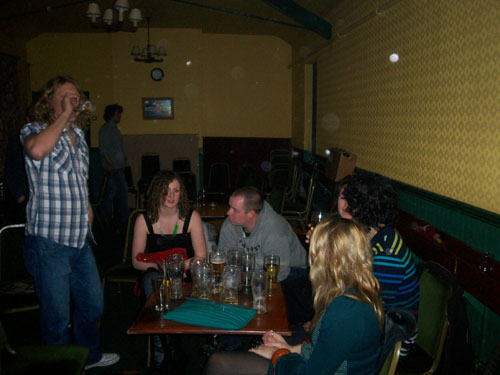
Club Sporadic... Saturday 27th January, 2007...
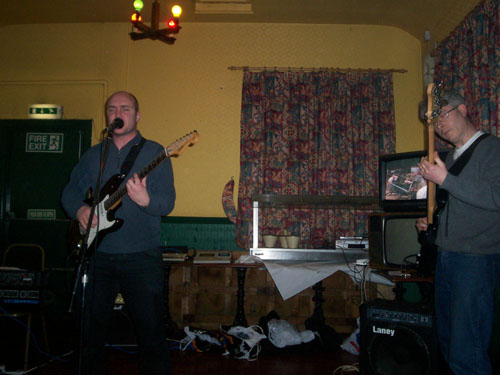


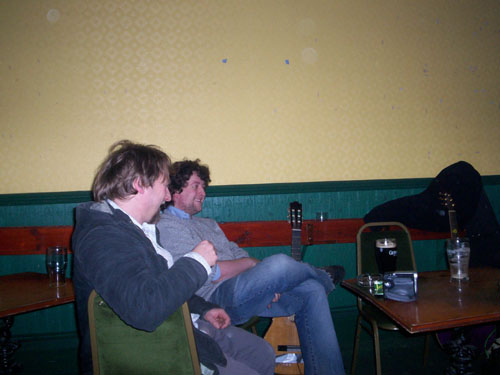
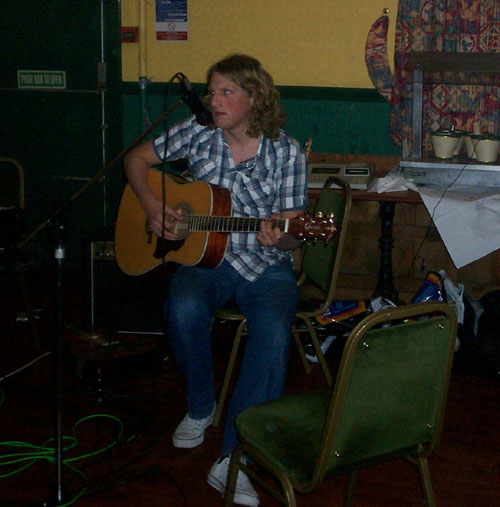
A chaotic, sprawling night at the Club Sporadic - with some surprises... The featured band Hulot played a short, sharp twenty minutes or so, echoes maybe of the Gang of Four in the harsh trebly Strat and the Three Johns – with regard to the drum machine – yet a fresh sound and this first gig showed few hiccups– they have their own vision, went down a storm and are booked back here again in March... Frank Marmion played a great set – acoustic folk with inept keyboards from yours truly who was still recovering from a late night after the Pete Morton gig – Frank managed to override my vision of integrating electronics into his music and went down well. (I will get it right, Frank, honest...). Plexus played their usual long pieces in duo form and later with Murray to bring us up to strength. Hard to review your own music – I know my head was elsewhere and we were all a trifle, shall we say, jaded. But some interesting stuff in there – that's the gamble of free improvisation, after all. Towards the end of the night we were joined by various members of the audience who got up to play... Not one of Plexus's best nights maybe – but band, singers and audience, were great and created a good atmosphere all evening... ending with impromptu dancing to some traditional jazz courtesy of DJ Whitedog, who laced the usual eclectic ambiance (tonight moving from Ornette's Prime Time to Chris McGregor and the Blue Notes via Charles Mingus and some weirder noise) with some Muggsy Spanier and Sidney Bechet... and James Brown... get down!
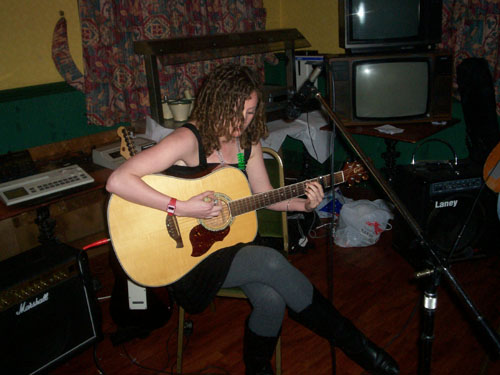
Pete Morton at the Packe Horse Loughborough, Friday 26th January...

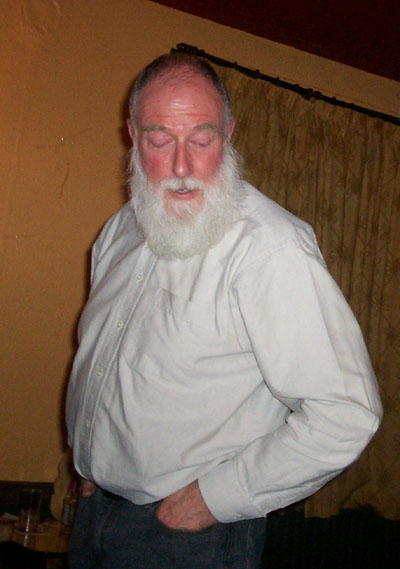
To the Pack Horse, Loughborough – Pete Morton, probably my favourite English singer/songwriter, on his annual visit to the Grand Old Club... Mr Marmion and Mr David Morton (no relation) started off with a couple of songs – 'The Dutchman,' which grows on me every time I hear it, and 'Ratcliffe Highway.' Forward Pete Morton – starting with a new song 'Good enough for me,' (I think). First couple of numbers seemed a bit tentative and I wondered if we can always have such high expectations of a performer – then he proceeded to blow the place apart as ever (how wrong can you be...) – his unique mixture of humour, passion and sharp social observation folded into his music – a soaring voice and rock solid guitar combining to build on what's left of the tradition without lapsing into the twee or the irrelevant – no more bloody songs about the First World War, for a start... although if anyone could come up with a new angle on those events – it would be Pete, I guess.
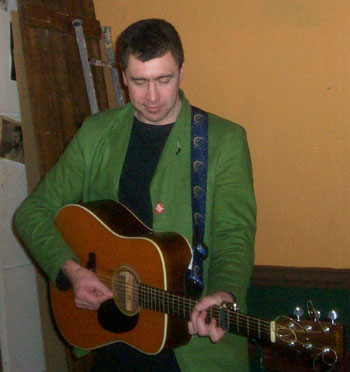
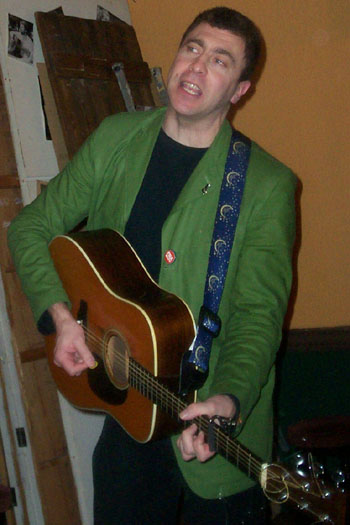
What he does is shine a light on the commonplace and position it in a wider context – without preaching – with a searing optimism which is just so damn refreshing. A celebration of his roots that fixes them in our common heritage without narrow xenophobic trappings – or sneery old lefty whinings – and takes in the city and the country, from mundane activities like standing in a post office and observing the people in the queue to the fun of a drinking session in a ratty old pub to the wide spaces and flatlands of Lincolnshire. I wrote a lengthy review of his last performance here so won't repeat myself too much – except to note that Pete never just wacks out the tried and trusted – he always has something new to offer – like the song in Platte Deutche. Even the anthem – 'Another Train' – gets sneakily placed in the song order – too easy to end on, he resists the temptation to take the easy hit. Pete, of course, has always been a superb interpeter of the tradition, making his bones all those years ago with his epic version of 'Tam Lin,' for example. Tonight he finished on 'Farmer's Boy,' plugging his audience into the English Rural Sublime with a vengeance... A stirring, soulful, superb night... He also gracefully performed my request for my current favourite song 'Shepherd's Song,' about the tragic nineteenth century poet, John Clare. Thanks, Pete... (And quick mention of the other floor singer, John Bentham, who bears a remarkable resemblance to the free jazz saxophonist,Paul Flaherty, and has a powerful yet mellow voice... ).
Support Kermit Driscoll... Benefit tonight in New York at the Tonic...
A flurry of reviews from a busy weekend and the usual eclectic mix of mp3's to come... but first a message about Kermit Driscoll from Matt Merewitz...
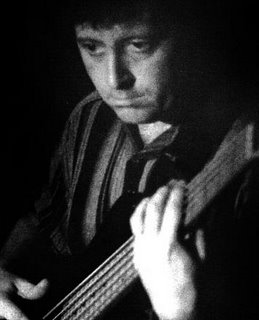
Though he has never released an album under his own name, the bassist Kermit Driscoll has had a considerable impact in adventurous jazz circles over the last 20 years. Mr. Driscoll first emerged as a close compatriot of the guitarist Bill Frisell during an influential stretch from the mid-1980s through the mid-90s. ('Live,' a 1991 Gramavision album credited to Bill Frisell, Kermit Driscoll and Joey Baron, especially worth seeking out for Mr. Driscoll's nimble rapport with the guitarist and drummer.) Mr. Driscoll concurrently tangled with an honor roll of downtown composer-improvisers like the alto saxophonist John Zorn and the trumpeter Dave Douglas, with whom he worked in a collective called New and Used. Then at some point in the mid-90s, Mr. Driscoll unknowingly contracted Lyme disease from a deer tick bite. He spent years contending with headaches, joint pain and deep fatigue before receiving an accurate diagnosis in 2005, when the disease was already in its difficult-to-treat third stage. Mr. Driscoll had stayed somewhat active during his illness - he appeared on several noteworthy 2005 releases, including albums by the guitarist Ben Monder and the drummer John Hollenbeck but he found it increasingly hard to work. Last month he managed to perform on a benefit in his honor with Mr. Douglas and Mr. Monder, among others; this month he played a concert with Mr. Hollenbeck's Large Ensemble. ('The next day he said that the music healed him, he felt a lot better,' according to Mr. Hollenbeck in an e-mail message, 'With this disease you go up and down.') On Monday Mr. Driscoll will appear, but probably not perform, at the largest yet benefit for his medical expenses. The lineup will include Mr. Frisell, with his 858 String Quartet; Mr. Zorn, with an undisclosed ensemble; Mr. Hollenbeck, with an ethereal group called the Refuge Trio; and the bassist John Patitucci, with the saxophonist Jon Ellis and the drummer Kendrick Scott. (Monday at 8 p.m., Tonic, 107 Norfolk Street, near Delancey Street, Lower East Side, 212-358-7501, tonicnyc.com; cover, $25. Tax-deductible donations can also be made payable to Emergency Relief Fund (Kermit Driscoll) and mailed to Bill Dennison, Musicians Union Local 802, 322 West 48th Street, New York, N.Y. 10036.
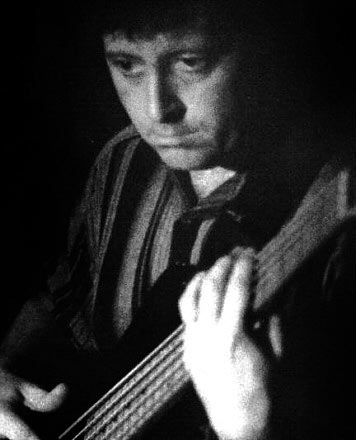
Though he has never released an album under his own name, the bassist Kermit Driscoll has had a considerable impact in adventurous jazz circles over the last 20 years. Mr. Driscoll first emerged as a close compatriot of the guitarist Bill Frisell during an influential stretch from the mid-1980s through the mid-90s. ('Live,' a 1991 Gramavision album credited to Bill Frisell, Kermit Driscoll and Joey Baron, especially worth seeking out for Mr. Driscoll's nimble rapport with the guitarist and drummer.) Mr. Driscoll concurrently tangled with an honor roll of downtown composer-improvisers like the alto saxophonist John Zorn and the trumpeter Dave Douglas, with whom he worked in a collective called New and Used. Then at some point in the mid-90s, Mr. Driscoll unknowingly contracted Lyme disease from a deer tick bite. He spent years contending with headaches, joint pain and deep fatigue before receiving an accurate diagnosis in 2005, when the disease was already in its difficult-to-treat third stage. Mr. Driscoll had stayed somewhat active during his illness - he appeared on several noteworthy 2005 releases, including albums by the guitarist Ben Monder and the drummer John Hollenbeck but he found it increasingly hard to work. Last month he managed to perform on a benefit in his honor with Mr. Douglas and Mr. Monder, among others; this month he played a concert with Mr. Hollenbeck's Large Ensemble. ('The next day he said that the music healed him, he felt a lot better,' according to Mr. Hollenbeck in an e-mail message, 'With this disease you go up and down.') On Monday Mr. Driscoll will appear, but probably not perform, at the largest yet benefit for his medical expenses. The lineup will include Mr. Frisell, with his 858 String Quartet; Mr. Zorn, with an undisclosed ensemble; Mr. Hollenbeck, with an ethereal group called the Refuge Trio; and the bassist John Patitucci, with the saxophonist Jon Ellis and the drummer Kendrick Scott. (Monday at 8 p.m., Tonic, 107 Norfolk Street, near Delancey Street, Lower East Side, 212-358-7501, tonicnyc.com; cover, $25. Tax-deductible donations can also be made payable to Emergency Relief Fund (Kermit Driscoll) and mailed to Bill Dennison, Musicians Union Local 802, 322 West 48th Street, New York, N.Y. 10036.
Wednesday, January 24, 2007
Miles Davis... Harold Land... John Coltrane... Muggsy Spanier... Gil Evans...
Let's weave in and out of some big band and combo sides...
'Miles Ahead' was always a curious work in the Davis canon... He had collaborated with Gil Evans on the Birth of the Cool band so this would be their second recorded project but it seems to have been partly forgotten/over-shadowed by 'Porgy and Bess' and 'Sketches of Spain.' Evans' unique sonorities frame Miles' playing superbly – a dark rich tapestry out of which his mournful brass voice emerges, that burnished mixture of fragility and courage. As both an extension of jazz soloing and the big band tradition, taken into new emotional and technical areas, could one see all these collaborations, perhaps, under the problematic banner of 'Third Stream?' Or, rather, where the Third Stream could have gone... Certainly, contemporary critical opinion was divided as to whether they were 'jazz' or not... Whatever...
'The Maids of Cadiz,' which is, I suppose, a pre-cursor of 'Sketches of Spain.' Miles is meltingly restrained, as if choking back strong emotions, which gives his solo a clenched edge. Paul Chambers bass is the spine of this track, beginning and ending with fast sequences of notes and prominent throughout offering rock-solid support as Evans deploys his 19 piece orchestra around Davis's flugelhorn in a slow colourful dance that expands outwards and back to clear new ground...
Harold Land's album 'The Fox'...
'One Down' opens on toms and a whacking backbeat from Frank Butler. After the theme, the obscure Dupree Bolton takes the first solo with Butler's snare clatteringly prominent in the mix. A brilliant - but sad - taster – there isn't much of Bolton around. Like the better known Chet Baker, Bolton was from Oklahoma – and he shared his fellow trumpeter's penchant for drugs – which put him in jail eventually. Bolton was apparently a rather taciturn charactee. I like this story – especially the dry last sentence:
'The only thing he said to John Tynan in an interview was 'When I was 14, I ran away from home.' When he ran away it was to join Jay McShann...' (from here... ).
Hope takes over and shows his class – another intriguing musician condemned to obscurity. Land seems relaxed - another underrated player, yet by the standards of Hope and Bolton, more readily known – and he had a longer career, luckily. And did Butler get his due? He shows his stuff after the leader... romping through his solo. This album is one that always crops up on favourite lists – not exactly ground-breaking but just – extremely good in-the-pocket jazz. A great ensemble performance...
Some fifties Coltrane is always welcome... From the album 'The Believer,' this is 'Do I love you because you are beautiful,' introduced by the tenor player - a master of ballad playing as well as his wilder forays up and down the horn. His keening tone with an edge of vulnerability is ideal for a slow tempo exploration. Garland ripples his way through his solo, that perfectly sprung line flowing across the solid rhythm of Paul Chambers and Art Taylor's brushes – ending as always (somewhat predictably) in his locked hands block chords. Freddy Hubbard – smart, sparkling and lyrical trumpet joined briefly by Coltrane sketching a few notes behind him to end.
There were always dissenting voices, of course...
'See, a lot of people don’t know that Coltrane was not a great bebop player. He was there all the time, but he never did really capture the bebop feeling in his soloing. Well, he was a hard worker; he practised a lot, and he got a lot of stuff together—but it has nothing to do with jazz. Not really. When you play harmonics, and play through the changes of blues, that’s really not playing blues. Some guys play one note and play blues; if you don’t believe it, you listen to some old records—those cats played at best, four notes, and they played a whole blues chorus. And it sounds good too. '
So said Lou Donaldson, in an interview here...).
Discuss... well, whatever one thinks about Lou Donaldson's comments on Coltrane, here's one of the 'old records' – 'Big Butter and Egg Man,' recorded in 1939 by Muggsy Spanier's Ragtime Band, who were a semi-revivalist group in one sense in their looking back to the previous years of hot jazz before the swing big band phenomenon moved the game on. 'Ragtime' is used somewhat confusingly in the band name – they are not harking quite that far back. This is more in the vein of Condon's Dixieland, small band jazz with a swing rhythm section, playing from the repertoire of Spanier's heroes, Louis Armstrong and Joe Oliver, that stands at a diagonal to the looming phase shift of bebop. Spanier always had a strong lead but was no great technician as a soloist – yet he knew how to make the notes speak – as Lou Donaldson says in the above quote, 'those cats played at best, four notes... And it sounds good too...' For the historically minded – or plain curious – here's a contemporary review I found of this track:
'The most heartening jazz record issued by a commercial company in a long time. Muggsy, reviving now from his long bondage to Ted Lewis, is again the hottest of the white trumpets, and he's taking his little "ragtime" band along with him. This record observes a simple adherence to the simple traditions of jazz. On the first side New Orleans influence is felt in the selection and style; on the second, the effect of Armstrong's personal style is apparent. Muggsy listened carefully to Joe Oliver, Armstrong, and Tommy Ladnier, in their prime; he still feels the music something the same way they did.' (From here...).
More big band jazz and Gil Evans again – this time on his own, 'La Nevada,' taken from his album, 'Out of the Cool,' which marks the advance from the 1949 sessions with Miles. Bluesily dissonant piano then bass and guitar over swishing cymbals as the the orchestra slowly enters and the drums build, deep throaty brass then higher instruments blending – then falling away– strong walking bass and comping guitar as Coles solos. Evans deft handling of his orchestra is subtle, never over-bearing and mindful of nuance. Jimmy Knepper fires off one of his gruff, bouncy solos, echoed by upward smearing trombones in places, followed by Budd Johnson's tenor, sounding plaintive in the higher register with a hint of Oliver Nelson, oddly... Ron Carter comes forward, eloquent, shadowed by faint piano, cymbals and far-away blurry orchestral figures – a trick of the mix or deliberate, it works well to add depth. Ray Crawford's guitar next, buoyed by growling brass and rising skittering drums and pointilist flute/piccolos. Building over repeated figures involving le tout ensemble to suddenly wind down...
This track displays Evans clever updating of big band practice – his melodic materials here are fairly sparse, always the arranger and re-composer rather than composer, perhaps, certainly compared to the winding, complex lines of the 'Birth of the Cool' band - and much of the excitement is built up by clever use of repetition – or riffs, if you like, as exemplified, arguably, by the Basie Band back in KC in the thirties. And perhaps something of Monk in the way he turns a repeated figure slowly round to display different angles? What further marks the advance is the use of extended timbral range, as on the Davis albums – from tuba up to piccolo via bassoon. Oh, and grafting that onto the riffs to make it swing like mad and prevent the essentially vertical/harmonic world that Evans inhabited from congealing into the more lumpy efforts that much of the 'Third Stream' ended up offering... Evans handles the acoustic spaces at his disposal so well... This could just have been a string of solos over a perfunctory theme – it ends up as so much more...
On a totally trivial note, while I was checking the personnel details I found one web site that gave an interesting miss-spelling to another of the tunes from this album – 'Bilbo Song.' Which briefly conjured up a bizarre thought – what kind of a collaboration would Tolkien have had with Kurt Weill and Bertold Brecht? In an alternative universe, no doubt such horrors loom...
In the Videodrome...
Muggsy Spanier...
and playing the Beale Street Blues...
... Miles and Gil
... Lee Konitz and Warne Marsh...
Miles Davis/Gil Evans
(Johnny Carisi, Bernie Glow, Taft Jordan, Louis Mucci, Ernie Royal (tp) Miles Davis (flh) Joe Bennett, Jimmy Cleveland, Frank Rehak (tb) Tom Mitchell (btb) Jim Buffington, Tony Miranda, Willie Ruff (frh) Bill Barber (tu) Edwin Caine, Sid Cooper, Romeo Penque (fl, cl) Danny Bank (bcl) Lee Konitz (as) Paul Chambers (b) Art Taylor (d) Gil Evans (arr, cond) ).
Maids of Cadiz
Download
Buy
Harold Land
(Harold Land (ts); Dupree Bolton (t); Elmo Hope (p); Herbie Lewis (b); Frank Butler (d) ).
One Down
Download
Buy
John Coltrane
(John Coltrane (ts); Freddie Hubbard (t); Red Garland (p); Paul Chambers (b); Arthur Taylor (d)).
Do I love you because you are beautiful
Download
Buy
Muggsy Spanier
(Muggsy Spanier (t); George Brunies (trb); Rod Cless (cl); Ray McKinstry (ts); George Zack (p); Bob Casey (g); Pat Pattison (b); Marty Greenberg (d) ).
Big Butter and Egg Man
Download
Buy
Gil Evans
(Gil Evans (p); Johnny Coles, Phil Sunkel (t); Keg Johnson, Jimmy Knepper (trm); Tony Studd (btrm); Bill Barber (tba); Ray Beckenstein, Eddie Cain (as, f, pic); Budd Johnson (ts, ss); Bob Tricarico (bass, f , pic); Ray Crawford (g); Ron Carter (b); Charles Persip, Elvin Jones (d, perc) ).
La Nevada
Download
Buy
'Miles Ahead' was always a curious work in the Davis canon... He had collaborated with Gil Evans on the Birth of the Cool band so this would be their second recorded project but it seems to have been partly forgotten/over-shadowed by 'Porgy and Bess' and 'Sketches of Spain.' Evans' unique sonorities frame Miles' playing superbly – a dark rich tapestry out of which his mournful brass voice emerges, that burnished mixture of fragility and courage. As both an extension of jazz soloing and the big band tradition, taken into new emotional and technical areas, could one see all these collaborations, perhaps, under the problematic banner of 'Third Stream?' Or, rather, where the Third Stream could have gone... Certainly, contemporary critical opinion was divided as to whether they were 'jazz' or not... Whatever...
'The Maids of Cadiz,' which is, I suppose, a pre-cursor of 'Sketches of Spain.' Miles is meltingly restrained, as if choking back strong emotions, which gives his solo a clenched edge. Paul Chambers bass is the spine of this track, beginning and ending with fast sequences of notes and prominent throughout offering rock-solid support as Evans deploys his 19 piece orchestra around Davis's flugelhorn in a slow colourful dance that expands outwards and back to clear new ground...
Harold Land's album 'The Fox'...
'One Down' opens on toms and a whacking backbeat from Frank Butler. After the theme, the obscure Dupree Bolton takes the first solo with Butler's snare clatteringly prominent in the mix. A brilliant - but sad - taster – there isn't much of Bolton around. Like the better known Chet Baker, Bolton was from Oklahoma – and he shared his fellow trumpeter's penchant for drugs – which put him in jail eventually. Bolton was apparently a rather taciturn charactee. I like this story – especially the dry last sentence:
'The only thing he said to John Tynan in an interview was 'When I was 14, I ran away from home.' When he ran away it was to join Jay McShann...' (from here... ).
Hope takes over and shows his class – another intriguing musician condemned to obscurity. Land seems relaxed - another underrated player, yet by the standards of Hope and Bolton, more readily known – and he had a longer career, luckily. And did Butler get his due? He shows his stuff after the leader... romping through his solo. This album is one that always crops up on favourite lists – not exactly ground-breaking but just – extremely good in-the-pocket jazz. A great ensemble performance...
Some fifties Coltrane is always welcome... From the album 'The Believer,' this is 'Do I love you because you are beautiful,' introduced by the tenor player - a master of ballad playing as well as his wilder forays up and down the horn. His keening tone with an edge of vulnerability is ideal for a slow tempo exploration. Garland ripples his way through his solo, that perfectly sprung line flowing across the solid rhythm of Paul Chambers and Art Taylor's brushes – ending as always (somewhat predictably) in his locked hands block chords. Freddy Hubbard – smart, sparkling and lyrical trumpet joined briefly by Coltrane sketching a few notes behind him to end.
There were always dissenting voices, of course...
'See, a lot of people don’t know that Coltrane was not a great bebop player. He was there all the time, but he never did really capture the bebop feeling in his soloing. Well, he was a hard worker; he practised a lot, and he got a lot of stuff together—but it has nothing to do with jazz. Not really. When you play harmonics, and play through the changes of blues, that’s really not playing blues. Some guys play one note and play blues; if you don’t believe it, you listen to some old records—those cats played at best, four notes, and they played a whole blues chorus. And it sounds good too. '
So said Lou Donaldson, in an interview here...).
Discuss... well, whatever one thinks about Lou Donaldson's comments on Coltrane, here's one of the 'old records' – 'Big Butter and Egg Man,' recorded in 1939 by Muggsy Spanier's Ragtime Band, who were a semi-revivalist group in one sense in their looking back to the previous years of hot jazz before the swing big band phenomenon moved the game on. 'Ragtime' is used somewhat confusingly in the band name – they are not harking quite that far back. This is more in the vein of Condon's Dixieland, small band jazz with a swing rhythm section, playing from the repertoire of Spanier's heroes, Louis Armstrong and Joe Oliver, that stands at a diagonal to the looming phase shift of bebop. Spanier always had a strong lead but was no great technician as a soloist – yet he knew how to make the notes speak – as Lou Donaldson says in the above quote, 'those cats played at best, four notes... And it sounds good too...' For the historically minded – or plain curious – here's a contemporary review I found of this track:
'The most heartening jazz record issued by a commercial company in a long time. Muggsy, reviving now from his long bondage to Ted Lewis, is again the hottest of the white trumpets, and he's taking his little "ragtime" band along with him. This record observes a simple adherence to the simple traditions of jazz. On the first side New Orleans influence is felt in the selection and style; on the second, the effect of Armstrong's personal style is apparent. Muggsy listened carefully to Joe Oliver, Armstrong, and Tommy Ladnier, in their prime; he still feels the music something the same way they did.' (From here...).
More big band jazz and Gil Evans again – this time on his own, 'La Nevada,' taken from his album, 'Out of the Cool,' which marks the advance from the 1949 sessions with Miles. Bluesily dissonant piano then bass and guitar over swishing cymbals as the the orchestra slowly enters and the drums build, deep throaty brass then higher instruments blending – then falling away– strong walking bass and comping guitar as Coles solos. Evans deft handling of his orchestra is subtle, never over-bearing and mindful of nuance. Jimmy Knepper fires off one of his gruff, bouncy solos, echoed by upward smearing trombones in places, followed by Budd Johnson's tenor, sounding plaintive in the higher register with a hint of Oliver Nelson, oddly... Ron Carter comes forward, eloquent, shadowed by faint piano, cymbals and far-away blurry orchestral figures – a trick of the mix or deliberate, it works well to add depth. Ray Crawford's guitar next, buoyed by growling brass and rising skittering drums and pointilist flute/piccolos. Building over repeated figures involving le tout ensemble to suddenly wind down...
This track displays Evans clever updating of big band practice – his melodic materials here are fairly sparse, always the arranger and re-composer rather than composer, perhaps, certainly compared to the winding, complex lines of the 'Birth of the Cool' band - and much of the excitement is built up by clever use of repetition – or riffs, if you like, as exemplified, arguably, by the Basie Band back in KC in the thirties. And perhaps something of Monk in the way he turns a repeated figure slowly round to display different angles? What further marks the advance is the use of extended timbral range, as on the Davis albums – from tuba up to piccolo via bassoon. Oh, and grafting that onto the riffs to make it swing like mad and prevent the essentially vertical/harmonic world that Evans inhabited from congealing into the more lumpy efforts that much of the 'Third Stream' ended up offering... Evans handles the acoustic spaces at his disposal so well... This could just have been a string of solos over a perfunctory theme – it ends up as so much more...
On a totally trivial note, while I was checking the personnel details I found one web site that gave an interesting miss-spelling to another of the tunes from this album – 'Bilbo Song.' Which briefly conjured up a bizarre thought – what kind of a collaboration would Tolkien have had with Kurt Weill and Bertold Brecht? In an alternative universe, no doubt such horrors loom...
In the Videodrome...
Muggsy Spanier...
and playing the Beale Street Blues...
... Miles and Gil
... Lee Konitz and Warne Marsh...
Miles Davis/Gil Evans
(Johnny Carisi, Bernie Glow, Taft Jordan, Louis Mucci, Ernie Royal (tp) Miles Davis (flh) Joe Bennett, Jimmy Cleveland, Frank Rehak (tb) Tom Mitchell (btb) Jim Buffington, Tony Miranda, Willie Ruff (frh) Bill Barber (tu) Edwin Caine, Sid Cooper, Romeo Penque (fl, cl) Danny Bank (bcl) Lee Konitz (as) Paul Chambers (b) Art Taylor (d) Gil Evans (arr, cond) ).
Maids of Cadiz
Download
Buy
Harold Land
(Harold Land (ts); Dupree Bolton (t); Elmo Hope (p); Herbie Lewis (b); Frank Butler (d) ).
One Down
Download
Buy
John Coltrane
(John Coltrane (ts); Freddie Hubbard (t); Red Garland (p); Paul Chambers (b); Arthur Taylor (d)).
Do I love you because you are beautiful
Download
Buy
Muggsy Spanier
(Muggsy Spanier (t); George Brunies (trb); Rod Cless (cl); Ray McKinstry (ts); George Zack (p); Bob Casey (g); Pat Pattison (b); Marty Greenberg (d) ).
Big Butter and Egg Man
Download
Buy
Gil Evans
(Gil Evans (p); Johnny Coles, Phil Sunkel (t); Keg Johnson, Jimmy Knepper (trm); Tony Studd (btrm); Bill Barber (tba); Ray Beckenstein, Eddie Cain (as, f, pic); Budd Johnson (ts, ss); Bob Tricarico (bass, f , pic); Ray Crawford (g); Ron Carter (b); Charles Persip, Elvin Jones (d, perc) ).
La Nevada
Download
Buy
Thursday, January 18, 2007
Jackie McLean... Albert Ayler... Jimmy Lyons... Sonny Rollins... Stan Getz/Bob Brookmeyer...
Out of the traps a little late this week – due to illness... plus ça change, etc...
So: coincidentally, as I pulled them out of the box – five saxophone players from varying positions on the jazz map (plus Bob Brookmeyer and his valve trombone). First off: Jackie McLean, who came out of the end of bebop in the fifties, under Bird's shadow but whose tenure in mid decade with Mingus provoked him to explore other directions:
'Jackie McLean was for the first part of his career a superior post-Parker bopper... a cut above most others but ultimately inconsequential compared with the innovators of the time. It was only when he joined Mingus in 1956 that the real Jackie McLean came into being.' (From here... )
One of those players in the Blue Note fold who kept 'in' while venturing 'out,' also influenced by Ornette's innovations:
'...Ornette Coleman was to become almost as significant a model for him as Parker had been.'
(From John Fordham's obituary here... ).
This is 'Saturday and Sunday' from 'One Step Beyond,' which was the first of three albums he would make with this lineup. This track seems to display the influences mentioned above – the compositional from Mingus, in this stop/start theme that eventually ends up in an uppish tempo and some of the alto line – and 'vocalised' sound – from Ornette. Hutcherson's vibes provide an interesting opened-out harmonic respite from piano – a symbol of McLean's music at this time, perhaps, in not totally shedding a chordal instrument underneath but utilising the more sonically ambiguous vibrophone? In/out? One speculates... McLean's alto displays his unique sound to advantage – the phrase 'blues-drenched' seems to be an accurate description... Moncur is earthy and good-humoured, in contrast to Hutcherson's cooler, more cerebral vibes – or is it just the somewhat constricted timbral area of the instrument anyway? Williams is tremendous here, playing all sorts of games with the beat and taking a brilliant solo backed by Khan's bass.
Bagpipes, anyone? Albert Ayler, skirling away through 'Masonic Inborn Part One,' from his late album 'Music is the Healing Force of the Univers.' Bobby Few's piano swirls across the murky river of sound underneath, swelled by the two basses and Ali's drumming into a torrent that frequently threatens to overflow its banks in glorious fashion. This album has always polarised critical opinion – initially derided, it has picked up some support over the years. Ayler's wheezing, croaking bagpipes are a wonder sound to behear.
Jimmy Lyons is always linked to Cecil Taylor by the fact that he spent so many years playing in the pianist's various bands. But he made a few sessions under his own name – this one in a line-up with John Lindbergh and Sunny Murray. 'Tortuga,' then, from the album 'Jump Up.' Listening to Lyons, I sometimes get a hint of how Charlie Parker may have played if he had lived – and proceeded to continue musically questing rather than, say, easing back and living on his (considerable, let it be said and justly deserved) reputation. There is a laid back eloquence to his playing here... Murray is busy as ever, and Lindberg acts mainly in an anchor role... Lyons translation and adaption of bop alto sax out of Bird, on this outing without the firestorms of Taylor's piano, seems not so far away from players like McLean, despite its more ostensible freedoms...
Sonny Rollins in 1954... his playing pretty much already in place as a bedrock for future developments... some solid blowing from the tenor saxist and Dorham is fleet and boppy. ElmoHope, one of the mystery men of the music, (see this article here that speculates as to why he never attained higher status and visibility) takes a stomping piano solo. Blakey and Heath power it all along...
Shrine Auditorium, West Coast, 1954...Stan Getz introduces Duke's tune 'It don't mean a thing if it ain't got that swing' with a musician's joke. He takes the first solo – this is Straight Ahead Stan rather than Cool School Getz... Brookmeyer interjects occasionally to keep it rolling and then makes his own deft, pithy contribution. John Williams solos neatly before a short contrapuntal episode and back to the theme. Swinging...
In the Videodrome...
Stan Getz takes the slow boat...
... Charles Mingus in Europe... (not sure if this was posted before, but what the hell... )
... Mance Lipscomb sings 'Ella Speed'...
... and slides through 'Jack O' Diamonds...
... Bo Diddley sings about himself...
and the mighty RL Burnside at Nicks...
Jackie McLean
(Jackie McLean (as); Grachan Moncur 111 (trb); Bobbie Hutcherson (vib); Eddie Khan (b); Tony Williams (d) ).
Saturday and Sunday
Download
Buy
Albert Ayler
(Personnel for album: Albert Ayler (ts, bagpipes, vocals); Bobby Few (p); Henry Vestine (g); Bill Folwell, Stafford James (b); Muhammad Ali (d); Mary Maria (v) ).
Masonic Inborn Part One
Download
Buy
Jimmy Lyons
(Jimmy Lyons (as); John Lindbergh (b); Sunny Murray (d) ).
Tortuga
Download
Buy
Sonny Rollins
(Sonny Rollins (ts); Kenny Dorham (t); Elmo Hope (p); Percy Heath (b); Art Blakey (d) ).
Moving Out
Download
Buy
Stan Getz/Bob Brookmeyer
(Stan Getz (ts); Bob Brookmeyer (vtrom); John Williams (p); Bill Anthony (b); Art Madigan (d) ).
It don't mean a thing (if it ain't got that swing)
Download
Buy
So: coincidentally, as I pulled them out of the box – five saxophone players from varying positions on the jazz map (plus Bob Brookmeyer and his valve trombone). First off: Jackie McLean, who came out of the end of bebop in the fifties, under Bird's shadow but whose tenure in mid decade with Mingus provoked him to explore other directions:
'Jackie McLean was for the first part of his career a superior post-Parker bopper... a cut above most others but ultimately inconsequential compared with the innovators of the time. It was only when he joined Mingus in 1956 that the real Jackie McLean came into being.' (From here... )
One of those players in the Blue Note fold who kept 'in' while venturing 'out,' also influenced by Ornette's innovations:
'...Ornette Coleman was to become almost as significant a model for him as Parker had been.'
(From John Fordham's obituary here... ).
This is 'Saturday and Sunday' from 'One Step Beyond,' which was the first of three albums he would make with this lineup. This track seems to display the influences mentioned above – the compositional from Mingus, in this stop/start theme that eventually ends up in an uppish tempo and some of the alto line – and 'vocalised' sound – from Ornette. Hutcherson's vibes provide an interesting opened-out harmonic respite from piano – a symbol of McLean's music at this time, perhaps, in not totally shedding a chordal instrument underneath but utilising the more sonically ambiguous vibrophone? In/out? One speculates... McLean's alto displays his unique sound to advantage – the phrase 'blues-drenched' seems to be an accurate description... Moncur is earthy and good-humoured, in contrast to Hutcherson's cooler, more cerebral vibes – or is it just the somewhat constricted timbral area of the instrument anyway? Williams is tremendous here, playing all sorts of games with the beat and taking a brilliant solo backed by Khan's bass.
Bagpipes, anyone? Albert Ayler, skirling away through 'Masonic Inborn Part One,' from his late album 'Music is the Healing Force of the Univers.' Bobby Few's piano swirls across the murky river of sound underneath, swelled by the two basses and Ali's drumming into a torrent that frequently threatens to overflow its banks in glorious fashion. This album has always polarised critical opinion – initially derided, it has picked up some support over the years. Ayler's wheezing, croaking bagpipes are a wonder sound to behear.
Jimmy Lyons is always linked to Cecil Taylor by the fact that he spent so many years playing in the pianist's various bands. But he made a few sessions under his own name – this one in a line-up with John Lindbergh and Sunny Murray. 'Tortuga,' then, from the album 'Jump Up.' Listening to Lyons, I sometimes get a hint of how Charlie Parker may have played if he had lived – and proceeded to continue musically questing rather than, say, easing back and living on his (considerable, let it be said and justly deserved) reputation. There is a laid back eloquence to his playing here... Murray is busy as ever, and Lindberg acts mainly in an anchor role... Lyons translation and adaption of bop alto sax out of Bird, on this outing without the firestorms of Taylor's piano, seems not so far away from players like McLean, despite its more ostensible freedoms...
Sonny Rollins in 1954... his playing pretty much already in place as a bedrock for future developments... some solid blowing from the tenor saxist and Dorham is fleet and boppy. ElmoHope, one of the mystery men of the music, (see this article here that speculates as to why he never attained higher status and visibility) takes a stomping piano solo. Blakey and Heath power it all along...
Shrine Auditorium, West Coast, 1954...Stan Getz introduces Duke's tune 'It don't mean a thing if it ain't got that swing' with a musician's joke. He takes the first solo – this is Straight Ahead Stan rather than Cool School Getz... Brookmeyer interjects occasionally to keep it rolling and then makes his own deft, pithy contribution. John Williams solos neatly before a short contrapuntal episode and back to the theme. Swinging...
In the Videodrome...
Stan Getz takes the slow boat...
... Charles Mingus in Europe... (not sure if this was posted before, but what the hell... )
... Mance Lipscomb sings 'Ella Speed'...
... and slides through 'Jack O' Diamonds...
... Bo Diddley sings about himself...
and the mighty RL Burnside at Nicks...
Jackie McLean
(Jackie McLean (as); Grachan Moncur 111 (trb); Bobbie Hutcherson (vib); Eddie Khan (b); Tony Williams (d) ).
Saturday and Sunday
Download
Buy
Albert Ayler
(Personnel for album: Albert Ayler (ts, bagpipes, vocals); Bobby Few (p); Henry Vestine (g); Bill Folwell, Stafford James (b); Muhammad Ali (d); Mary Maria (v) ).
Masonic Inborn Part One
Download
Buy
Jimmy Lyons
(Jimmy Lyons (as); John Lindbergh (b); Sunny Murray (d) ).
Tortuga
Download
Buy
Sonny Rollins
(Sonny Rollins (ts); Kenny Dorham (t); Elmo Hope (p); Percy Heath (b); Art Blakey (d) ).
Moving Out
Download
Buy
Stan Getz/Bob Brookmeyer
(Stan Getz (ts); Bob Brookmeyer (vtrom); John Williams (p); Bill Anthony (b); Art Madigan (d) ).
It don't mean a thing (if it ain't got that swing)
Download
Buy
Tuesday, January 16, 2007
Review of Coates/Edwards/Ryan plus Patrick Farmer at the Rose of England, Nottingham, 12 January, 2007...

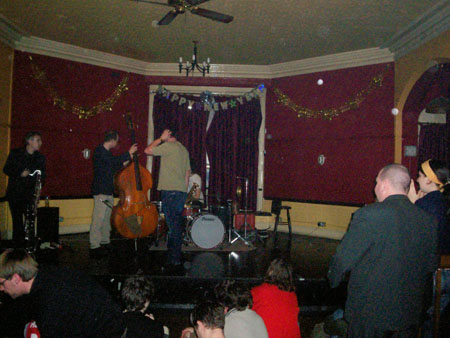
We arrived in the middle of the first set, unfortunately.. but it was a crowded house which augured well... Bruce Coates was taking an impassioned solo, backed by John Edwards' impeccable,imperious bass, soon to be joined by the other member of the trio, David Ryan... Difficult to get an exact take as obviously we had missed the previous ebb and flow – but it sounded good and full, on the surprisingly wide stage of the Rose of England in Nottingham – one of those familiar beat-up rooms we all know and love... Without amplification you take a few chances on your audience's ability not to talk too loudly and disrupt the music for others – by and large this gambit paid off...
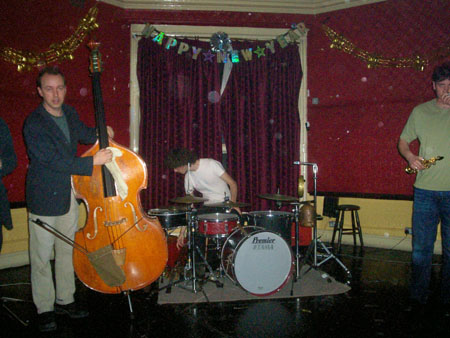
For the second set the trio were joined by local drum hero Patrick 'Patch' Farmer, on a larger kit than I have seen him use before. In the presence of three stalwarts of the Jazz/Improv scene, he was far from over-awed and took no prisoners, powering under and across – and over – the music as it unfolded. A wide variety of style and sound on display – it's obvious these guys have great conventional command of their instruments but also have a battery of 'extended techniques' (in the now time-honoured phrase) at their disposals... Edwards moves from semi-orthodox arco to bowing under the bridge, for example – or wetting his right hand fingers to vigorously rub the wood of his bass, producing high squeaky noises. Coates adopted a strange one-legged stance at times (eerily reminiscent of Ian Anderson fronting lumpy old rock band Jethro Tull – is he still around and ripping off Roland Kirk?)that enabled him to mute the bell of his saxophones against his leg for timbral variation. Given where I was standing, my sight line did not pick up David Ryan so clearly, but it seemed that he stuck to his horns' (relatively) more conventional soundworlds – at times the stage position perhaps did not favour him as well as the others with regard to volume – but he delivered some gorgeous clarinet in heartfelt outpourings and his bass clarinet ran deep in tandem with Edwards bass to provide a murkily oceanic sonic medium for Coates to fly high over on his alto and soprano. The quartet gave a stimulating performance, throughout which the attention of the audience was generally held by long, complex and beautiful improvisations... even some of the chatterers shut up after a while (or disappeared to the bar)– and, I suppose you have to be fair and consider what this music is like for the relatively uninitiated – because there was a good crowd, as I said above, which demonstrates the ability of the organisers to get their people out, some of whom may not be very familiar with these more arcane sound worlds. I wondered if the success of the gig was partly because of the visual aspect which is obviously not available on recordings of improvisations(video aside) – 'Patch' Farmer is a remarkable sight, for example, physically involving himself with his drums, rubbing, banging, ratcheting, scraping surfaces alongside his exemplary stick/mallet work - you could see what was going down and consequently be drawn in to the performance by curiosity (and an open mind) – a relentlessly physical process as much as it was driven by high intelligence – interlocking of the body, brain - and emotions. They travelled across a wide area of reference – from free jazz to the more abstract sonics/noise which one could term 'Post-Cagean' where the essentially linear melodic line is disrupted and splintered into different directions – but there were few seams showing. Fascinating to watch Patch respond to the various challenges thrown up... for example, one section where Edwards was relying on scratches and bumps from the surface of his bass to generate sound... Patch followed him effortlessly into this more 'pulseless' area and found complementary responses from his kit. This requires, of course, a percussional knowledge beyond even the usual unconventional drum strategies and the ability to respond in kind. Patch Farmer goes from strength to strength... Coates's flamboyant note-crammed solos contrasted well with the more understated Ryan who delivered elegant clarinet/bass clarinet work, all backed by the rather splendid bass of John Edwards - a muscularly virtuoso performance, especially given the strength needed to rip into those strings with the visceral attack he displayed – he must have fingers of steel... ... And all credit to KneeKnees and Good Name for a Racehorse in raising such a good audience... not an easy task as we at the Sporadic know! It looks like they are successfully bridging the noise rock and improv worlds – which increasingly overlap anyway.
I even bought a CD...
...and Olya said they were 'Funbizzle.'
Sunday, January 14, 2007
Alice Coltrane... Robert Anton Wilson...RIP...

Sad to hear of the death last friday of Alice Coltrane - a mere 69 years old. I was looking forward to seeing her in London in April... now, not to be... A hurried tribute – the title track from her 1970 album, 'Ptah, the El Daoud.'
And also discovered that Robert Anton Wilson has moved on ... keep the lasagne flying, Bob...
In the Videodrome...
Alice Coltrane with her son Ravi... A Love Supreme...
... Bob explains the Eye in the Triangle...
Alice Coltrane
(Alice Coltrane (p); Joe Henderson, Pharoah Sanders (ts); Ron Carter (b); Ben Riley (d) ).
Ptah the El Daoud
Download
Buy
Friday, January 12, 2007
Chico Hamilton... and Gerry Mulligan/Chet Baker...Tony Oxley... Albert Ayler... Red Norvo... Larry Young
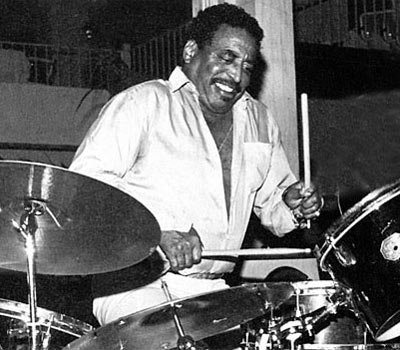
Less waffle than usual (sounds like an instruction to a short order chef) – I am going to Nottingham tonight to see this lot, so on the clock... Also – check out the new feature at the bottom of the left hand side of the page – an mp3 player which I am still tinkering with... at the moment only loaded with ten tracks, some of which have been featured here as recent downloads...
Chico Hamilton disbanded his quintet in 1961 and formed a new group where the trombone was brought in to replace the cello, giving a tougher edge to the sound. He retained the services of the young Charles Lloyd from his old band – and gave him more prominence as MD and composer/arranger of much of the new material. Here's 'One for Joan,' a loping swaggering piece, Lloyd showing his Coltrane influence, the trombonist contributing some fiery blowing. Szabo comes up and worries at a phrase in interesting fashion to start his solo. Fascinating change of direction at the time – from one of the more undersung jazz giants. This track dedicated to Mr Hamilton whose nomination by President Bush to the National Council on the Arts has now been confirmed by the Senate...
Gerry Mulligan recorded 'Moonlight in Vermont' with Chet Baker in 1953. Briefly introduced by the bass, it becomes a slow, mournfully reading of the rather beautiful standard..
'Saturnalia' is taken from Tony Oxley's album 'Four Compositions for Sextet,' 1970. A fascinating snapshot of where British free jazz was on the cusp of a new decade... Bailey especially had already found his voice, on this evidence...
Albert Ayler, playing 'Holy Holy' from his album, 'Witches and Devils.' Introduced by Murray's drums, Ayler launches himself straight in, pleading vocalised querulous and questing tone swathed in that oceanic vibrato, his style by 1964 pretty much fully formed. Speaking in tongues...
Noah Howard is impressive in adapting to the new language of freedom being forged...
Red Norvo was a quiet revolutionary in his own way... not just a piano-less but a drummerless trio here – with Red Mitchell, who took over from Charles Mingus in the bass chair and the great Tal Farlow. Mainly improvised stuff – apparently they took it as it came – flowing, light – and swinging...
Larry Young recorded 'Seven Steps to Heaven' as part of his 'Of Love and Peace' album in 1966. Considering the Miles Davis connection in the title, Eddie Gale seems hell-bent on proving he had his own voice – brash, fiery and storming stuff from the trumpeter (who is still around, I think...). Exhilarating...
In the Videodrome...
... 30 mins plus of Wolf Eyes...
... Lenny Bruce live...
Chico Hamilton
(Chico Hamilton (d); Charles Lloyd (ts); Garnett Brown (tb); Gabor Szabo (g); Albert Stinson (b) )
One for Joan
Download
Buy
Gerry Mulligan/Chet Baker
(Gerry Mulligan (bs); Chet Baker (tp); Carson Smith (b); Chico Hamilton (d) ).
Moonlight in Vermont
Download
Buy
Tony Oxley
(Evan Parker (t); Kenny Wheeler (tp); Paul Rutherford (tb); Derek Bailey (g); Jeff Clyne (b); Tony Oxley (d) ).
Saturnalia
Download
Buy
Albert Ayler
(Albert Ayler (ts); Noah Howard (tp); Earl Harrison (b) Sunny Murray (d) ).
Holy Holy
Download
Buy
Red Norvo Trio
(Red Norvo: (vb); Tal Farlow (g); Red Mitchell (b) ).
Lullaby of the leaves
Download
Buy
Larry Young
(Larry Young (og); James Spaulding (fl, as; Herbert Morgan (ts); Eddie Gale (tp); Jerry Thomas, Wilson Moorman III (d) ).
Seven steps to heaven
Download
Buy
Tuesday, January 09, 2007
Dizzy Gillespie... Derek Bailey... Andrew Hill... Gil Evans... Ahmad Jamal... John Zorn... Howling Wolf
Dizzy Gillespie came together with Machito, Mario Bauza and the composer/arranger Chico O' Farrill in 1975 to produce 'Afro-Cuban Moods.' Working off his career-long fascination and interaction with latin rhythms, 'Oro, Incienso y Mirra' is a long suite written by O' Farrill for the trumpet master. Starting on tightly muted bluesy figures, he progresses into open horn flourishes over a busy, bustling rhythm and stabbing orchestral sections. Electric bass and piano provide a dash of fusionish timbres – but more from Miles, perhaps, than the stagnant electro-jazz mainstream of the time. The slower sections have a touch of Gil Evans work with Miles in the voicings – but one remembers that O' Farrill has been around just as long if not longer, writing stirring and groundbreaking charts for the 1940's Gillespie big bands. An episodic, exciting piece... Diz lasts the pace well, demonstrating his considerable skills, fine-honed since before the birth of bop - of which he was one of the founding fathers. Yet: somehow I feel he is over-shadowed by the dark romance of Bird's tragically exotic life. Unfairly...
Some Derek Bailey, just a year after his untimely death... 'After Three Weeks' is taken from his late album 'Carpal Tunnel Syndrome' the title referring explicitly to his then-recently diagnosed hand problem:
'Though advised to undergo minor surgery on the right hand, he chose to acknowledge the inevitability of this degeneration and use the disability as an innovation. Unable to use a pick, he began to rehearse odd fingerings and strumming effects in order to recreate the pioneering atonal investigations he first developed in the late 1960s. Carpal Tunnel, a document of his progress over the span of three months, is therefore an anomaly in an anomalous career, evading technical precision in favor of alarmingly personal affect. ' (From the review here...).
Thus, a somewhat macabre yet honest document of one of his last journeys, artistically. The precision and savage strumming are gone, leaving a sometimes fumbling yet always fascinating exploration of a new finger-style technique. Some of the chordal/string cluster sections sound like they are played at half the speed of the old Bailey, a slowed-down echo of the past... sad yet oddly beautiful...
Andrew Hill recorded 'Bayou Red' as part of the sessions for his album 'Grass Roots,' released in 1968 More in the house style of Blue Note than much of his other work (that was characterised by the tensions between bop and freer strategies), a slow burner that nevertheless is more than just a hard bop blowing session. Ron Carter's bass and Waits's drums bounce the piece along with good solos from Ervin and Morgan – and the leader...
Another big band... Gil Evans leading his own ensemble from the mid-sixties... commencing on a delicate flute over slow strummed bass and plungingly deep orchestral timbres before the drums tick in with a slow bluesy 12/8 – Evans piano getting (surprisingly) low down and greasy. Expansive colourations as ever, those trademark low end tuba and french horn additions as the track bumps and grinds along...
Miles always championed him while most dismissed him – yet Ahmad Jamal is one of those musicians who have lasted the trip well. Here, he is caught live in Paris in 1992... starting off slowly and thoughtfully before becoming more expressive. Light and shade... and subtle swing... Apparently one of his favourite quotes is "Don't worry 'bout the mule goin' blind, just sit tight and hold the line..." (From his web site here...). Quite...
'Janohah' opens on walking bass and drums before the theme stated by the horns. The bass ostinato will continue throughout relentlessly. This is John Zorn from Masada's first album. Welding folk melody and Ornette-ish jazz to produce an intriguing mix – almost in the mainstream - but these musicians can turn on a penny and rip off outwards whenever inspired to so do. Douglas is outstanding especially, a class act... yet unfair to single one out of the four – they all play to their considerable strengths. (And Joey Baron is one of my favourite drummers...). And... the interplay between sax and trumpet is dazzling... the long whole given an overall shape by Cohen's rock-solid bass.
Back to the blues... the mighty Howling Wolf, with 'Moaning at Midnight.' Rough, raw... and beautiful...
In the Videodrome...
Diz in 1947...dig the fancy footwork...
... Masada live...
...and Electric Masada...
... Dave Douglas with his quintet...
Dizzy Gillespie/Machito
(Dizzy Gillespie (tp) Manny Duran, Raul Gonzalez Jr., Paul Gonzalez, Victor Paz (tp, flh) Jerry Chamberlain, Jack Jeffers, Lewis Kahn, Barry Morrow (tb) Don Corrado, Brooks Tillotson (frh) Bob Stewart (tu) Mauricio Smith (as, fl, picc) Mario Bauza (as, cl) Mario Rivera (ts, afl) Jose Madera Sr. (ts, cl) Leslie Yahonikan (bars, bcl) Machito (mar, clav, ldr) Jorge Dalto (el-p) Dana McCurdy (syn) Carlos Castillo (el-b) Mickey Roker (d) Julito Grillo, Raymond Hernandez (African d) Pepin Pepin (cga) Mario Grillo (bgo, cowbell) Jose Madera Jr. (tim) Chico O'Farrill (arr, cond) ).
Oro, Incienso y Mirra
Download
Buy
Derek Bailey
(Derek Bailey (eg) ).
After three weeks
Download
Buy
Andrew Hill
( Andrew Hill (p); Lee Morgan (tp); Booker Ervin (ts); Ron Carter (b); Freddie Watts (d) ).
Bayou Red
Download
Buy
Gil Evans
( Gil Evans (arranger, piano), Johnny Coles, Bernie Glow, Ernie Royal, Thad Jones (trumpet), Jimmy Cleveland, Tony Studd (trombone), Ray Alonge, Julius Watkins, Gil Cohen, Don Corado (French horn), Bill Barber (tuba), Eric Dolphy, Wayne Shorter, Al Block, Steve Lacy, Andy Fitzgerald, Jerome Richardson, Bob Tricarico (reeds, woodwinds), Bob Maxwell, Margaret Ross (harp), Harry Lookofsky (tenor violin), Kenny Burrell, Barry Galbraith (guitar), Ron Carter, Paul Chambers, Gary Peacock, Richard Davis, Ben Tucker (bass), Elvin Jones (drums) ).
Flute Song/Hotel Me
Download
Buy
Ahmad Jamal
( Ahmad Jamal (p); James Cammack (b); Todd Coolman (b); Gordon Lane, David Bowler (d) ).
Easy Living
Download
Buy
John Zorn
(John Zorn (as); Dave Douglas (tp); Greg Cohen (b); Joey Baron (d) ).
Janohah
Download
Buy
Howling Wolf
Moaning at Midnight
Download
Buy
Some Derek Bailey, just a year after his untimely death... 'After Three Weeks' is taken from his late album 'Carpal Tunnel Syndrome' the title referring explicitly to his then-recently diagnosed hand problem:
'Though advised to undergo minor surgery on the right hand, he chose to acknowledge the inevitability of this degeneration and use the disability as an innovation. Unable to use a pick, he began to rehearse odd fingerings and strumming effects in order to recreate the pioneering atonal investigations he first developed in the late 1960s. Carpal Tunnel, a document of his progress over the span of three months, is therefore an anomaly in an anomalous career, evading technical precision in favor of alarmingly personal affect. ' (From the review here...).
Thus, a somewhat macabre yet honest document of one of his last journeys, artistically. The precision and savage strumming are gone, leaving a sometimes fumbling yet always fascinating exploration of a new finger-style technique. Some of the chordal/string cluster sections sound like they are played at half the speed of the old Bailey, a slowed-down echo of the past... sad yet oddly beautiful...
Andrew Hill recorded 'Bayou Red' as part of the sessions for his album 'Grass Roots,' released in 1968 More in the house style of Blue Note than much of his other work (that was characterised by the tensions between bop and freer strategies), a slow burner that nevertheless is more than just a hard bop blowing session. Ron Carter's bass and Waits's drums bounce the piece along with good solos from Ervin and Morgan – and the leader...
Another big band... Gil Evans leading his own ensemble from the mid-sixties... commencing on a delicate flute over slow strummed bass and plungingly deep orchestral timbres before the drums tick in with a slow bluesy 12/8 – Evans piano getting (surprisingly) low down and greasy. Expansive colourations as ever, those trademark low end tuba and french horn additions as the track bumps and grinds along...
Miles always championed him while most dismissed him – yet Ahmad Jamal is one of those musicians who have lasted the trip well. Here, he is caught live in Paris in 1992... starting off slowly and thoughtfully before becoming more expressive. Light and shade... and subtle swing... Apparently one of his favourite quotes is "Don't worry 'bout the mule goin' blind, just sit tight and hold the line..." (From his web site here...). Quite...
'Janohah' opens on walking bass and drums before the theme stated by the horns. The bass ostinato will continue throughout relentlessly. This is John Zorn from Masada's first album. Welding folk melody and Ornette-ish jazz to produce an intriguing mix – almost in the mainstream - but these musicians can turn on a penny and rip off outwards whenever inspired to so do. Douglas is outstanding especially, a class act... yet unfair to single one out of the four – they all play to their considerable strengths. (And Joey Baron is one of my favourite drummers...). And... the interplay between sax and trumpet is dazzling... the long whole given an overall shape by Cohen's rock-solid bass.
Back to the blues... the mighty Howling Wolf, with 'Moaning at Midnight.' Rough, raw... and beautiful...
In the Videodrome...
Diz in 1947...dig the fancy footwork...
... Masada live...
...and Electric Masada...
... Dave Douglas with his quintet...
Dizzy Gillespie/Machito
(Dizzy Gillespie (tp) Manny Duran, Raul Gonzalez Jr., Paul Gonzalez, Victor Paz (tp, flh) Jerry Chamberlain, Jack Jeffers, Lewis Kahn, Barry Morrow (tb) Don Corrado, Brooks Tillotson (frh) Bob Stewart (tu) Mauricio Smith (as, fl, picc) Mario Bauza (as, cl) Mario Rivera (ts, afl) Jose Madera Sr. (ts, cl) Leslie Yahonikan (bars, bcl) Machito (mar, clav, ldr) Jorge Dalto (el-p) Dana McCurdy (syn) Carlos Castillo (el-b) Mickey Roker (d) Julito Grillo, Raymond Hernandez (African d) Pepin Pepin (cga) Mario Grillo (bgo, cowbell) Jose Madera Jr. (tim) Chico O'Farrill (arr, cond) ).
Oro, Incienso y Mirra
Download
Buy
Derek Bailey
(Derek Bailey (eg) ).
After three weeks
Download
Buy
Andrew Hill
( Andrew Hill (p); Lee Morgan (tp); Booker Ervin (ts); Ron Carter (b); Freddie Watts (d) ).
Bayou Red
Download
Buy
Gil Evans
( Gil Evans (arranger, piano), Johnny Coles, Bernie Glow, Ernie Royal, Thad Jones (trumpet), Jimmy Cleveland, Tony Studd (trombone), Ray Alonge, Julius Watkins, Gil Cohen, Don Corado (French horn), Bill Barber (tuba), Eric Dolphy, Wayne Shorter, Al Block, Steve Lacy, Andy Fitzgerald, Jerome Richardson, Bob Tricarico (reeds, woodwinds), Bob Maxwell, Margaret Ross (harp), Harry Lookofsky (tenor violin), Kenny Burrell, Barry Galbraith (guitar), Ron Carter, Paul Chambers, Gary Peacock, Richard Davis, Ben Tucker (bass), Elvin Jones (drums) ).
Flute Song/Hotel Me
Download
Buy
Ahmad Jamal
( Ahmad Jamal (p); James Cammack (b); Todd Coolman (b); Gordon Lane, David Bowler (d) ).
Easy Living
Download
Buy
John Zorn
(John Zorn (as); Dave Douglas (tp); Greg Cohen (b); Joey Baron (d) ).
Janohah
Download
Buy
Howling Wolf
Moaning at Midnight
Download
Buy
Monday, January 08, 2007
YouSendIt/SaveFile download problems... Monday 8 January 2007...
Just been checking a couple of things and it seems as if both YouSendIt and SaveFile are unavailable for downloads... not sure if this is just a temporary glitch but will monitor and switch downloads if necessary... apologies for any inconvenience...
Friday, January 05, 2007
Duke Ellington...Charles Mingus... Ornette Coleman... Stan Getz/Chet Baker... Bukka White... Marian Mc Partland... DJ Screw...
Duke Ellington recorded the 'Latin American Suite' in 1968. Here's 'The Sleeping Lady and the Giant who watches over.' Mainly an ensemble piece, based on a couple of riffs that get tossed around and across the orchestra... from such simple material Ellinton creates a late gem.
Charles Mingus from 1963 with a largish band playing 'Hora Decubitus.' A booting, fiery track that encapsulates much of the pleasures of this man's music – rooted in the tradition (Dukal as well as general) but bursting at the seams with ideas that ing point forward... visceral and smart...
Ornette Coleman – firstly, from the late fifties – 'Congeniality.' Which is one of Ornette's stop-start tunes that seem to shadow a dancing move in and out of bop. The pianoless quartet had of course been famously identified with Gerry Mulligan... here one feels that there is so much more freedom...
And even more... 'The Empty Foxhole' was the notorious album Ornette recorded with his son Denardo – who was ten at the time. Critical response was – to say the least – unfavourable, if not downright hostile. Ornette plays violin for the first time on record... this is 'Sound Gravitation'... Haden underpins with mighty arco – and I don't think that Denardo sounds too bad...
Piano-less groups... were the pianos on the West Coast that bad? Gerry Mulligan was the famous pre-cursor, of course, (before Ornette took up the ball and ran...) but his one-time musical partner Chet Baker is not a musician I have ever really listened to a great deal. My loss, some close aural encounters over the past week confirm he had much more to offer – even late on - than the junkie noir romance of the fatal arc that his life described. (Although – remember my encounter in Nantes – 'Chet Lives' is still going the rounds in certain circles). Here he is joined by Stan Getz (who apparently had little respect for him, especially later on in their several encounters: Stan apparently when he was using could hold his drugs better and still play brilliantly – well, according to Stan ... ). This is essentially the Mulligan quartet with Stan depping for the baritonist, in 1953 when Chet was still burning youthfully bright. In certain later tourneys, Stan ran all over him, apparently. Here – he more than holds his own... Getz solos first – fluent, bouncing across the solid rhythm of Carson Smith and Larry Bunker and the bar/chorus line divisions. Baker next – sprightly but with that special emotional vulnerability he brought to his take on 'cool' – out of Miles. Getz again then collective imrov to take it out...
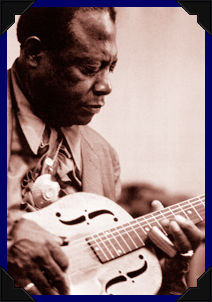
The freedoms of the country blues... 'Aberdeen Mississippi' by Bukka (Booker) White, vocals and National Steel guitar. String-snapping, bottleneck-sliding funky brilliance and that mournful, so sad voice... 'Play it good now'...
Something by Marian McPartland – a gorgeous and elegant reading of 'I've got a crush on you.' Marian has run her show on NPR for many years – and is still going strong. Timeless piano jazz.
I didn't get into the James Brown obituary scenario as I was away over Christmas... here's an oblique tribute... Miles Davis playing 'Funky Tonk' from those wild 'Live/Evil' sessions. Smouldering stuff...
And out... with another diagonal move... a DJ Screw track: 'Southside rolling on choppaz.' It's all related somewhere/somehow – slurred syncopated vocals bouncing off the beat... break out the Dr J Collis Brown... time seems to stretch... back to Bukka White and beyond maybe...
In the Videodrome...
Bukka/Booker White in the 1970s...
... and again... I love YouTube!
... Count Basie in Europe 1959...
... Charles Gayle blowing...
Duke Ellington
Cat Anderson, Willie Cook, Mercer Ellington (tp) Lawrence Brown, Chuck Connors, Buster Cooper (tb) Jimmy Hamilton (cl, ts) Johnny Hodges (as) Russell Procope (as, cl) Paul Gonsalves (ts) Harold Ashby (ts, cl) Harry Carney (bars, cl, bcl) Duke Ellington (p) Jeff Castleman (b) Rufus Jones (d) )
The Sleeping Lady and the Giant who watches over
Download
Buy
Charles Mingus
Eddie Preston, Richard Williams (tp) Britt Woodman (tb) Don Butterfield (tu) Dick Hafer (fl, cl, ts) Jerome Richardson (fl, ss, bars) Eric Dolphy (as, fl) Booker Ervin (ts) Jaki Byard (p) Charles Mingus (b) Walter Perkins (d)
Hora Decubitus
Download
Buy
Ornette Coleman
(Ornette Coleman (as); Don Cherry ( c ); Charlie Haden (b); Billy Higgins (d) ).
Congeniality
Download
Buy
Ornette Coleman
(Ornette Coleman (v); Charlie Haden (b); Denardo Coleman (d) ).
Sound Gravitation
Download
Buy
Stan Getz/Chet Baker
(Stan Getz (ts); Chet Baker (t); Carson Smith (b); Larry Bunker (d) ).
The way you look tonight
Download
Buy
Bukka White
(Bukka White (g) ).
Aberdeen Mississippi
Download
Buy
Marian McPartland
(Marian McPartland (p) ).
I've got a crush on you
Download
Buy
Miles Davis
(Miles Davis (t); Gary Bartz (ts); John McLoughlin (eg); Keith Jarrett (ep); Michael Henderson (b); Airto Moreira (perc); Jack De Johnette (d)).
Funky Tonk
Download
Buy
DJ Screw
Southside roll choppaz
Download
Buy
Sunday, December 31, 2006
Into the new... Gus Cannon... Steve Lacy... Von Schlippenbach quartet... Pharoah Sanders...

One has returned from the wilds... and the new year's eve festivities beckon... so: a brief holding action - four tracks that hopefully reflect the diversity this blog strives for... which I intend to try and broaden further in the New Year...
Gus Cannon recorded 'Minglewood Blues' in 1928 with his Jug Stompers. A raw yet curiously delicate track...
Steve Lacy and Don Cherry playing 'Let's Cool One' from the Monk canon - something very fresh about this track- Lacy in particular seems calm and unhurried...
Alexander Von Schlippenbach's quartet (with Evan Parker) - a long clattering extravaganza from one of the best and most consistent European combos... 'Wenn Wir Kehlkopfspieler,' recorded for a live radio broadcast in 1975, yet only released in 2000, I think...
This track - 'Venus - Upper and Lower Egypt' - is under Pharoah Sanders' name but was unissued as far as I know until it came out on the monster Albert Ayler Revenant 9 cd set (link below) - a long free jazz blowout from the sixties with Albert and Pharoah on tenors alongside an unknown alto and third tenor player... an interesting obscurity...
And... a happy new year to all... back soon...
In the Videodrome...
Eric Dolphy in Europe...
... and with Trane...
... the Coltrane Quartet – doing Afro Blue...
and a vid from Ecstatic Peace of a live performance from Paul Flaherty, Joe Lovano and Chris Corsano...
...and the future beckons... The Good Anna...
Gus Cannon
(Gus Cannon (j, ban); Ashley Thompson (g); Noah Lewis (h) ).
Minglewood Blues
Download
Buy
Steve Lacy/Don Cherry
(Steve Lacy (ss); Don Cherry (cnt); Carl Brown (b); Billy Higgins (d) ).
Let's Cool One
Download
Buy
Alexander Von Schlippenbach Quartet
(Alexander Von Schlippenbach (p); Evan Parker (ts); Peter Kowald (b); Paul Lovens (d)).
Wenn Wir Kehlkopfspieler
Download
Buy
Pharoah Sanders
(Pharoah Sanders (ts); Chris Capers (tp); unknown (as); Albert Ayler (ts); unknown (ts); Dave Burrell (p); Sirone (b); Roger Blank (d) ).
Venus-Upper and Lower Egypt
Download
Buy
Wednesday, December 20, 2006
Almost Xmas... Monk, Pete Johnson, Paul Bley, George Russell, Louis Armstrong, Pepper Adams, Brotherhood of Breath, Evan Parker, MJQ... phew!
A bit delayed on the posting front - an exhausting (but rewarding) recording session with the boys - followed by my usual health nose dive coupled with a tooth infection. What larks... All sorted now - hopefully. So: probably the last one before xmas... 'tis the season to be jolly...
Thelonious Monk recorded his first album for Columbia in 1962 (released in 1963). His composition 'Bright Mississippi,' based on 'Sweet Georgia Brown,' shows the harmonic bones underneath in the theme and in constant references throughout both Charlie Rouse's solo and Monk's - one of his best, I think – yet somehow remains a quintessential Thelonious theme. Moving on two levels interestingly...
Another pianist... the boogie woogie stomper, Pete Johnson, one of the Big Three, along with Meade Lux Lewis (what a great name...) and Gene Ammons' old man, Albert, here employing that mighty left hand on his solo tour de force – 'Roll 'Em Pete.' Interesting to speculate on the influence of boogie piano – surely the most rhythmic and 'drum like' of styles. Conlon Noncarrow, for one, acknowledged his debt to the genre... Cecil Taylor – via Monk – perhaps? Always something grounded and down about Cecil, no matter how abstract. (Jaki Byard, of course - but he could play the whole history from ragtime upwards...)
Paul Bley from the sixties and 'Closer.' Spare and dissonant, probing, against a suitably enigmatic bass and drums. Going into an emotional space some way from the previous two offerings – oddly the Monk nearer to Johnson, I feel, despite his own crashing dissonances that make the bridge back to Bley. Yet all jazz...
George Russell 1956 – the avant garde of the day in a dense and complex composition featuring Bill Evans 'Concerto for Billy the Kid' – shades of Copland in the title – the pianist launching strings of piercing single note lines that unpeel from the harmonic structure, displaying the inherent linearity of Russell's approach, Evans sounding as if the figure of Lennie Tristano is hovering at times. Hard hitting piano. Art Farmer taking a nice solo – an often underrated thinker who ventured down some interesting paths... A piece that ambitiously tries to bring composition and improvisation into balance... My own thought about these attempts to break the fifties perimeter fence is that the key was rhythm - when the drummers took it away from straight or even implied four four the space was opened... Elvin Jones, Tony Williams but ultimately Sunny Murray and the others were needed... after that everything drops into place...
Louis Armstrong recorded 'Wild Man Blues' in 1927 with his Hot Seven. Some debate as to whether this is a Jelly Roll Morton composition or one of Louis'... what is not in dispute is the majestically assured trumpet – taking the breaks in doubled time and hinting at rhythmic complexities way beyond the backing musicians. Louis is all over this – although Johnny Dodds runs him close...
Pepper Adams was a mighty baritone player who could ride the unwieldy horn dashingly through the bop landscape and beyond. This is 'Bloos Booze' – a twelve bar that starts with Elvin Jone's cymbals, an odd, lurching tramp of a bass figure and Hank Jones trinkly treble figures before the odd yet matched front line of baritone and euphonium take the theme. Adams solos, leisurely spinning a satisfyingly melodic improvisation – he regarded Wardell Gray as an influence which is telling. Bernard McKinney has a warm, rubbery sound on the euphonium, plenty of space here for his relaxed solo. Hank Jones tips in some classy single note bebop – mainly up the keyboard. Duvivier weighs in for a couple of choruses, eloquent across the bass range. Melody central and swinging all the way through. A gem...
The first of the two long tracks is a kind of homage to my South African roots that demonstrates both the best of that country's artistic endeavours and the shadow that apartheid threw over so many of its citizens. Chris McGregor and the Blue Notes – white pianist amid black band members – came to Europe in the sixties to escape the hassles back home that an interracial group had to undergo. They were an invigorating breath of sweet and fiery fresh air – mutating into the Brotherhood of Breath indeed, incorporating like-minded European musicians such Skidmore, Surman, Osborne (who had a wild trio called SOS as I remember...) and the others on tap here. 'Night Poem' offers so much as it unfolds – beginning with flutes and African slanted rhythms that offer a hint of what 'world music' was to become – or rather what it could be – as the piece slowly builds into a sprawling, surging triumph of the spirit...
Evan Parker played with the Brotherhood of Breath on some notable sessions. Here he is, the quiet revolutionary, unpacking his ground-breaking long line solo saxophone playing on a track from 'The Snake Decides,' 'Leipzig' Folly.' There is a rigour to his playing, an iron integrity that makes his technical innovations the more satisfying... Is this jazz? To quote one of the current catch-phrases doing the rounds, 'Am I bothered?'
Finally – as promised/threatened last week... but it has to be done... the MJQ playing 'First variation on God rest you merry gentlemen.' My only overtly Xmas track. The Modern Jazz Quartet always have a special place in my heart because they were the first live group I ever saw as a wide-eyed young jazz fanatic way back when at the De Montfort Hall in Leicester, in the days when the stupid Brit MU embargo made visiting Americans so much rarer an entity. I still love this track...
So: Merry Xmas to all... I'm off to the wilds of Cumbria in a couple of days... to return invigorated with another batch of musics and a New Year's Eve mix - next year we may start to stretch out more...
In the Videodrome...
A Xmas feast...
A rare 1954 glimpse of the cool school in action... complete with mellophone... sans Tristano... add Billy Taylor...
... MJQ strike gold...
...Oliver Nelson, Art Farmer and Lee Konitz (again) are 'Just Friends'...
... an oblique link via the cool school to Brit altoist Bruce Turner...
... back to FREE JAZZ... compendium clip... some cool hats and Bill Dixon in a scarf...
... and wheeling back to 1962... finale of the American Folk Blues Festival...
... Stan Getz and Mary Lou Williams doing 'Lush Life'...
... this time of the year we all need Spiritual Unity don't we? A nice reminder of a great gig that I never got round to reviewing... thanks Chris...
Thelonious Monk
(Thelonious Monk (p); Charlie Rouse (ts); John Ore (b); Frankie Dunlop (d) ).
Bright Mississippi
Download
Buy
Pete Johnson
(Pete Johnson (p) ).
Roll 'em Pete
Download
Buy
Paul Bley
(Paul Bley (p) Steve Swallow (b) Barry Altschul (d) ).
Closer
Download
Buy
George Russell
( Art Farmer (tp) Hal McKusick (fl, as) Bill Evans (p) Barry Galbraith (g) Milt Hinton (b) Paul Motian (d) ).
Concerto for Billy The Kid
Download
Buy
Louis Armstrong
(Louis Armstrong (cnt); John Thomas (tb); Johnny Dodds (cl); Lil Armstrong (p); Johnny St. Cyr ( bjo); Pete Briggs (tu); Baby Dodds (d) ).
Wild Man Blues
Download
Buy
Pepper Adams
(Pepper Adams (bs); Bernard McKinney (euph); Hank Jones (p); George Duvivier (b); Elvin Jones (d) ).
Bloos Booz
Download
Buy
Brotherhood of Breath
(Chris McGregor: piano; Dudu Pukwana, Alan Skidmore, Mike Osborne, John Surman, Ronnie Beer (saxes/flutes etc); (Mongezi Feza, Nich Charig, Harry Beckett (t); Malcolm Griffiths, Nick Evans (tr); Harrie Miller (b); Louis Moholo (d) ).
Night Poem
Download
Buy
Evan Parker
(Evan Parker (ss).
Download
Leipzig's Folly
Buy
Modern Jazz Quartet
(John Lewis (p); Milt Jackson (vb); Percy Heath (b) Connie Kay (d) ).
Variation on God rest ye merry gentlemen
Download
Buy
Thelonious Monk recorded his first album for Columbia in 1962 (released in 1963). His composition 'Bright Mississippi,' based on 'Sweet Georgia Brown,' shows the harmonic bones underneath in the theme and in constant references throughout both Charlie Rouse's solo and Monk's - one of his best, I think – yet somehow remains a quintessential Thelonious theme. Moving on two levels interestingly...
Another pianist... the boogie woogie stomper, Pete Johnson, one of the Big Three, along with Meade Lux Lewis (what a great name...) and Gene Ammons' old man, Albert, here employing that mighty left hand on his solo tour de force – 'Roll 'Em Pete.' Interesting to speculate on the influence of boogie piano – surely the most rhythmic and 'drum like' of styles. Conlon Noncarrow, for one, acknowledged his debt to the genre... Cecil Taylor – via Monk – perhaps? Always something grounded and down about Cecil, no matter how abstract. (Jaki Byard, of course - but he could play the whole history from ragtime upwards...)
Paul Bley from the sixties and 'Closer.' Spare and dissonant, probing, against a suitably enigmatic bass and drums. Going into an emotional space some way from the previous two offerings – oddly the Monk nearer to Johnson, I feel, despite his own crashing dissonances that make the bridge back to Bley. Yet all jazz...
George Russell 1956 – the avant garde of the day in a dense and complex composition featuring Bill Evans 'Concerto for Billy the Kid' – shades of Copland in the title – the pianist launching strings of piercing single note lines that unpeel from the harmonic structure, displaying the inherent linearity of Russell's approach, Evans sounding as if the figure of Lennie Tristano is hovering at times. Hard hitting piano. Art Farmer taking a nice solo – an often underrated thinker who ventured down some interesting paths... A piece that ambitiously tries to bring composition and improvisation into balance... My own thought about these attempts to break the fifties perimeter fence is that the key was rhythm - when the drummers took it away from straight or even implied four four the space was opened... Elvin Jones, Tony Williams but ultimately Sunny Murray and the others were needed... after that everything drops into place...
Louis Armstrong recorded 'Wild Man Blues' in 1927 with his Hot Seven. Some debate as to whether this is a Jelly Roll Morton composition or one of Louis'... what is not in dispute is the majestically assured trumpet – taking the breaks in doubled time and hinting at rhythmic complexities way beyond the backing musicians. Louis is all over this – although Johnny Dodds runs him close...
Pepper Adams was a mighty baritone player who could ride the unwieldy horn dashingly through the bop landscape and beyond. This is 'Bloos Booze' – a twelve bar that starts with Elvin Jone's cymbals, an odd, lurching tramp of a bass figure and Hank Jones trinkly treble figures before the odd yet matched front line of baritone and euphonium take the theme. Adams solos, leisurely spinning a satisfyingly melodic improvisation – he regarded Wardell Gray as an influence which is telling. Bernard McKinney has a warm, rubbery sound on the euphonium, plenty of space here for his relaxed solo. Hank Jones tips in some classy single note bebop – mainly up the keyboard. Duvivier weighs in for a couple of choruses, eloquent across the bass range. Melody central and swinging all the way through. A gem...
The first of the two long tracks is a kind of homage to my South African roots that demonstrates both the best of that country's artistic endeavours and the shadow that apartheid threw over so many of its citizens. Chris McGregor and the Blue Notes – white pianist amid black band members – came to Europe in the sixties to escape the hassles back home that an interracial group had to undergo. They were an invigorating breath of sweet and fiery fresh air – mutating into the Brotherhood of Breath indeed, incorporating like-minded European musicians such Skidmore, Surman, Osborne (who had a wild trio called SOS as I remember...) and the others on tap here. 'Night Poem' offers so much as it unfolds – beginning with flutes and African slanted rhythms that offer a hint of what 'world music' was to become – or rather what it could be – as the piece slowly builds into a sprawling, surging triumph of the spirit...
Evan Parker played with the Brotherhood of Breath on some notable sessions. Here he is, the quiet revolutionary, unpacking his ground-breaking long line solo saxophone playing on a track from 'The Snake Decides,' 'Leipzig' Folly.' There is a rigour to his playing, an iron integrity that makes his technical innovations the more satisfying... Is this jazz? To quote one of the current catch-phrases doing the rounds, 'Am I bothered?'
Finally – as promised/threatened last week... but it has to be done... the MJQ playing 'First variation on God rest you merry gentlemen.' My only overtly Xmas track. The Modern Jazz Quartet always have a special place in my heart because they were the first live group I ever saw as a wide-eyed young jazz fanatic way back when at the De Montfort Hall in Leicester, in the days when the stupid Brit MU embargo made visiting Americans so much rarer an entity. I still love this track...
So: Merry Xmas to all... I'm off to the wilds of Cumbria in a couple of days... to return invigorated with another batch of musics and a New Year's Eve mix - next year we may start to stretch out more...
In the Videodrome...
A Xmas feast...
A rare 1954 glimpse of the cool school in action... complete with mellophone... sans Tristano... add Billy Taylor...
... MJQ strike gold...
...Oliver Nelson, Art Farmer and Lee Konitz (again) are 'Just Friends'...
... an oblique link via the cool school to Brit altoist Bruce Turner...
... back to FREE JAZZ... compendium clip... some cool hats and Bill Dixon in a scarf...
... and wheeling back to 1962... finale of the American Folk Blues Festival...
... Stan Getz and Mary Lou Williams doing 'Lush Life'...
... this time of the year we all need Spiritual Unity don't we? A nice reminder of a great gig that I never got round to reviewing... thanks Chris...
Thelonious Monk
(Thelonious Monk (p); Charlie Rouse (ts); John Ore (b); Frankie Dunlop (d) ).
Bright Mississippi
Download
Buy
Pete Johnson
(Pete Johnson (p) ).
Roll 'em Pete
Download
Buy
Paul Bley
(Paul Bley (p) Steve Swallow (b) Barry Altschul (d) ).
Closer
Download
Buy
George Russell
( Art Farmer (tp) Hal McKusick (fl, as) Bill Evans (p) Barry Galbraith (g) Milt Hinton (b) Paul Motian (d) ).
Concerto for Billy The Kid
Download
Buy
Louis Armstrong
(Louis Armstrong (cnt); John Thomas (tb); Johnny Dodds (cl); Lil Armstrong (p); Johnny St. Cyr ( bjo); Pete Briggs (tu); Baby Dodds (d) ).
Wild Man Blues
Download
Buy
Pepper Adams
(Pepper Adams (bs); Bernard McKinney (euph); Hank Jones (p); George Duvivier (b); Elvin Jones (d) ).
Bloos Booz
Download
Buy
Brotherhood of Breath
(Chris McGregor: piano; Dudu Pukwana, Alan Skidmore, Mike Osborne, John Surman, Ronnie Beer (saxes/flutes etc); (Mongezi Feza, Nich Charig, Harry Beckett (t); Malcolm Griffiths, Nick Evans (tr); Harrie Miller (b); Louis Moholo (d) ).
Night Poem
Download
Buy
Evan Parker
(Evan Parker (ss).
Download
Leipzig's Folly
Buy
Modern Jazz Quartet
(John Lewis (p); Milt Jackson (vb); Percy Heath (b) Connie Kay (d) ).
Variation on God rest ye merry gentlemen
Download
Buy
Saturday, December 16, 2006
Cecil Taylor... Bill Evans/Warne Marsh/Lee Konitz...Eddie Condon... Roland Kirk... Miles Davis...
I am always fascinated by the variety that 'jazz' has offered throughout its relatively short history... and I am not being coy by inserting the word between inverted commas... the area that the word tries to map has always been fought over...
Cecil Taylor recorded 'Bulbs' in 1961 as one of the tracks on one side of an album released under Gil Evans' name: 'Into the Hot.' (The other side was taken up with compositions by Johnny Carisi,the composer of 'Israel'). Transitional stuff... Lyons solos – bebop stretched to fluidly accommodate the new freedoms - and Archie Shepp does a manful job – but the track is made by the thumping piano of the leader over the dream rhythm section of Henry Grimes and Sunny Murray. 'Bulbs' is a fascinating composition – abstract lines rubbing against riffs – like the leader's solo which starts with a fairly conventional phrase and then hops skips and jumps into other dimensions. A mirror of the transitional state...
Bill Evans recorded with Lee Konitz and Warne Marsh in 1977. (There was a previous encounter in 1959). 'Night and Day' opens with the two horns weaving round each other in an airy dance. Marsh frequently plays high up the tenor so the timbres are closely matched – then Evans springs in with bass and drums – some almost Tatumesque flourishes and variations on the tune. Marsh takes a stop time break then solos in that unpredictable line of his. This is linearity supreme, Tristano school – unravelling the changes horizontally. Marsh was one of the unsung greats. As is Konitz – whom I missed a few weeks back at the London Jazz Festival. He solos next – with more muscle than one would usually expect – Evans getting quite animated behind him, sounding like he was having fun. Some breaks and everyone briefly all in – Marsh finally dropping deep for the final tenor note. Stirring stuff...
'Can one of you guys start the blues in C?' Eddie Condon commences this live track from 1971 – late Chicago Dixieland, his hybrid style carried through from the twenties and developed by the force of his will as much as anything. Condon, a banjo player and later guitarist was never a featured intrumentalist, preferring to strum in the rhythm section - and perhaps more to the point, make his mark as a bandleader and fixer of sessions – including some of the first integrated ones with Louis Armstrong and Fats Waller. And a nightclub proprietor – and character... a pre-modern Ronnie Scott... (His book, 'We Called it Music' is worth a read...). I've always liked his music, something about the anarchic boozy spirit of it... Condon famously dissed bebop – 'They flat their fifths, we drink ours...' But plenty of beboppers dissed the coming avant garde... and so it goes... Hi Wynton... Here, we have consummate trad/mainstream jazz – Wellstood and Davern could, I reckon, fit into most jazz paradigms. Krupa sounds the most unsure, his drums a bit clumping. A slow, drawling blues – led by Wild Bill's trumpet and Davern's homage-y but not blatantly servile out-of-Bechet soprano. In their own way, an irreverent and joyful keeping to the trad virtues – sort of Marsalis with humour...
Getting near to Xmas – better dust off that MJQ track for the looming carol season. For now, Roland Kirk blasting his way through 'We Free Kings.' Ho ho ho – the man for whom the adjective 'inimitable' always suggests itself inexorably... Powering in on all his horns, mutant and otherwise – including some funky flute.
To finish with – a big beast of a track – reverse the name and what do you get – Davis = Sivad. Miles turned the jazz world on its head with 'Bitches Brew' – this is a live (mainly – Teo Macero chopped and mixed in the studio later) set recorded at the Cellar Door in 1970. Starting off on a declaratory drum roll and going into a fast-paced bass-heavy vamp as Miles whah whahs over the rock (in both senses) solid Michael Henderson and Jack De Johnette lay down, the track mutates into a slow, ominous bluesy groove. McLoughlin plays a nifty solo – his guitar tone sounding almost synth-like. The English guitar player always participated in The Prince of Darkness's musics as if to the manner borne... Followed by Keith Jarrett in the days before he renounced the electric piano as the keyboard of the devil or something similar (Get thee behind me, fusion). Miles returns with an open horn stab and a couple of skewed phrases before building up some longer lines – and the track dies abruptly. In the longer and slower section, interesting to note how much space there is in the rhythm – which gives the drummer room to state the beat and also play across it – jazz-rock-fusion unfortunately, in the main, never successfully managed this combination – of jazz and rock....
In the Videodrome...
Eddie Condon on YouTube...
Sidney Bechet over in France in the 1950's playing the St Louis Blues...
Roland Kirk in Europe playing 'Bag's Groove'...
Cecil Taylor
Cecil Taylor (p) Jimmy Lyons (as) Archie Shepp (ts) Ted Curson (t) Roswell Rudd (tb) Henry Grimes (b) Sunny Murray (d)
Bulbs
Download
Buy
Bill Evans/Lee Konitz/Warner Marsh
Lee Konitz (as) Warne Marsh (ts) Bill Evans (p) Eddie Gomez (b) Eliot Zigmund (d)
Download
Buy
Eddie Condon
Kenny Davern (ss); Wild Bill Davison (cnt); Dick Wellstood (p); Eddie Condon (g); Gene Krupa (d).
Blues in C
Download
Buy
Roland Kirk
Roland Kirk (ts, mzo, str, fl, siren); Hank Jones (p); Wendell Marshall (b); Charlie Persip (d)
We Free Kings
Download
Buy
Miles Davis
Miles Davis (t); Gary Bartz (ts); John McLoughlin (eg); Keith Jarrett (ep); Michael Henderson (b); Airto Moreira (perc); Jack De Johnette (d)
Sivad
Download
Buy
Cecil Taylor recorded 'Bulbs' in 1961 as one of the tracks on one side of an album released under Gil Evans' name: 'Into the Hot.' (The other side was taken up with compositions by Johnny Carisi,the composer of 'Israel'). Transitional stuff... Lyons solos – bebop stretched to fluidly accommodate the new freedoms - and Archie Shepp does a manful job – but the track is made by the thumping piano of the leader over the dream rhythm section of Henry Grimes and Sunny Murray. 'Bulbs' is a fascinating composition – abstract lines rubbing against riffs – like the leader's solo which starts with a fairly conventional phrase and then hops skips and jumps into other dimensions. A mirror of the transitional state...
Bill Evans recorded with Lee Konitz and Warne Marsh in 1977. (There was a previous encounter in 1959). 'Night and Day' opens with the two horns weaving round each other in an airy dance. Marsh frequently plays high up the tenor so the timbres are closely matched – then Evans springs in with bass and drums – some almost Tatumesque flourishes and variations on the tune. Marsh takes a stop time break then solos in that unpredictable line of his. This is linearity supreme, Tristano school – unravelling the changes horizontally. Marsh was one of the unsung greats. As is Konitz – whom I missed a few weeks back at the London Jazz Festival. He solos next – with more muscle than one would usually expect – Evans getting quite animated behind him, sounding like he was having fun. Some breaks and everyone briefly all in – Marsh finally dropping deep for the final tenor note. Stirring stuff...
'Can one of you guys start the blues in C?' Eddie Condon commences this live track from 1971 – late Chicago Dixieland, his hybrid style carried through from the twenties and developed by the force of his will as much as anything. Condon, a banjo player and later guitarist was never a featured intrumentalist, preferring to strum in the rhythm section - and perhaps more to the point, make his mark as a bandleader and fixer of sessions – including some of the first integrated ones with Louis Armstrong and Fats Waller. And a nightclub proprietor – and character... a pre-modern Ronnie Scott... (His book, 'We Called it Music' is worth a read...). I've always liked his music, something about the anarchic boozy spirit of it... Condon famously dissed bebop – 'They flat their fifths, we drink ours...' But plenty of beboppers dissed the coming avant garde... and so it goes... Hi Wynton... Here, we have consummate trad/mainstream jazz – Wellstood and Davern could, I reckon, fit into most jazz paradigms. Krupa sounds the most unsure, his drums a bit clumping. A slow, drawling blues – led by Wild Bill's trumpet and Davern's homage-y but not blatantly servile out-of-Bechet soprano. In their own way, an irreverent and joyful keeping to the trad virtues – sort of Marsalis with humour...
Getting near to Xmas – better dust off that MJQ track for the looming carol season. For now, Roland Kirk blasting his way through 'We Free Kings.' Ho ho ho – the man for whom the adjective 'inimitable' always suggests itself inexorably... Powering in on all his horns, mutant and otherwise – including some funky flute.
To finish with – a big beast of a track – reverse the name and what do you get – Davis = Sivad. Miles turned the jazz world on its head with 'Bitches Brew' – this is a live (mainly – Teo Macero chopped and mixed in the studio later) set recorded at the Cellar Door in 1970. Starting off on a declaratory drum roll and going into a fast-paced bass-heavy vamp as Miles whah whahs over the rock (in both senses) solid Michael Henderson and Jack De Johnette lay down, the track mutates into a slow, ominous bluesy groove. McLoughlin plays a nifty solo – his guitar tone sounding almost synth-like. The English guitar player always participated in The Prince of Darkness's musics as if to the manner borne... Followed by Keith Jarrett in the days before he renounced the electric piano as the keyboard of the devil or something similar (Get thee behind me, fusion). Miles returns with an open horn stab and a couple of skewed phrases before building up some longer lines – and the track dies abruptly. In the longer and slower section, interesting to note how much space there is in the rhythm – which gives the drummer room to state the beat and also play across it – jazz-rock-fusion unfortunately, in the main, never successfully managed this combination – of jazz and rock....
In the Videodrome...
Eddie Condon on YouTube...
Sidney Bechet over in France in the 1950's playing the St Louis Blues...
Roland Kirk in Europe playing 'Bag's Groove'...
Cecil Taylor
Cecil Taylor (p) Jimmy Lyons (as) Archie Shepp (ts) Ted Curson (t) Roswell Rudd (tb) Henry Grimes (b) Sunny Murray (d)
Bulbs
Download
Buy
Bill Evans/Lee Konitz/Warner Marsh
Lee Konitz (as) Warne Marsh (ts) Bill Evans (p) Eddie Gomez (b) Eliot Zigmund (d)
Download
Buy
Eddie Condon
Kenny Davern (ss); Wild Bill Davison (cnt); Dick Wellstood (p); Eddie Condon (g); Gene Krupa (d).
Blues in C
Download
Buy
Roland Kirk
Roland Kirk (ts, mzo, str, fl, siren); Hank Jones (p); Wendell Marshall (b); Charlie Persip (d)
We Free Kings
Download
Buy
Miles Davis
Miles Davis (t); Gary Bartz (ts); John McLoughlin (eg); Keith Jarrett (ep); Michael Henderson (b); Airto Moreira (perc); Jack De Johnette (d)
Sivad
Download
Buy
Thursday, December 14, 2006
A small tribute to Jay McShann 1916-2006... with Maria Muldaur, Charlie Parker, Big Joe Turner... and Dave Brubeck...

A few tracks to note the passing of Jay McShann. Leading off with 'Backwater Blues,' the old Bessie Smith number, here interpreted by Maria Muldaur whose mature voice makes the stretch from classic twenties blues to the almost present. A rocking rolling blues with some pithy guitar work by Duke Robichaux, backing horns and plunger muted trumpet that move between r and b and jazz inflections/riffs – and the bouncing piano of Mr McShann – who leads the track in with a spoken intro...
McShann ran probably the last great swing band out of Kansas City at the tail end of the thirties. He also employed the young Charlie Parker whose first recorded solo was on 'Hootie Blues' - which you can find on the There Stands The Glass blog's tribute to McShann, along with some other tracks... Here's 'Sepian Bounce,' from the same period - on the cusp of bebop... stomping McShann piano, some nice tenor and a fascinating glimpse of young Charlie P – and a roaring ensemble...
Big Joe Turner was a Kansas City musical giant (literally) and another whose career crossed many a boundary (for example, he was arguably one of the founders of rock and roll via some of his early fifties hits). Here he is in tandem with McShann on 'Piney Brown Blues.' The pianist essays some powerful choruses, driven on by the exhortations of Big Joe. Recorded in 1974...
Lastly – an oddity. A piano duo with Dave Brubeck on another twelve bar – 'Mission Ranch Blues.'
Recorded in 2002 as part of the Clint Eastwood movie 'Piano Blues.'
“I think he served as a bridge between swing and bebop,” said saxophonist Bobby Watson. “He was open to young people coming with new ideas that weren’t traditionally thought of as swing. He was really a man with an open mind to all styles of music.” (Quoted from the Kansas City Star obituary here... some nice links to video footage as well).
A long and epic journey that has sadly just ended...
In the Videodrome...
I couldn't find any YouTube footage – surprisingly – so here's some other KC related music...
Big Joe Turner at the Apollo, 1955...
Another KC man – the Count from 1943...
And the inimitable Jimmy Rushing alongside Basie singing the 'Kansas City Blues'...
Jay McShann/Maria Muldaur/Duke Robichaux
Backwater Blues
Download
Buy
Jay McShann
Sepian Bounce
Download
Buy
Jay McShann/Big Joe Turner
Piney Brown Blues
Download
Buy
Jay McShann/Dave Brubeck
Mission Ranch Blues
Download
Buy
Wednesday, December 13, 2006
Jay McShann January 12, 1916 - December 7, 2006...RIP...

I've received a comment to an older post which says that Jay McShann has died - I just checked his web site and apparently he passed away on December 7. A truly great man,whose life spanned the breadth of the music and who was still recording recently - condolences to family and friends. I'll see if I can dig out some music in tribute later on...
Friday, December 08, 2006
and some Miles Davis... Bitches Brew...
Infuriating - having taken the Miles Davis link off the previous post - Savefile now apparently operational again... So here goes...
Addendum...
Miles – a truly vanguard piece: the title track of 'Bitches Brew.' Shared honours between Teo Macero's skills - a landmark of studio production techniques:
'Bitches Brew also pioneered the application of the studio as a musical instrument, featuring stacks of edits and studio effects that were an integral part of the music. Even though it sounded like an old-style studio registration of a bunch of guys playing some amazing stuff, large sections of it relied heavily on studio technology to create a fantasy that never was...' (from here... scroll down)
and the revolutionary dark swirling electric jazz into rock – and back - that flowed from the leader's imagination...
Miles Davis
(Miles Davis – trumpet;Wayne Shorter - soprano sax; Bennie Maupin - bass clarinet; Chick Corea - electric piano; John McLaughlin - electric guitar; Harvey Brooks - Fender bass; Dave Holland - bass
Lenny White, Jack DeJohnette – drums; Jim Riley – percussion).
Bitches Brew
Download
Buy
Addendum...
Miles – a truly vanguard piece: the title track of 'Bitches Brew.' Shared honours between Teo Macero's skills - a landmark of studio production techniques:
'Bitches Brew also pioneered the application of the studio as a musical instrument, featuring stacks of edits and studio effects that were an integral part of the music. Even though it sounded like an old-style studio registration of a bunch of guys playing some amazing stuff, large sections of it relied heavily on studio technology to create a fantasy that never was...' (from here... scroll down)
and the revolutionary dark swirling electric jazz into rock – and back - that flowed from the leader's imagination...
Miles Davis
(Miles Davis – trumpet;Wayne Shorter - soprano sax; Bennie Maupin - bass clarinet; Chick Corea - electric piano; John McLaughlin - electric guitar; Harvey Brooks - Fender bass; Dave Holland - bass
Lenny White, Jack DeJohnette – drums; Jim Riley – percussion).
Bitches Brew
Download
Buy
Stan Getz, Wardell Gray, Serge Chaloff... Clifford Brown/Max Roach... George Russell... John Zorn/Derek Bailey/William Parker...
Let's start with some forties bebop: Stan Getz in 1949 playing 'Crazy Chords.' A tour de force for Stan, changing key every chorus in a bravura display, ushered in by the speedy elegance of Haig. Gatz extends the school of Lester into his own technically flamboyant space – dexterity - melodic and harmonic - and gorgeous tone to match...
Wardell Gray – another from the jazz Legion of the Lost, dying under mysterious circumstances in 1955. Here he is playing 'Twisted,' (also later made famous in the Annie Ross version). An odd latin-y intro – then straight into the blues. Gray also came out of Lester (via Bird) but by 1949 when these tracks were recorded he was firmly his own man, tone slightly darker than Prez, a tough yet supple quality to his lines. Backed by Charlie Parker's rhythm section – Al Haig delivers classic, rippling bebop piano. Tommy Potter – a nice bass solo, going beyond the usual steady four to the bar before Wardell returns – Haynes dropping obligatory but apposite bombs.
Serge Chaloff was one of the top bop baritone players (the best according to many), heading up against Gerry Mulligan. Another tragic character – after giving up the addiction that blighted his life, he died from cancer in 1957. This live recording from 1949 of the Denzil Best tune 'Move' (more famous, perhaps, in its rendition by the Miles Davis Birth of the Cool band a year before) is taken at a fast run. The fiery trumpet is apparently – Miles himself... which made me check the discography. Some critics would have it that he couldn't play as well as this and at this tempo... Chaloff solos and puts the big horn smoothly through its bebop paces. Sonny Stitt powers in for some fast Bird-type blowing yet – you can hear his tone is slightly different to Parker's, despite the lurking presence – Stitt always under the shadow of the master – unfairly... Combative... Trombone - Benny Green, having no problems keeping up... Bud Powell positively clambers in for his solo – dazzling, stomping stuff. Max takes a quick spot before a brief exchange between the horns and back into the theme...
Into the fifties... one can never have too much Clifford Brown... He was a trumpeter who possessed in abundance: ideas, tone, fire, driven by the (joy) spring of youth... sadly dying in a car crash... for those in peril on the road should be the hymn for musicians... here he is, in 1956, a few months before his fatal accident, with Max Roach and their co-led quintet, Rollins newly added to the tenor seat and Richie Powell, Bud's brother (who died with Brownie in the crash) on piano, plus George Borrow on bass... An alternate take of 'What is this thing called love?' Starting on an odd trumpet flutter (shades of later Bill Dixon!) then drums as the bass and piano hold a pedal point under trumpet and tenor, building the groove before Brown goes fleetly into the theme, answered by Rollins in the middle eight, trumpet returns for last eight then: Brownie out of the trap and going strong – joyous playing, he never seems content to run changes, always a strong melodic thread. Rollins seems almost diffident in comparison initially before building his own strong solo... Powell – swift and clean single note lines with a bluesy edge. Borrow, solid throughout, takes a four to the bar solo. Max back in the mix but making his presence felt. Brief ensemble, bass, drums and return of ensemble – then Max, a pithily complex solo, return of horns, playing tag. Definitive of where small band bop was at the time... stretching out more because of new recording techniques, some of the frenetic compressed fury of the older records removed in place of new spaces to breath...
George Russell was in the shadows for many years before he was finally and belatedly recognised for his compositional and arranging abilities – but also for his behind-the-scenes influence on the direction of jazz as bebop moved towards the linearities of modality. He reminds me of another august survivor, Andrew Hill, in that they both constructed strategies that enable their musicians to move outside while keeping the roots inside. This is the title track from his 1961 album 'Ezz-thetics.' Hearing it again makes me think of many of those soon to come Blue Note sessions that incorporated new ideas within a solid rhythmic framework. The theme – like a complex bebop line stretched out into another dimension, based on the chords of 'Love for Sale.' Baker solos, fast and firm – giving a few quotes in time-honoured bop fashion – 'I love Paris' and 'Bebop.' The trumpet of Don Ellis, bright and sharp... another whose star sank into obscurity after his untimely death. Then Eric Dolphy, who really seems to grasp what this is about – fast, urgent and skittering against the harmonic boundaries in long, flowing lines. A round of fours between horns and drums and piano... fragment of theme into a collapsing ending of seemingly free blowing... almost a harbinger...
Moving swifly on, as they say... jumpcut to 1995. John Zorn, Derek Bailey on electric guitar and William Parker, from a live set at the Knitting Factory. Free improvisation... interestingly, Parker's bass gives more of an overt 'jazz' feel than is usual for Bailey, coupled to the sax lines of Zorn. Bailey is fairly restrained at first, then as they collectively hot up, he starts dropping flinty shards of guitar and those inimitably crabby fast strummed runs as Parker goes deep and Zorn flies across the top with corrugated buzzing and textural noise– horn and guitar timbrally matched sporadically. This is one of the places the music went to... the wilder side of free improv...
I was intending to put up 'Bitches Brew,' but Savefile seems to have problems - I will try to repost it later...
Stan Getz
(Stan Getz: tenor saxophone; Al Haig: piano; Gene Ramey: bass; Stan Levey: drums).
Crazy Chords
Download
Buy
Wardell Gray
(Wardell Gray: tenor saxophone; Al Haig: piano; Tommy Potter: bass; Roy Haynes: drums).
Twisted
Download
Buy
(Miles Davis: trumpet; Bennie Green: trombone; Sonny Stitt: alto saxophone; Serge Chaloff: baritone saxophone; Bud Powell: piano; Curly Russell: bass; Max Roach: Max Roach: drums).
Move
Download
Buy
Clifford Brown/Max Roach
(Clifford Brown: trumpet; Sonny Rollins: tenor saxophone; Richie Powell: piano: George Morrow: bass: Max Roach: drums).
What is this thing called love? (Alternate take)
Download
Buy
George Russell
(George Russell: piano; Eric Dolphy: alto saxophone; Dave Baker: trombone; Don Ellis: trumpet; Steve Swallow: bass; Joe Hunt: drums).
Download
Ezz-thetic
Buy
John Zorn/Derek Bailey/William Parker
(John Zorn: alto saxophone; Derek Bailey: electric guitar; William Parker: bass).
Morning Harras
Download
Buy
Wardell Gray – another from the jazz Legion of the Lost, dying under mysterious circumstances in 1955. Here he is playing 'Twisted,' (also later made famous in the Annie Ross version). An odd latin-y intro – then straight into the blues. Gray also came out of Lester (via Bird) but by 1949 when these tracks were recorded he was firmly his own man, tone slightly darker than Prez, a tough yet supple quality to his lines. Backed by Charlie Parker's rhythm section – Al Haig delivers classic, rippling bebop piano. Tommy Potter – a nice bass solo, going beyond the usual steady four to the bar before Wardell returns – Haynes dropping obligatory but apposite bombs.
Serge Chaloff was one of the top bop baritone players (the best according to many), heading up against Gerry Mulligan. Another tragic character – after giving up the addiction that blighted his life, he died from cancer in 1957. This live recording from 1949 of the Denzil Best tune 'Move' (more famous, perhaps, in its rendition by the Miles Davis Birth of the Cool band a year before) is taken at a fast run. The fiery trumpet is apparently – Miles himself... which made me check the discography. Some critics would have it that he couldn't play as well as this and at this tempo... Chaloff solos and puts the big horn smoothly through its bebop paces. Sonny Stitt powers in for some fast Bird-type blowing yet – you can hear his tone is slightly different to Parker's, despite the lurking presence – Stitt always under the shadow of the master – unfairly... Combative... Trombone - Benny Green, having no problems keeping up... Bud Powell positively clambers in for his solo – dazzling, stomping stuff. Max takes a quick spot before a brief exchange between the horns and back into the theme...
Into the fifties... one can never have too much Clifford Brown... He was a trumpeter who possessed in abundance: ideas, tone, fire, driven by the (joy) spring of youth... sadly dying in a car crash... for those in peril on the road should be the hymn for musicians... here he is, in 1956, a few months before his fatal accident, with Max Roach and their co-led quintet, Rollins newly added to the tenor seat and Richie Powell, Bud's brother (who died with Brownie in the crash) on piano, plus George Borrow on bass... An alternate take of 'What is this thing called love?' Starting on an odd trumpet flutter (shades of later Bill Dixon!) then drums as the bass and piano hold a pedal point under trumpet and tenor, building the groove before Brown goes fleetly into the theme, answered by Rollins in the middle eight, trumpet returns for last eight then: Brownie out of the trap and going strong – joyous playing, he never seems content to run changes, always a strong melodic thread. Rollins seems almost diffident in comparison initially before building his own strong solo... Powell – swift and clean single note lines with a bluesy edge. Borrow, solid throughout, takes a four to the bar solo. Max back in the mix but making his presence felt. Brief ensemble, bass, drums and return of ensemble – then Max, a pithily complex solo, return of horns, playing tag. Definitive of where small band bop was at the time... stretching out more because of new recording techniques, some of the frenetic compressed fury of the older records removed in place of new spaces to breath...
George Russell was in the shadows for many years before he was finally and belatedly recognised for his compositional and arranging abilities – but also for his behind-the-scenes influence on the direction of jazz as bebop moved towards the linearities of modality. He reminds me of another august survivor, Andrew Hill, in that they both constructed strategies that enable their musicians to move outside while keeping the roots inside. This is the title track from his 1961 album 'Ezz-thetics.' Hearing it again makes me think of many of those soon to come Blue Note sessions that incorporated new ideas within a solid rhythmic framework. The theme – like a complex bebop line stretched out into another dimension, based on the chords of 'Love for Sale.' Baker solos, fast and firm – giving a few quotes in time-honoured bop fashion – 'I love Paris' and 'Bebop.' The trumpet of Don Ellis, bright and sharp... another whose star sank into obscurity after his untimely death. Then Eric Dolphy, who really seems to grasp what this is about – fast, urgent and skittering against the harmonic boundaries in long, flowing lines. A round of fours between horns and drums and piano... fragment of theme into a collapsing ending of seemingly free blowing... almost a harbinger...
Moving swifly on, as they say... jumpcut to 1995. John Zorn, Derek Bailey on electric guitar and William Parker, from a live set at the Knitting Factory. Free improvisation... interestingly, Parker's bass gives more of an overt 'jazz' feel than is usual for Bailey, coupled to the sax lines of Zorn. Bailey is fairly restrained at first, then as they collectively hot up, he starts dropping flinty shards of guitar and those inimitably crabby fast strummed runs as Parker goes deep and Zorn flies across the top with corrugated buzzing and textural noise– horn and guitar timbrally matched sporadically. This is one of the places the music went to... the wilder side of free improv...
I was intending to put up 'Bitches Brew,' but Savefile seems to have problems - I will try to repost it later...
Stan Getz
(Stan Getz: tenor saxophone; Al Haig: piano; Gene Ramey: bass; Stan Levey: drums).
Crazy Chords
Download
Buy
Wardell Gray
(Wardell Gray: tenor saxophone; Al Haig: piano; Tommy Potter: bass; Roy Haynes: drums).
Twisted
Download
Buy
(Miles Davis: trumpet; Bennie Green: trombone; Sonny Stitt: alto saxophone; Serge Chaloff: baritone saxophone; Bud Powell: piano; Curly Russell: bass; Max Roach: Max Roach: drums).
Move
Download
Buy
Clifford Brown/Max Roach
(Clifford Brown: trumpet; Sonny Rollins: tenor saxophone; Richie Powell: piano: George Morrow: bass: Max Roach: drums).
What is this thing called love? (Alternate take)
Download
Buy
George Russell
(George Russell: piano; Eric Dolphy: alto saxophone; Dave Baker: trombone; Don Ellis: trumpet; Steve Swallow: bass; Joe Hunt: drums).
Download
Ezz-thetic
Buy
John Zorn/Derek Bailey/William Parker
(John Zorn: alto saxophone; Derek Bailey: electric guitar; William Parker: bass).
Morning Harras
Download
Buy
Subscribe to:
Posts (Atom)

