I am offline at the moment as my laptop is being repaired and, as is always the way, this is taking slightly longer than planned. So this comes from the local cyber cafe... As I am unable to post any music for another day or so, here is a reminder of some of the extant links... reminder... these are all over 20 mb files and are on Savefile - the majority of mp3s are only up for a week. These long files will be deleted over the coming weeks - so grab them while you can...
Hopefully back ASAP...
Charles Mingus: Cumbia and Jazz Fusion
Roland Kirk: Saxophone Concerto
Cecil Taylor: Serdab
Charlie Parker: What is this thing called love?
Borbetomagus: Side A
Ornette Coleman: Comme Il Faut
Peter Brotzmann: Responsible (First Take)
Tuesday, November 28, 2006


Tuesday, November 21, 2006
St Cecilia's Day tomorrow... Gene Ammons/ Sonny Stitt... Jimmy Smith... Gillespie/Getz/Stitt... Mingus... Coltrane... and more Mingus... today...
Back to the music... last week was an intestinal nightmare which left me totally bolloxed... but I made it to the Club Sporadic gig on Saturday, which, on a freezing cold night, lifted my spirits. Guest band Ego Unit played an intriguing set and we came together and did what we do. Waiting to get the playback to hear whether it was actually as good as it felt at the time...
As my cd drive is buggered and I can't get it fixed until Friday I'm limited to what I can upload for a few days and can't convert any tracks into MP3 either for the same reason – so whatever comes up will be stuff on my hard drive or MP3 player... apparently, tomorrow is St Cecilia's Day, the patron saint of music... for reasons that I have missed/avoided/whatever, it has been declared that today, the 21st, is 'No Music Day'... so, perverse to the end, here's a stack of jazz and assorted musics... we all celebrate in our own ways and this is mine. Happy listening... (This is one of Bill Drummond's gags, anyway...)
So: let's do 'The Shuffle Twist.' Some greasy back beat blues from Gene Ammons, Brother Jack Mc Duff and Sonny Stitt. Does exactly what you think it will do – but does it so well. Ammons has a bearhug of a tone on tenor... Stitt, always unfairly underrated... Brother Jack testifies...
More Hammond, upping the tempo – the redoubtable Jimmy Smith heading up a session of hard blowers on the old Bird classic 'Au Privave.' Smith bubbles up into the first solo, a couple of his trademark funky riffs in there, but, in the main, more linear work, invoking the shade of the composer. A couple of shattering rolls from Blakey, just to spur him on... Lee Morgan, fleet of line. Lou Donaldson, wanders a bit but heart in the right place. Tina Brooks good on tenor... Kenny Burrell always steady and bluesy...
'Dark Eyes' from a session recorded by three early giants of modern jazz, Gillespie, Getz and Stitt (again). The album title flags it up – 'For Musicians Only.' Defiantly elitist... Where bop started, shutting out those who could not negotiate the changes, tempos and rhythms. 1956 was the year after Charlie Parker died and this marks a high watermark, maybe, a summation of all that had gone before. Classy, high octane blowing... Stan Getz off first, belying his 'cool' image – fiery stuff. Followed by Stitt, equally firing strongly - but Diz pips them all, I think. Easy to forget sometimes how good he really was... rapid-fire lines and the odd vocalised smear from the back end of the trumpet timbral history just to remind you where it all came from. A brief solo from John Lewis to remind us that he was there as well before Diz takes it out over the two weaving saxes.
'Ysabel's Table Dance.' The 'Spanish Tinge' with a vengeance... Mingus's 'spontaneous overflow of powerful feelings from emotions recollected,'(from here... scroll down...) no doubt, (but probably not in tranquility) stemming from a trip south of the border, this track supposedly evoking a striptease. Starting with Frankie Dunlop's maraccas, according to the discography, female yips and handclaps from Ysabel Morel and a flamenco-like progression, etched out by bowed bass, the track slowly builds into a wild ride. For a smallish band, they make a lot of noise... Moving in sections like much of Mingus's music – one of his solutions to composing in longer forms - doing the postmodern thang before John Zorn? - Shafi Hadi goes to a straighter jazz interlude in relief to the preceding chaos. Things calm down... An ensemble passage leading back into flamenco and the wildness returns before the bass walks it down steady. Tension and release, tension and release. This was recorded in 1957 but shelved for several years. One wonders at the way history may have been changed if it had come out earlier, pre-figuring much of what was to come... Consider: the preceding Diz/Getz/Stitt track was recorded a year earlier – yet this is conceptually a long way from High Bebop... Arriba...
John Coltrane recorded this version of 'Summertime' in 1960 on the first album his epochal quartet made, 'My Favourite Things.' Taken faster than is usual for this tune, a perfect summation of where he was artistically at that moment – the sheets of sound wrapped so tightly that one can now see/hear why he had to explode beyond into new spaces. A perfect snapshot... the tenor playing is immense, overpowering in its grandeur... but I'm a fan. Tyner plays a superb solo, still sure of his ground at this part of the game, followed by Steve Davis – fleet and melodic - and Elvin, soloing over Davis's bass accompaniment before Coltrane returns for another quick blast. A superb track... St Cecilia will dig this...
Late Mingus, 1977: Cumbia and Jazz Fusion, part one... opening on bird-song and flutes over a sparse drum off-beat and chanting... Mingus meets the rain forest? Percussion: latin meets african – the global music thing... until a strong bass vamp appears... instrument call and response over the simple tune, switching textures and sections... finally the band come powering in, odd echoes of Diz and his Afro-Cuban thing? Throaty tenor solo...A third of the way in, the tempo slows, rhapsodic piano from Bob Neloms, swirling across the keyboard, then a waggish trombone heralds an oddly corny bass vamp – muted trumpets and trombones converse, the rhythm building relentlessly like a train, the horns slowing again half-time – another tempo shift – the drums and percussion have it and ride for a while. Orchestra returns – then Mingus sings: 'Who says momma's little baby likes shortning bread... momma's little baby likes... caviar... diamond mines...Freedom!!' You get the idea... Mingus comes up for a solo, as the band tread water - lines that range across the whole range of the bass, a late laying down of markers, sadly... return of band... then Knepper solos, his usual gruff fluency, followed by piano again, this time more single line in the pocket... ensemble, then the bass weaving in and out to a fade...
A superbly wacky track, really...
In the Videodrome...
Coltrane in 1963...
Some Mingus...
Ornette dances with your head...
Gene Ammons/Sonny Stitt/Jack McDuff
(Gene Ammons, Sonny Stitt (ts) Brother Jack McDuff (org) Charlie Persip (d)).
Download
Shuffle Twist
Buy
Jimmy Smith
(Lee Morgan (tp) Lou Donaldson (as) Tina Brooks (ts) Jimmy Smith (org) Kenny Burrell (g) Art Blakey (d)).
Download
Au Privave
Buy
Dizzy Gillespie/Sonny Stitt/Stan Getz
(Dizzy Gillespie (trumpet); Stan Getz (tenor saxophone); Sonny Stitt (alto saxophone); John Lewis (piano); Herb Ellis (guitar); Ray Brown (bass); Stan Levey (drums)).
Download
Dark Eyes
Buy
John Coltrane
(John Coltrane: tenor saxophone; McCoy Tyner: piano; Steve Davis: bass; Elvin Jones: drums).
Download
Summertime
Buy
Charles Mingus
(Charles Mingus: bass; Clarence Shaw: trumpet; Shafi Hadi: alto saxophone; Jimmy Knepper: trombone; Bill Triglia: piano: Danny Richmond: drums; Frankie Dunlop: castanets; Ysabel Morel: vocals, handclaps).
Download
Ysabel's Table Dance
Buy
Charles Mingus
(Jack Walrath (tp) Jimmy Knepper (tb, btb) Mauricio Smith (fl, picc, ss, as) Paul Jeffrey (ob, ts) Gene Scholtes (basn) Gary Anderson (cbcl, bcl) Ricky Ford (ts) Bob Neloms (p) Charles Mingus (b, South American rhythm inst., vo, arr) Dannie Richmond (d) Candido, Daniel Gonzales, Ray Mantilla, Alfredo Ramirez (cga) Bradley Cunningham, Ricky Ford, Jack Walrath (South American rhythm inst.)
Download
Cumbia and Jazz Fusion
Buy
As my cd drive is buggered and I can't get it fixed until Friday I'm limited to what I can upload for a few days and can't convert any tracks into MP3 either for the same reason – so whatever comes up will be stuff on my hard drive or MP3 player... apparently, tomorrow is St Cecilia's Day, the patron saint of music... for reasons that I have missed/avoided/whatever, it has been declared that today, the 21st, is 'No Music Day'... so, perverse to the end, here's a stack of jazz and assorted musics... we all celebrate in our own ways and this is mine. Happy listening... (This is one of Bill Drummond's gags, anyway...)
So: let's do 'The Shuffle Twist.' Some greasy back beat blues from Gene Ammons, Brother Jack Mc Duff and Sonny Stitt. Does exactly what you think it will do – but does it so well. Ammons has a bearhug of a tone on tenor... Stitt, always unfairly underrated... Brother Jack testifies...
More Hammond, upping the tempo – the redoubtable Jimmy Smith heading up a session of hard blowers on the old Bird classic 'Au Privave.' Smith bubbles up into the first solo, a couple of his trademark funky riffs in there, but, in the main, more linear work, invoking the shade of the composer. A couple of shattering rolls from Blakey, just to spur him on... Lee Morgan, fleet of line. Lou Donaldson, wanders a bit but heart in the right place. Tina Brooks good on tenor... Kenny Burrell always steady and bluesy...
'Dark Eyes' from a session recorded by three early giants of modern jazz, Gillespie, Getz and Stitt (again). The album title flags it up – 'For Musicians Only.' Defiantly elitist... Where bop started, shutting out those who could not negotiate the changes, tempos and rhythms. 1956 was the year after Charlie Parker died and this marks a high watermark, maybe, a summation of all that had gone before. Classy, high octane blowing... Stan Getz off first, belying his 'cool' image – fiery stuff. Followed by Stitt, equally firing strongly - but Diz pips them all, I think. Easy to forget sometimes how good he really was... rapid-fire lines and the odd vocalised smear from the back end of the trumpet timbral history just to remind you where it all came from. A brief solo from John Lewis to remind us that he was there as well before Diz takes it out over the two weaving saxes.
'Ysabel's Table Dance.' The 'Spanish Tinge' with a vengeance... Mingus's 'spontaneous overflow of powerful feelings from emotions recollected,'(from here... scroll down...) no doubt, (but probably not in tranquility) stemming from a trip south of the border, this track supposedly evoking a striptease. Starting with Frankie Dunlop's maraccas, according to the discography, female yips and handclaps from Ysabel Morel and a flamenco-like progression, etched out by bowed bass, the track slowly builds into a wild ride. For a smallish band, they make a lot of noise... Moving in sections like much of Mingus's music – one of his solutions to composing in longer forms - doing the postmodern thang before John Zorn? - Shafi Hadi goes to a straighter jazz interlude in relief to the preceding chaos. Things calm down... An ensemble passage leading back into flamenco and the wildness returns before the bass walks it down steady. Tension and release, tension and release. This was recorded in 1957 but shelved for several years. One wonders at the way history may have been changed if it had come out earlier, pre-figuring much of what was to come... Consider: the preceding Diz/Getz/Stitt track was recorded a year earlier – yet this is conceptually a long way from High Bebop... Arriba...
John Coltrane recorded this version of 'Summertime' in 1960 on the first album his epochal quartet made, 'My Favourite Things.' Taken faster than is usual for this tune, a perfect summation of where he was artistically at that moment – the sheets of sound wrapped so tightly that one can now see/hear why he had to explode beyond into new spaces. A perfect snapshot... the tenor playing is immense, overpowering in its grandeur... but I'm a fan. Tyner plays a superb solo, still sure of his ground at this part of the game, followed by Steve Davis – fleet and melodic - and Elvin, soloing over Davis's bass accompaniment before Coltrane returns for another quick blast. A superb track... St Cecilia will dig this...
Late Mingus, 1977: Cumbia and Jazz Fusion, part one... opening on bird-song and flutes over a sparse drum off-beat and chanting... Mingus meets the rain forest? Percussion: latin meets african – the global music thing... until a strong bass vamp appears... instrument call and response over the simple tune, switching textures and sections... finally the band come powering in, odd echoes of Diz and his Afro-Cuban thing? Throaty tenor solo...A third of the way in, the tempo slows, rhapsodic piano from Bob Neloms, swirling across the keyboard, then a waggish trombone heralds an oddly corny bass vamp – muted trumpets and trombones converse, the rhythm building relentlessly like a train, the horns slowing again half-time – another tempo shift – the drums and percussion have it and ride for a while. Orchestra returns – then Mingus sings: 'Who says momma's little baby likes shortning bread... momma's little baby likes... caviar... diamond mines...Freedom!!' You get the idea... Mingus comes up for a solo, as the band tread water - lines that range across the whole range of the bass, a late laying down of markers, sadly... return of band... then Knepper solos, his usual gruff fluency, followed by piano again, this time more single line in the pocket... ensemble, then the bass weaving in and out to a fade...
A superbly wacky track, really...
In the Videodrome...
Coltrane in 1963...
Some Mingus...
Ornette dances with your head...
Gene Ammons/Sonny Stitt/Jack McDuff
(Gene Ammons, Sonny Stitt (ts) Brother Jack McDuff (org) Charlie Persip (d)).
Download
Shuffle Twist
Buy
Jimmy Smith
(Lee Morgan (tp) Lou Donaldson (as) Tina Brooks (ts) Jimmy Smith (org) Kenny Burrell (g) Art Blakey (d)).
Download
Au Privave
Buy
Dizzy Gillespie/Sonny Stitt/Stan Getz
(Dizzy Gillespie (trumpet); Stan Getz (tenor saxophone); Sonny Stitt (alto saxophone); John Lewis (piano); Herb Ellis (guitar); Ray Brown (bass); Stan Levey (drums)).
Download
Dark Eyes
Buy
John Coltrane
(John Coltrane: tenor saxophone; McCoy Tyner: piano; Steve Davis: bass; Elvin Jones: drums).
Download
Summertime
Buy
Charles Mingus
(Charles Mingus: bass; Clarence Shaw: trumpet; Shafi Hadi: alto saxophone; Jimmy Knepper: trombone; Bill Triglia: piano: Danny Richmond: drums; Frankie Dunlop: castanets; Ysabel Morel: vocals, handclaps).
Download
Ysabel's Table Dance
Buy
Charles Mingus
(Jack Walrath (tp) Jimmy Knepper (tb, btb) Mauricio Smith (fl, picc, ss, as) Paul Jeffrey (ob, ts) Gene Scholtes (basn) Gary Anderson (cbcl, bcl) Ricky Ford (ts) Bob Neloms (p) Charles Mingus (b, South American rhythm inst., vo, arr) Dannie Richmond (d) Candido, Daniel Gonzales, Ray Mantilla, Alfredo Ramirez (cga) Bradley Cunningham, Ricky Ford, Jack Walrath (South American rhythm inst.)
Download
Cumbia and Jazz Fusion
Buy
Monday, November 20, 2006
The Mike Westbrook Village Band at the Queen Elisabeth Hall, Friday, 10 November... a review...
This first night free gig in the Front Room at the Queen Elisabeth Hall on the first night of the 2006 London Jazz Festival had brought out the crowd... when I got there in what I had falsely assumed was plenty of time to grab a beer and a good seat, I realised that plan A was out the window... all the best seats had gone. So I acquired a drink and found a reasonable vantage point to lean on, at a diagonal on the sight-line from the stage. Luckily I am long-sighted... I could see the band OK and hear most of the music fine – apart from some conflicting sounds from the coffee machine forward left of me – an interesting degree of aleatoric noise which started to became irritating eventually. Mercifully the coffee drinkers were keeping their consumption down tonight. Hooray for alcohol... Also, when Kate Westbrook took vocals, I couldn't make out the words too well... but... on y va...
Mike Westbrook: One of the great composer/bandleaders, he has worked with a bewildering diversity of lineups and projects down the years. On an intersecting synchronicity, the book I had been reading on the train was Iain Sinclair's new work on John Clare, 'Edge of the Orison.' Which caused me to remember the Westbrook album 'The Cortege' and my two favourite tracks - the stunning version of Clare's 'Toper's Rant.' And the New Orleans march on the same set – 'Free as a bird.' Between those two poles – of the poet of rural England and the roots of early jazz – taking in the European influences of art song and cabaret, doubling back into the English music hall and the complex soundworlds of contemporary jazz... there you will maybe find this concert situated. Which sounds portentous – but the performance certainly was not, done with a firm but light touch. The Village Band essayed two suites – 'All that jazz' which was a celebration of jazz composition and song from Joplin to Monk, via Jelly Roll Morton, Charles Mingus, Duke Ellington, Tadd Dameron and Bessie Smith and 'The Waxeywork Show' – an original work from the Westbrooks melding Kate's lyrics to Mike's setting, making a comparison between a Victorian fairground and the present day internet. These were split up, situating the 'Waxeywork' in the middle of the set, book-ended by the homage to jazz...
The Village Band lineup is: tenor horn, euphonium, trumpet, trombone, alto and tenor saxophones. They started with (I think) Morton's 'Dead Man Blues.' A warm deep sound – the euphonium and tenor horn giving a generous sonority and depth. No rhythm section – which allows a certain freedom to float these pieces on – albeit within certain necessary idiomatic constraints of tempo and rhythmic nuance. This makes it easier for the older pieces to work effectively – it avoids the polar risks of being too clumpy or too polyrhythmic. A clever selection – 'Goodbye Pork Pie Hat' leading into Charles Mingus's 'Jelly Roll Soul,' that affectionate homage to the (arguably) first great jazz composer – a doubling back which signifies the movement here in acoustic space to clear a temporary ground where these pieces can exist, the old against the new. I actually preferred this version - never having liked the Mingus original, too clumsy I always felt, despite the genuine feeling. It can be awkward to play in older idioms – if you have a wide palette of instrumental techniques available as most modern musicians obviously do, how far can you bend the older form before it breaks and the precarious balance is detroyed? The Mingus recording always comes across to me as hokum because it seems to my heretic ear that no one is exactly sure of what to play... The soloists in these pieces managed to negotiate their way through by playing well within themselves – and avoiding pastiche. (No slap-tonguing saxes...) Also, a more general point: certain jazz timbres will cut across the stylistic divides, so the more vocalised trumpet and trombone effects, for example, can work at a point where the avant-garde/contemporary concern with sound links with some older jazz techniques.
The audience was responding well and with much obvious affection... at various points I was waiting for someone to start jiving, given the age of many in the crowd... traditional jazz is embedded deep in the UK popular cultural heritage. Memories of older purist wars poked amusingly through as I had the impish yet nostalgic thought that it would be hilarious if someone suddenly unfurled a banner with 'Go home dirty bebopper' (scroll down for hilarious story) emblazoned on it when one of the saxes took a solo...
The new work being premiered was 'The Waxeywork Show.' Embedded in the middle so that the second section of 'All that jazz' took the gig out. An interesting progression – rather than a straight line, a steady circling outwards and back which seems to be the spatial metaphor that describes this performance best – into the more modern and astringent textures of 'Waxeyworks,' the knowing theatricality and ventriloquism of Kate Westbrook being featured now... the Art/Cabaret Song up front... music sharpening, becoming harmonically denser, rhythmically more complex, the soloing freer, unleashed from the constraints of more traditional jazz. Dissonance more explicit now... and seesawing rhythms to match the visions of the Victorian fairground? Missing most of the lyrics, as already mentioned, I just responded to the sound, which included a beautiful long, written section – although I caught this line: 'Welcome to the show that never ends, that leads you on and on...' This comparison between the 19th century fairground and the contemporary internet sounds intriguing. And also operates as reinforcing the linkage with of past and present, which seems to be the theme of the night... I also caught a reference to that late Victorian A-Lister Jack the Ripper... Always something contemporary about Jack, the spurious romanticising of the serial killer... Kate Westbrook uses her wide-ranging vocal technique to conjure up different characters, at one point evoking the meta-babble of the Net in channelling conversational American voices against the splendidly sonorous backdrop of her husband's orchestration. I hope to hear this work again so I can get a clearer grasp of its wider message...
Maybe the economics of the business dictate small ensembles – I love to hear the really BIG band sounds of Westbrook – but this can also facilitate much cunning and invention. An old jazz pastime – writing for a band to make it seem bigger than its parts... so, into the last third...
... 'All that jazz' redux... more looping through jazz time – going from Tadd Dameron's 'If you could see me now' sung in more conventional jazz style now by Kate to her roaring version of an old Bessie Smith blues via Monk – a superb version of 'Monk's Mood' which could almost have been written for this lineup (with a faint echo perhaps of 'Abide with me' scored for horns only on 'Monk's Music' – that would have been an interesting hymnal segue), Duke Ellington, of course, going out on the stately gait of Scott Joplin. Where much of the music came from originally...
Last thoughts – a great gig. An ensemble evening, but all the solists acquitted themselves well and within the spirit of their material. This was warm music, warmly received by the crowd. 'All that Jazz' referenced the wide spectrum from ragtime to Monk - but intelligently – this wasn't some trad/mainstream 'Tribute to ...' warhorse... the new work was firmly in the long-established Westbrook tradition of going out beyond jazz to bring in elements of variety/music hall and European art/cabaret song spiced with political astringencies – featuring Kate Westbrook's lyrics and her unique voice, not always loved by all, an acquired taste, perhaps (which I acquired a long time back) that has a range encompassing early classic blues to the concert hall and beyond via the jazz vocal mainstream. Just good fun for the opening night? Much more, I think... The Village Band conceit is subtle – using a rural English metaphor and the brass band sound to give American jazz a local setting without compromising the performance via misplaced pastiche and placing old favourites into a new orientation. Both strange and familiar at the same time and a process that is possibly more experimental than it seems on the surface... playing games with time to displace the linear in favour of the loop and the circle? I had another attack of whimsy later on, when an image of some West Coutry summer fete came into mind complete with bandstand and Westbrooks riffing away as the Morris dancers got it on and some retainer coming to the bandstand for a request: 'Squire presents his compliments, Mr W, and asks if you know any Ornette Coleman?' 'No problem, Mr Hudson – “Lonely Woman” in B flat, lads, easy on the harmolodics, Squire's good lady is a bit delicate... one two three...'
But it's getting late... Enough...
The lineup of the Village Band:
Mike Brewer - trumpet
Kate Westbrook - tenor horn/vocals
Sam Smith - trombone
Mike Westbrook - euphonium
Stan Willis - alto saxophone
Gary Bayley - tenor saxophone
Mike Westbrook: One of the great composer/bandleaders, he has worked with a bewildering diversity of lineups and projects down the years. On an intersecting synchronicity, the book I had been reading on the train was Iain Sinclair's new work on John Clare, 'Edge of the Orison.' Which caused me to remember the Westbrook album 'The Cortege' and my two favourite tracks - the stunning version of Clare's 'Toper's Rant.' And the New Orleans march on the same set – 'Free as a bird.' Between those two poles – of the poet of rural England and the roots of early jazz – taking in the European influences of art song and cabaret, doubling back into the English music hall and the complex soundworlds of contemporary jazz... there you will maybe find this concert situated. Which sounds portentous – but the performance certainly was not, done with a firm but light touch. The Village Band essayed two suites – 'All that jazz' which was a celebration of jazz composition and song from Joplin to Monk, via Jelly Roll Morton, Charles Mingus, Duke Ellington, Tadd Dameron and Bessie Smith and 'The Waxeywork Show' – an original work from the Westbrooks melding Kate's lyrics to Mike's setting, making a comparison between a Victorian fairground and the present day internet. These were split up, situating the 'Waxeywork' in the middle of the set, book-ended by the homage to jazz...
The Village Band lineup is: tenor horn, euphonium, trumpet, trombone, alto and tenor saxophones. They started with (I think) Morton's 'Dead Man Blues.' A warm deep sound – the euphonium and tenor horn giving a generous sonority and depth. No rhythm section – which allows a certain freedom to float these pieces on – albeit within certain necessary idiomatic constraints of tempo and rhythmic nuance. This makes it easier for the older pieces to work effectively – it avoids the polar risks of being too clumpy or too polyrhythmic. A clever selection – 'Goodbye Pork Pie Hat' leading into Charles Mingus's 'Jelly Roll Soul,' that affectionate homage to the (arguably) first great jazz composer – a doubling back which signifies the movement here in acoustic space to clear a temporary ground where these pieces can exist, the old against the new. I actually preferred this version - never having liked the Mingus original, too clumsy I always felt, despite the genuine feeling. It can be awkward to play in older idioms – if you have a wide palette of instrumental techniques available as most modern musicians obviously do, how far can you bend the older form before it breaks and the precarious balance is detroyed? The Mingus recording always comes across to me as hokum because it seems to my heretic ear that no one is exactly sure of what to play... The soloists in these pieces managed to negotiate their way through by playing well within themselves – and avoiding pastiche. (No slap-tonguing saxes...) Also, a more general point: certain jazz timbres will cut across the stylistic divides, so the more vocalised trumpet and trombone effects, for example, can work at a point where the avant-garde/contemporary concern with sound links with some older jazz techniques.
The audience was responding well and with much obvious affection... at various points I was waiting for someone to start jiving, given the age of many in the crowd... traditional jazz is embedded deep in the UK popular cultural heritage. Memories of older purist wars poked amusingly through as I had the impish yet nostalgic thought that it would be hilarious if someone suddenly unfurled a banner with 'Go home dirty bebopper' (scroll down for hilarious story) emblazoned on it when one of the saxes took a solo...
The new work being premiered was 'The Waxeywork Show.' Embedded in the middle so that the second section of 'All that jazz' took the gig out. An interesting progression – rather than a straight line, a steady circling outwards and back which seems to be the spatial metaphor that describes this performance best – into the more modern and astringent textures of 'Waxeyworks,' the knowing theatricality and ventriloquism of Kate Westbrook being featured now... the Art/Cabaret Song up front... music sharpening, becoming harmonically denser, rhythmically more complex, the soloing freer, unleashed from the constraints of more traditional jazz. Dissonance more explicit now... and seesawing rhythms to match the visions of the Victorian fairground? Missing most of the lyrics, as already mentioned, I just responded to the sound, which included a beautiful long, written section – although I caught this line: 'Welcome to the show that never ends, that leads you on and on...' This comparison between the 19th century fairground and the contemporary internet sounds intriguing. And also operates as reinforcing the linkage with of past and present, which seems to be the theme of the night... I also caught a reference to that late Victorian A-Lister Jack the Ripper... Always something contemporary about Jack, the spurious romanticising of the serial killer... Kate Westbrook uses her wide-ranging vocal technique to conjure up different characters, at one point evoking the meta-babble of the Net in channelling conversational American voices against the splendidly sonorous backdrop of her husband's orchestration. I hope to hear this work again so I can get a clearer grasp of its wider message...
Maybe the economics of the business dictate small ensembles – I love to hear the really BIG band sounds of Westbrook – but this can also facilitate much cunning and invention. An old jazz pastime – writing for a band to make it seem bigger than its parts... so, into the last third...
... 'All that jazz' redux... more looping through jazz time – going from Tadd Dameron's 'If you could see me now' sung in more conventional jazz style now by Kate to her roaring version of an old Bessie Smith blues via Monk – a superb version of 'Monk's Mood' which could almost have been written for this lineup (with a faint echo perhaps of 'Abide with me' scored for horns only on 'Monk's Music' – that would have been an interesting hymnal segue), Duke Ellington, of course, going out on the stately gait of Scott Joplin. Where much of the music came from originally...
Last thoughts – a great gig. An ensemble evening, but all the solists acquitted themselves well and within the spirit of their material. This was warm music, warmly received by the crowd. 'All that Jazz' referenced the wide spectrum from ragtime to Monk - but intelligently – this wasn't some trad/mainstream 'Tribute to ...' warhorse... the new work was firmly in the long-established Westbrook tradition of going out beyond jazz to bring in elements of variety/music hall and European art/cabaret song spiced with political astringencies – featuring Kate Westbrook's lyrics and her unique voice, not always loved by all, an acquired taste, perhaps (which I acquired a long time back) that has a range encompassing early classic blues to the concert hall and beyond via the jazz vocal mainstream. Just good fun for the opening night? Much more, I think... The Village Band conceit is subtle – using a rural English metaphor and the brass band sound to give American jazz a local setting without compromising the performance via misplaced pastiche and placing old favourites into a new orientation. Both strange and familiar at the same time and a process that is possibly more experimental than it seems on the surface... playing games with time to displace the linear in favour of the loop and the circle? I had another attack of whimsy later on, when an image of some West Coutry summer fete came into mind complete with bandstand and Westbrooks riffing away as the Morris dancers got it on and some retainer coming to the bandstand for a request: 'Squire presents his compliments, Mr W, and asks if you know any Ornette Coleman?' 'No problem, Mr Hudson – “Lonely Woman” in B flat, lads, easy on the harmolodics, Squire's good lady is a bit delicate... one two three...'
But it's getting late... Enough...
The lineup of the Village Band:
Mike Brewer - trumpet
Kate Westbrook - tenor horn/vocals
Sam Smith - trombone
Mike Westbrook - euphonium
Stan Willis - alto saxophone
Gary Bayley - tenor saxophone
Thursday, November 16, 2006
Still in recovery... another holding pattern... Teddy Charles, Art Farmer/Jim Hall... Roland Kirk...
Slowly surfacing from illness... what a week... Hoping to get the promised reviews on track today or tomorrow at the latest...here's another few holding tracks... the usual disparate bunch...
First up: the Teddy Charles Quartet, from 1956 (the album says this and the larger band sessions that comprise it were recorded in 1957 but the Charles discography gives the earlier year). 'Just one of those things.' Bouncing, joyous and swinging, more straight ahead playing than the vibist is probably known for ( as a lost legend of the fifties experimental underground), yet splendidly oblique in the opening choruses, almost avoiding the theme. Although Charles made his bones early on in the mainstream, starting out with Chubby Jackson's band in the 40s (and within six months was playing with Max Roach)... Overton worked with Monk, arranging material famously for the Monk at Town Hall concert – here, he comps solidly in the background, nothing fancy. Mingus takes a flowing, fast solo and Shaughnessy holds the back line.
Art Farmer and Jim Hall recorded the classic 'Whisper Not' in 1978 . (Whose composer, Benny Golson, the trumpeter/flugelhornist had worked with so famously in the Jazztet). A longish track with plenty of space for the two men to stretch out – similar takes on improvisation... Farmer had worked in a variety of situations in the fifties from straight ahead blowing to experimental work – especially with the aforementioned Teddy Charles - always a fluent, intelligent player with a warmhearted style spiked with advanced harmonic knowledge – a good description maybe of Hall as well. Mainieri solos and points out the disparate timbres that had evolved between 1956 Charles and this session either by better instrumental amplification or recording technniques or a combination of both– the vibes seem warmer, less detached, more resonant.
Opening with a train whistle, that archetypal American aural signifier of movement, (in the African-American tradition, signifying an even more complex mixture of hope and loss, perhaps, with the great twentieth century movements/evacuations from the South), then brass whoops, strings and voice: kicking into rhythm as the Kirk tenor comes irrepressibly (a word coined for Roland) out of the traps – a tumultuous workout for 21 minutes of almost non-stop blowing – crashing cymbals like dustbin lids, orchestral interjections that he rides off and through... onwards, onwards – a mash-up of styles/genres that makes Third-Stream look and sound remarkably tame in comparison... a train steaming through breaks off the first section... slowing down in serpentine lines accompanied by sparse piano then a ridiculous oompah, Kletzmer-ish section – although Kirk breaks free soon enough of the four-square rhythm to fly over it every which way... wonder if John Zorn ever heard this? Third section: more conventional jazz as the band come back in – wild blowing – he's still going strong – a ripping trumpet heralds a free section where everything swirls like a dust cloud... everything but the kitchen sink thrown into the muddy mix – then his whistle signals a partial halt – train chugging back to finally steam to a finish... a wild ride...
Usual caveat - the Kirk track may not pick up on Hype Machine as it's very long and on another download to the other two...
Teddy Charles Quartet
(Teddy Charles: vibes; Hall Overton: piano; Charles Mingus: bass; Ed Shaughnessy: drums).
Download
Just one of those things
Buy
Art Farmer/Jim Hall
(Art Farmer: flugelhorn; Jim Hall: guitar; Mike Mainieri: vibes; Mike Moore: bass; Stev Gadd: drums)
Download
Whisper Not
Buy
Rahsaan Roland Kirk
(Charles McGhee (tp) Dick Griffin (tb) Harry Smiles (ehr, ob) Rahsaan Roland Kirk (ts, cl, fl, nose fl, pipes, E flat sax) Sanford Allen, Julien Barber, Selwart Clarke, Gayle Dixon (vln) Al Brown (vla) Kermit Moore (vlc) Ron Burton (p) Henry Mattathias Pearson (b) Robert Shy (d) Sonny Brown or Ralph MacDonald (per) Dee Dee Bridgewater, Jeanne Lee (vo) ).
Download
Saxophone concerto
Buy
First up: the Teddy Charles Quartet, from 1956 (the album says this and the larger band sessions that comprise it were recorded in 1957 but the Charles discography gives the earlier year). 'Just one of those things.' Bouncing, joyous and swinging, more straight ahead playing than the vibist is probably known for ( as a lost legend of the fifties experimental underground), yet splendidly oblique in the opening choruses, almost avoiding the theme. Although Charles made his bones early on in the mainstream, starting out with Chubby Jackson's band in the 40s (and within six months was playing with Max Roach)... Overton worked with Monk, arranging material famously for the Monk at Town Hall concert – here, he comps solidly in the background, nothing fancy. Mingus takes a flowing, fast solo and Shaughnessy holds the back line.
Art Farmer and Jim Hall recorded the classic 'Whisper Not' in 1978 . (Whose composer, Benny Golson, the trumpeter/flugelhornist had worked with so famously in the Jazztet). A longish track with plenty of space for the two men to stretch out – similar takes on improvisation... Farmer had worked in a variety of situations in the fifties from straight ahead blowing to experimental work – especially with the aforementioned Teddy Charles - always a fluent, intelligent player with a warmhearted style spiked with advanced harmonic knowledge – a good description maybe of Hall as well. Mainieri solos and points out the disparate timbres that had evolved between 1956 Charles and this session either by better instrumental amplification or recording technniques or a combination of both– the vibes seem warmer, less detached, more resonant.
Opening with a train whistle, that archetypal American aural signifier of movement, (in the African-American tradition, signifying an even more complex mixture of hope and loss, perhaps, with the great twentieth century movements/evacuations from the South), then brass whoops, strings and voice: kicking into rhythm as the Kirk tenor comes irrepressibly (a word coined for Roland) out of the traps – a tumultuous workout for 21 minutes of almost non-stop blowing – crashing cymbals like dustbin lids, orchestral interjections that he rides off and through... onwards, onwards – a mash-up of styles/genres that makes Third-Stream look and sound remarkably tame in comparison... a train steaming through breaks off the first section... slowing down in serpentine lines accompanied by sparse piano then a ridiculous oompah, Kletzmer-ish section – although Kirk breaks free soon enough of the four-square rhythm to fly over it every which way... wonder if John Zorn ever heard this? Third section: more conventional jazz as the band come back in – wild blowing – he's still going strong – a ripping trumpet heralds a free section where everything swirls like a dust cloud... everything but the kitchen sink thrown into the muddy mix – then his whistle signals a partial halt – train chugging back to finally steam to a finish... a wild ride...
Usual caveat - the Kirk track may not pick up on Hype Machine as it's very long and on another download to the other two...
Teddy Charles Quartet
(Teddy Charles: vibes; Hall Overton: piano; Charles Mingus: bass; Ed Shaughnessy: drums).
Download
Just one of those things
Buy
Art Farmer/Jim Hall
(Art Farmer: flugelhorn; Jim Hall: guitar; Mike Mainieri: vibes; Mike Moore: bass; Stev Gadd: drums)
Download
Whisper Not
Buy
Rahsaan Roland Kirk
(Charles McGhee (tp) Dick Griffin (tb) Harry Smiles (ehr, ob) Rahsaan Roland Kirk (ts, cl, fl, nose fl, pipes, E flat sax) Sanford Allen, Julien Barber, Selwart Clarke, Gayle Dixon (vln) Al Brown (vla) Kermit Moore (vlc) Ron Burton (p) Henry Mattathias Pearson (b) Robert Shy (d) Sonny Brown or Ralph MacDonald (per) Dee Dee Bridgewater, Jeanne Lee (vo) ).
Download
Saxophone concerto
Buy
Tuesday, November 14, 2006
All is flux... illness... delays... and Paul Dunmall Octet... Pinski Zoo
Everything this week is in flux... an appropriate word, given the fact that I have been laid mightily low with a virulent stomach complaint since sunday evening... so the planned review of Mike Westbrook/Marc Ribot will be delayed, unfortunately, along with a couple of other posts I had planned. Here's a holding action, two British bands led by two tenor players...
Paul Dunmall is a longtime favourite of mine. On this track recorded in 2000, 'Part Five,' he leads his octet (plus John Adams on guitar), taking solo honours with Paul Rutherford.
Pinski Zoo came out of Nottingham, just up the road:
'Back in the 80s, Nottingham-based group Pinski Zoo arrived like a breath of fresh air on the revitalised British jazz scene. With the energy and values of punk rock, their amalgam of funk and fusion with harmolodic-inspired free jazz was unpredictable and unprecedented...Co-founder and saxophonist Jan Kopinski not only gave (part of) his name to the band, he was also its driving force, winning plaudits for his own individual style of playing.' (Taken from here...http://www.allaboutjazz.com/php/article.php?id=272 )
This is the title track from the 1993 album 'De-Icer.' Harmolodic, funky, crashing backbeats...
Now, sadly, back to bed...
Paul Dunmall Octet
(Paul Dunmall, Simon Picard: tenor saxophones; Paul Rutherford, Hilary Jeffries: trombones; Gethin Liddington: trumpet;Keith Tippett: piano; John Adams: guitar; Paul Rogers: bass; Tony Levin: drums).
Download
Part Five
Buy
Pinski Zoo
(Jan Kopinski: tenor saxophone; Karl Bingham: Electric Bass; Steve Iliffe: synthesizers, samplers; Steve Harris: drums).
Download
De-Icer
Buy
Paul Dunmall is a longtime favourite of mine. On this track recorded in 2000, 'Part Five,' he leads his octet (plus John Adams on guitar), taking solo honours with Paul Rutherford.
Pinski Zoo came out of Nottingham, just up the road:
'Back in the 80s, Nottingham-based group Pinski Zoo arrived like a breath of fresh air on the revitalised British jazz scene. With the energy and values of punk rock, their amalgam of funk and fusion with harmolodic-inspired free jazz was unpredictable and unprecedented...Co-founder and saxophonist Jan Kopinski not only gave (part of) his name to the band, he was also its driving force, winning plaudits for his own individual style of playing.' (Taken from here...http://www.allaboutjazz.com/php/article.php?id=272 )
This is the title track from the 1993 album 'De-Icer.' Harmolodic, funky, crashing backbeats...
Now, sadly, back to bed...
Paul Dunmall Octet
(Paul Dunmall, Simon Picard: tenor saxophones; Paul Rutherford, Hilary Jeffries: trombones; Gethin Liddington: trumpet;Keith Tippett: piano; John Adams: guitar; Paul Rogers: bass; Tony Levin: drums).
Download
Part Five
Buy
Pinski Zoo
(Jan Kopinski: tenor saxophone; Karl Bingham: Electric Bass; Steve Iliffe: synthesizers, samplers; Steve Harris: drums).
Download
De-Icer
Buy
Saturday, November 11, 2006
London Jazz Festival... Opening night... Mike Westbrook... Marc Ribot and Spirtual Unity... Friday November 10, 2006...
Up to town for the Marc Ribot gig and the earlier Mike Westbrook show... have to say it was all good... a longer review to follow... apologies for the photos - my damn camera has not recovered from being dropped but I have more on my mobile phone when I re-install the software to download it... on second thoughts, the images have a bluesy, blurry feel... art, anyone?
The Westbrook show was in the Front Room at the QEH, packed already by the time I got there and fought through to the bar... I hadn't realised that it was the opening night of the festival but good to see such a crowd - the eistedfod off to a warm and mellow start as Westbrook's Village Band performed old jazz classics from the book (Morton, Mingus, Ellington, Joplin and a beautiful rendition of TM's 'Monk's Mood.') Plus Kate Westbrook's smoky vocals on Tadd Dameron's 'If you could see me now,' an old Bessie Smith blues snorter plus a new piece: 'The Waxeywork Show.' More on this ...
Marc Ribot and band were awesome - rough and ragged in places but playing at a sustained level of energy for nearly two hours (including the lengthy encore). Henry Grimes looked well and gave out some power bass... Ribot played serrated guitar, Chad Taylor drumming was supple and strong - and Roy Cambell on trumpet, pocket trumpet and flugelhorn was brassily sharp. More on this as well...
A great opening - hope to get back to town next friday for the Evan Parker gig and another Ribot lineup... if energy permits...
Thursday, November 09, 2006
Free ticket... for Marc Ribot at the London Jazz Festival, Friday,November 10th...
A late shout... but I have a spare FREE ticket for tomorrow night's gig at the Queen Elizabeth Hall, South Bank, London - the Marc Ribot gig (with Henry Grimes)... Friday, 10th November... if anyone wants it... email me before midday tomorrow (Friday)... and the first up can collect it from me at the gig... I'll be there early as I'm going to see the Mike Westbrook set from 5.45 pm onwards... mobile number can be supplied by email for co-ordination etc...
Repeat performance... review of Kim Gordon's 'Perfect Partner' at the Barbican, 2nd October, 2005...
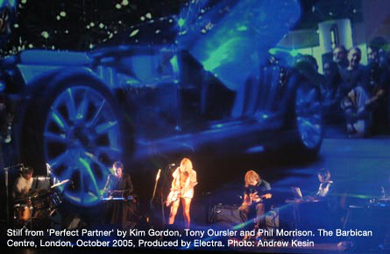
I have only just discovered that some more of my older reviews went missing due to snarl-ups on the Plexus site a while back... here's a repeat of my take on the Kim Gordon show at the Barbican last October, 2005 - which has just seen its American debut a couple of weeks back on October 27/28 at Montclair State University. Here's one review of that performance... which wasn't as enthusiastic as mine... offered in the cause of balance...
So... more adventures in the American Sublime... onwards...
I had a seat in the front row of the balcony which offered a panoramic view... appropriate for a performance which attempts such a wide, sweeping mix of image and music. Which is Kim Gordon's film 'Perfect Partner,' made in collaboration with video artist Tony Oursler and filmmaker Phil Morrison. Starring Michael Pitt and Jamie Bochert with a live, improvised soundtrack from a star band comprising Gordon on bass and vocals, Jim O' Rourke, Tim Barnes on percussion, Ikue Mori on laptop, DJ Olive laptop and turntables and tonight only, Thurston Moore. Some pit band... DJ Olive set it rolling with swooshing samples overlaid with muted trumpet and flute, culminating in a cutting up of a recorded voice... I missed the exact beginning when the full band arrived on stage as I had a quick run to the toilets and just squeaked back in as they started (a coupleof hours in the 'Rising Sun' down the road and an ageing bladder...)
The idea for the film takes off from Gordon's love of car ads and the idealised life depicted in them – dreams that feed symbiotically off the dreams of movement and escape that underpin what I see as 'the American Sublime...' filtered back through to this English space I belong to and as I run with it from the encapsulation in the Olson phrase: 'I take SPACE to be the defining factor for man born in America.' Or woman, Charles... (My apologies for dragging this in yet again – but it seems apposite... and everyone has their obsessions...) Kim Gordon glosses her work thus:
“I've always been fascinated by that movement to escape history, westward, towards the setting sun." (Kim Gordon quoted from here...).
'To escape history' – And stasis? By movement in dream cars into the SPACE of America... The story is briefly this: a guy who is apparently searching for his mother goes into a car showroom and a girl tries to sell him a car. They go for a test drive – and keep on going. We are back on the old Lost Highway, encountering a couple of noir-ish characters, (a fat, pimp-like figure whom the girl shoots – some back-story hinted at), another maybe being killed (the Shepard-ish cowboy, topped apparently by two men, who turns up again at the end) until they reach the coast and the ocean, where the film ends on images of rippling water abstracted into shimmering shapes on the screen. So it's a road movie of sorts which bounces lightly off Godard, among others... At the beginning, the man (Michael Pitt) is carrying a book with western imagery prominantly displayed on the cover and there are some intercut shots from old Remington-esque paintings, referencing the Old West... (the book was, I think, 'The West that was,' by John E. Eggen, a collection of old photographs from the frontier). Seems a simple enough and familiar story? I suppose so. But it's in the telling is the fascination... Utilising two screens, one behind the band, the other in front, the perspective shifts continually as the music responds in real time. At various points, band members are visually 'sampled' and appear on screen, meshing the performance deeper into the film narrative. By the end of the journey, I felt that I had witnessed a unique spectacle – a performance that rolls and wraps round itself, incorporating all the elements of moving image, figures on a stage whose music comments upon the filmic action even as it incorporates aspects of the performance in the visual sampling. Seamlessly integrating music, the occasional vocal and visuals in a sure-footed dance. And, it was, I thought, brilliant. At the end, as the images of water rippled on the screen, the band hot-footed it off stage as the audience applauded when they realised that it was over. Not for long: no one seemed sure how to respond. Well, this is England, chaps - but it seemed a slightly desultory note to end on – I suppose that the usual live gig rituals had been subverted - after all, when a movie ends, the actors – or the musicians responsible for the soundtrack, rather - don't usually step out of the screen and take a bow – unless you're watching 'Hellzappoppin' or some such... If Gordon and company had come back on, you could figure that people would start shouting for an encore or something – which would have probably screwed and skewed the mood of the previous hour and more... Maybe this was more fun – not knowing what to do...
The music was great, a level of improvised performance pretty much what you would expect from the stellar line up. Couldn't make out the vocals too well, but it didn't matter... the overall sound was integral to the concept. Very much a group performance. And one with the necessary SPACE inside it to expand and match the imagery and myth in the film. Improvisation in this context seems the true musical response... The Barbican did them proud, I thought, a good venue for Gordon and co's creations. Now, I want to see it again – but it's on at places a long way from where I am at present. Maybe I should go on a road trip to track it down. But we don't do that sort of thing very well here. It can be a nightmare (and not an interesting one, usually) to try to cross the UK east-west or the reverse – but you run out of SPACE pretty quickly and end up in the Irish, North Sea or the Channel. The English Sublime is a different bugger – one that is usually more cramped and crabby. Maybe up in the Lakes – but when I went looking for that variant a couple of years back, via the horrors of post-industrial Lancashire – foot and mouth had closed it off. This night, I ended up in the hotel surrounded by drunks singing along with one of the truly awesomely BAD bar bands of all time, running through a grubby selection of Oirish diddley-dee and bizarrely juxtaposed Sixties hits – 'American Pie' slams into 'I'm a Believer' into 'Mustang Sally' back to a couple of outtakes from St Paddy's night, for God's sake, which all da young folk there seemed not only to know by heart but to take to their hearts. It was either totally shite or some bizarre post-modern joke... funny either/both way – but you had to be there to appreciate it, as they say... A couple of Budweisers loosened me but I wisely in the end declined the gambit that this part of the evening offered... went to bed and dreamed of escaping into the Sublime...
Tuesday, November 07, 2006
Jug and Dodo... Oliver Nelson... Art Tatum/Ben Webster/Louis Bellson... Andrew Hill... Cecil Taylor...
'You're driving me crazy'... Marmarosa swings lightly in... then Ammons brusquely blats out the tune. As good an example of the way jazz works as you will find – stripping the melody to the bones before commencing an exploration and expansion of the song's innards and possibilities. The pianist takes over, an assured, articulate performance ranging over the keyboard and ending in some discreet block-chording that allows the bass through before Ammons returns to signal some exchanges with the drummer until the saxophone takes it out. Ammons, of course, the incomparable 'Jug,' son of barrelhouse/boogie player Albert Ammons and one of the best tenors out of bebop. Marmarosa: a white bebop legend who flared briefly across the forties – noted especially for his recordings with Artie Shaw and later Charlie Parker - and disappeared back to Pittsburgh after an unhappy hitch with the military in the early fifties. This session was a rare surfacing, recorded in Chicago,1962. Marmarosa was a player who bridged the gap from swing to bop successfully, yet:
'[he was]a gentle and fragile man who never really learned to cope with the pressures of jazz life, but... also given to unpredictable behaviour. According to [Charlie] Barnet, he once pushed a piano off a balcony, and explained that he wanted to hear what chord it would sound when it landed.' (From here...). Cool...
Oliver Nelson made several records with Eric Dolphy, including the stone classic 'Blues and the Abstract Truth.' This is 'Alto-itis' from 'Screaming the Blues,' an odd mixture of post- Bird and hard bop/soul jazz. Dolphy wheels and flies on the first solo, skittering lines that sound a conceptional light year from the riff backing that suddenly blasts in towards the end – like a jam-session head. Nelson, calmer, cooler, more conventional. But something appealing about his playing. That riffing blasts back in... Wyands spins a skilful chorus before the two altos head on out. Williams oddly only plays backup on this track... Booting along joyfully...
Andrew Hill, and 'Flea Flop' taken from his album 'Judgement!' A quartet with Bobby Hutcherson, the vibes giving a cerebral edge, up first, spurred on by the wonderful Davis and Elvin Jones's always probing drums. Davis takes a mobile, expressive solo, fast flurries in all registers. Hill cascades into his solo, double-timing and bouncing the rhythms round. Jones takes over, expressive and rumbling polyrhythms before the ensemble ends. This music is contained by its form and genre – but only just, Hill playing his inside/game to perfection here.
Art Tatum was a consummate soloist, of course. But he made some fascinating records with other musicians – here with Benny Carter and Louis Bellson. An easy ride into the theme by solo piano before the alto and fairly understated drums join in at the second chorus. Carter - finely-honed elegance with a smear of the blues in unexpected places, understated power – one of the great alto players. Tatum takes up the game – the usual trade-mark easy swing and virtuoso runs that disrupt and suspend it. A fairly sudden ending. Is this what they mean by 'timeless?'
To end – another mercurial pianist... yes, here's Cecil (again!)... but according to the hits these tracks are popular so...
From 'Serdab' – an almost restrained beginning, successive waves of ensemble and piano – one always separates the two, despite the grammar, it's always band AND Cecil. Raphe Malik clear and cutting, the violin adding an extra textural dimension, Lyons hanging back at first. Some almost bluesy licks from Cecil about five minutes in. Shannon Jackson makes his presence felt with some rumbling bass drum bombs although he sounds a little buried in the mix (along with Sirone). Despite the usual Taylor pyrotechnical crash and scrabble, quite a melodic track, with plenty of breathing space due to the episodic, processional nature of its unfolding...
Gene Ammons/Dodo Marmarosa
(Gene Ammons: Tenor Saxophone; Dodo Marmorosa: piano; Sam Jones: bass; Marshall Thompson: drums).
Download
You're driving me crazy
Buy
Oliver Nelson
(Oliver Nelson, Eric Dolphy: alto saxophones; Richard Williams: trumpet; Richard Wyands: piano; George Duvivier: bass; Roy Haynes: drums).
Download
Alto-itis
Buy
Art Tatum
(Art Tatum: piano; Benny Carter: alto saxophone; Louis Bellson: drums)
Download
I'm left with the blues in my heart
Buy
Andrew Hill
(Andrew Hill: piano; Bobby Hutcherson: vibes; Richard Davis: bass; Elvin Jones: drums).
Download
Flea flop
Buy
Cecil Taylor Unit
(Jimmy Lyons: alto saxophone; Raphe Malik: trumpet; Ramsey Ameen: violin; Sirone: bass; Ronald Shannon Jackson: drums).
Download
Serdab
Buy
'[he was]a gentle and fragile man who never really learned to cope with the pressures of jazz life, but... also given to unpredictable behaviour. According to [Charlie] Barnet, he once pushed a piano off a balcony, and explained that he wanted to hear what chord it would sound when it landed.' (From here...). Cool...
Oliver Nelson made several records with Eric Dolphy, including the stone classic 'Blues and the Abstract Truth.' This is 'Alto-itis' from 'Screaming the Blues,' an odd mixture of post- Bird and hard bop/soul jazz. Dolphy wheels and flies on the first solo, skittering lines that sound a conceptional light year from the riff backing that suddenly blasts in towards the end – like a jam-session head. Nelson, calmer, cooler, more conventional. But something appealing about his playing. That riffing blasts back in... Wyands spins a skilful chorus before the two altos head on out. Williams oddly only plays backup on this track... Booting along joyfully...
Andrew Hill, and 'Flea Flop' taken from his album 'Judgement!' A quartet with Bobby Hutcherson, the vibes giving a cerebral edge, up first, spurred on by the wonderful Davis and Elvin Jones's always probing drums. Davis takes a mobile, expressive solo, fast flurries in all registers. Hill cascades into his solo, double-timing and bouncing the rhythms round. Jones takes over, expressive and rumbling polyrhythms before the ensemble ends. This music is contained by its form and genre – but only just, Hill playing his inside/game to perfection here.
Art Tatum was a consummate soloist, of course. But he made some fascinating records with other musicians – here with Benny Carter and Louis Bellson. An easy ride into the theme by solo piano before the alto and fairly understated drums join in at the second chorus. Carter - finely-honed elegance with a smear of the blues in unexpected places, understated power – one of the great alto players. Tatum takes up the game – the usual trade-mark easy swing and virtuoso runs that disrupt and suspend it. A fairly sudden ending. Is this what they mean by 'timeless?'
To end – another mercurial pianist... yes, here's Cecil (again!)... but according to the hits these tracks are popular so...
From 'Serdab' – an almost restrained beginning, successive waves of ensemble and piano – one always separates the two, despite the grammar, it's always band AND Cecil. Raphe Malik clear and cutting, the violin adding an extra textural dimension, Lyons hanging back at first. Some almost bluesy licks from Cecil about five minutes in. Shannon Jackson makes his presence felt with some rumbling bass drum bombs although he sounds a little buried in the mix (along with Sirone). Despite the usual Taylor pyrotechnical crash and scrabble, quite a melodic track, with plenty of breathing space due to the episodic, processional nature of its unfolding...
Gene Ammons/Dodo Marmarosa
(Gene Ammons: Tenor Saxophone; Dodo Marmorosa: piano; Sam Jones: bass; Marshall Thompson: drums).
Download
You're driving me crazy
Buy
Oliver Nelson
(Oliver Nelson, Eric Dolphy: alto saxophones; Richard Williams: trumpet; Richard Wyands: piano; George Duvivier: bass; Roy Haynes: drums).
Download
Alto-itis
Buy
Art Tatum
(Art Tatum: piano; Benny Carter: alto saxophone; Louis Bellson: drums)
Download
I'm left with the blues in my heart
Buy
Andrew Hill
(Andrew Hill: piano; Bobby Hutcherson: vibes; Richard Davis: bass; Elvin Jones: drums).
Download
Flea flop
Buy
Cecil Taylor Unit
(Jimmy Lyons: alto saxophone; Raphe Malik: trumpet; Ramsey Ameen: violin; Sirone: bass; Ronald Shannon Jackson: drums).
Download
Serdab
Buy
Monday, November 06, 2006
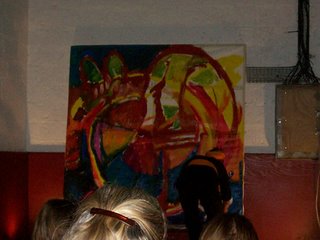
What I did on my holidays part x... photos from the Michel Devillier/Lutina Pensard gig on the Île De Groix..
Here are a few photos from the Devilliers/Pensard gig the other week... quality not that great as my camera was playing up and decided to die on me... Michel is rather obscured on the only shot with him that came out... apologies, mon brave... But they give a small flavour of the evening...


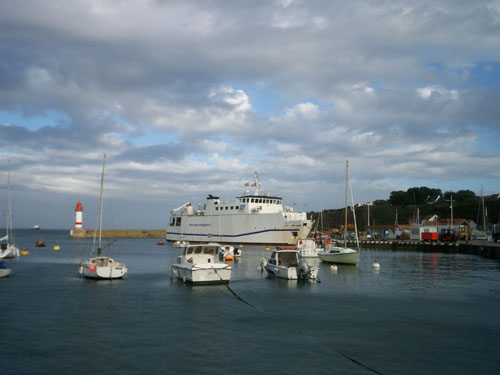
And three of the island, to set the wider scene... a shot from outside my friend's house, one of the coast and one of the harbour where the boat comes in, Port Tudy...
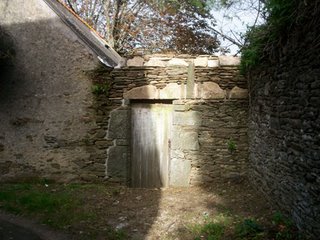
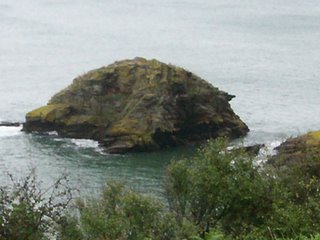
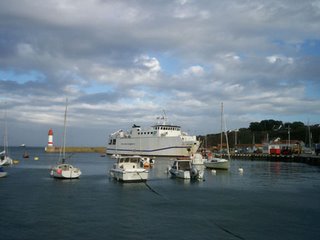
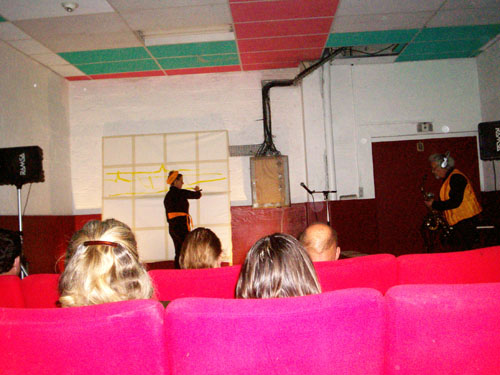
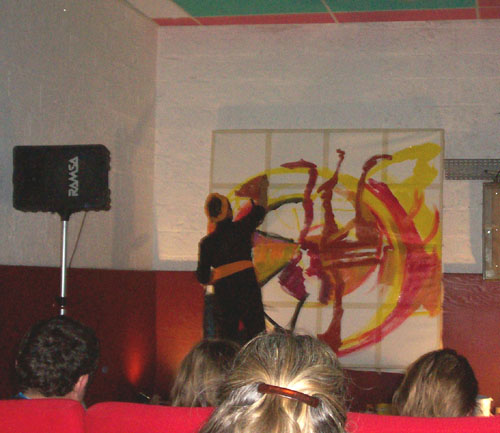


And three of the island, to set the wider scene... a shot from outside my friend's house, one of the coast and one of the harbour where the boat comes in, Port Tudy...


Friday, November 03, 2006
Jimmy Yancey... Miles Davis... John Coltrane in Seattle...
Back from France last night... trailing clouds of glory... maybe not... But it's a glorious, sharp, sunny morning here... A short post to celebrate return... To start: here's a track by Jimmy Yancey - 'How Long Blues.'
'Part of Yancey's distinctive style was that he played in a variety of keys but always ended every song in E flat. These endings added a strangely satisfying dissonance to every performance. ' (From here... ).
Yancey did not record till the late thirties but had been around from the beginning and was a large influence on the more famous Meade Lux Lewis and Albert Ammons. Yet his style of boogie was delicate, eschewing the pounding train-like rhythms that popularly defined the style... This track has a loping bass (which turns from four to the bar into a 'spanish tinged' syncopation that opens it up spatially, disregarding the odd fumble) and takes the old blues at a fair pace but has a wistful, crystal clarity – and his trademark jump to E flat at the end adds to the charm...
The Fifties Miles David Quintet: finely sprung tensions between the epigrammatic terseness of the leader and the bubbling, questing torrents of John Coltrane. The rhythm section a dream: Philly Joe and the young Paul Chambers providing a firm swinging undergirding and Red Garland's piano – from bouncing crisp and clear single note lines to the accurate (if sometimes overdone) block-chording. 'Surrey with the fringe on top,' then. A medium tempo nine minutes of ease and joy – Miles sounds almost happy through the tightly muted trumpet, Coltrane gruffly cheerful. This comes from another album I had as a kid and can still remember very well - pretty much every nuance etched into the budding jazz brain...
Coltrane in 1965... 'Out of this world,' from the epochal 'Live in Seattle,' burning and faring forward. Edging in on bass and piano vamp, before that cutting tone of JC establishes the mood of the journey... Pharoah Sanders pours out smearing, querulous, diagonality, Tyner is rolling, thumping, powerful. Coltrane returns on soprano, swirling, squalling against eventual sporadic counter horn that builds to buttress although the drums dominate now... Jones imperiously swatting out rhythm and counter-rhythm throughout. The end-zone almost quiescent – long tenor notes... This music demands the time it takes to unfold... twenty three minutes here so upped to Savefile where I usually put the big ones...)
In the Videodrome...
Matthew Shipp talks and plays...
Bill Evans waits for his prince...
The Art Ensemble of Chicago...
Jimmy Yancey
Download
How Long Blues
Buy
Miles Davis Quintet
(Miles Davis: trumpet; John Coltrane: tenor saxophone; Red Garland: piano; Paul Chambers: bass; 'Philly Joe' Jones: drums).
Download
Surrey with the fringe on top
Buy
John Coltrane
(John Coltrane: tenor, soprano saxophone; Pharoah Sanders: tenor saxophone; McCoy Tyner: piano; Donald Raphael Garrett: bass clarinet, bass; Jimmy Garrison: bass; Elvin Jones: drums).
Download
Out of this world
Buy
'Part of Yancey's distinctive style was that he played in a variety of keys but always ended every song in E flat. These endings added a strangely satisfying dissonance to every performance. ' (From here... ).
Yancey did not record till the late thirties but had been around from the beginning and was a large influence on the more famous Meade Lux Lewis and Albert Ammons. Yet his style of boogie was delicate, eschewing the pounding train-like rhythms that popularly defined the style... This track has a loping bass (which turns from four to the bar into a 'spanish tinged' syncopation that opens it up spatially, disregarding the odd fumble) and takes the old blues at a fair pace but has a wistful, crystal clarity – and his trademark jump to E flat at the end adds to the charm...
The Fifties Miles David Quintet: finely sprung tensions between the epigrammatic terseness of the leader and the bubbling, questing torrents of John Coltrane. The rhythm section a dream: Philly Joe and the young Paul Chambers providing a firm swinging undergirding and Red Garland's piano – from bouncing crisp and clear single note lines to the accurate (if sometimes overdone) block-chording. 'Surrey with the fringe on top,' then. A medium tempo nine minutes of ease and joy – Miles sounds almost happy through the tightly muted trumpet, Coltrane gruffly cheerful. This comes from another album I had as a kid and can still remember very well - pretty much every nuance etched into the budding jazz brain...
Coltrane in 1965... 'Out of this world,' from the epochal 'Live in Seattle,' burning and faring forward. Edging in on bass and piano vamp, before that cutting tone of JC establishes the mood of the journey... Pharoah Sanders pours out smearing, querulous, diagonality, Tyner is rolling, thumping, powerful. Coltrane returns on soprano, swirling, squalling against eventual sporadic counter horn that builds to buttress although the drums dominate now... Jones imperiously swatting out rhythm and counter-rhythm throughout. The end-zone almost quiescent – long tenor notes... This music demands the time it takes to unfold... twenty three minutes here so upped to Savefile where I usually put the big ones...)
In the Videodrome...
Matthew Shipp talks and plays...
Bill Evans waits for his prince...
The Art Ensemble of Chicago...
Jimmy Yancey
Download
How Long Blues
Buy
Miles Davis Quintet
(Miles Davis: trumpet; John Coltrane: tenor saxophone; Red Garland: piano; Paul Chambers: bass; 'Philly Joe' Jones: drums).
Download
Surrey with the fringe on top
Buy
John Coltrane
(John Coltrane: tenor, soprano saxophone; Pharoah Sanders: tenor saxophone; McCoy Tyner: piano; Donald Raphael Garrett: bass clarinet, bass; Jimmy Garrison: bass; Elvin Jones: drums).
Download
Out of this world
Buy
Monday, October 30, 2006
Still on the island... but here's Lucky Thompson... Jimmy Lyons and Raphe Malik... Charlie Parker and co...
Still in France... the fleur de lys getting a little tattered... but just happened to carry a stash of music with me... and have access to the net thanks to my hostess and dear old friend Caroline... so some of the show can still roll... rested now and the addictions are tugging... and mellowed after a damn good meal... one of the local specialties: 'Gangster Paté,' (not sure what 'go figure' is in French - if an equivalence exists) followed by an extremely good entrecote steak... yum... but back to the business...
Here's an oddity which I think was snaffled from the late lamented Bus Conductor Hines (those who know... do... those who don't – don't need to...). The late Lucky Thompson (maybe not so Lucky, given his star-crossed life) with Kenny Clarke and Peter Trunk and the inimitable Martial Solal. Recorded in France, 1961... subtle and swinging. Solal has a dry and sly wit... solid old-school bass from Trunk and the elegance of the fountainhead of bebop drums, Monsieur Clarke, who had decamped to France in 1956 or thereabouts... Also: given the circumstances of his life, the title is somewhat (very?) poignant. 'Lord, Lord, am I ever going to know?' (Obituary here...)
More from Thompson as soon as I get back to the U.K. - a truly great player... and another one enscribed on the roll of the mighty who suffered because he was not prepared to take any shit... (This link may still be active... an interview with Thompson... scroll down...).
That's the link Français sorted... on to Cecil Taylor... or rather two of his musicians in a game of tag from a famous concert in Stuttgart in 1978... oddly enough, I have just realised that I was in Stuttgart and environs that year... From the album 'One too salty swift and not goodbye' (answers on a postcard to the critic of your choice), the opening section: Jimmy Lyons,long term stalwart and one of the great post-Bird saxophonists plus Raphe Malik,who is also sadly no longer with us... died earlier this year at the absurdly young age 57... This track acts as an almost gentle intro to the storms to come... of which more soon... two poised and melodic criss-crossings...
To end this brief blog... Bird... I keep coming back to him recently and for the good reason that anyone interested in the musics has to... simple as that. From that famous Jazz at the Phil session, the cross mix of participants proving some point about the continuity of the music... it was always there, just sometimes obscured by factors that I have neither space or energy tonight to analyse or explicate... just dig... sublime...
Necessarily brief this time round... the usual rambling verbal ellipticals back very soon... you lucky people, as the late, great Tommy Trinder used to say... adieu...
Lucky Thompson (soprano & tenor saxophones); Martial Solal (piano); Peter Trunk (bass); Kenny Clarke (drums). Recorded in Paris, France in 1960.
Download
Lord, Lord; am I ever going to know?
Buy
Jimmy Lyons/Raphe Malik
(Jimmy Lyons: alto saxophone; Raphe Malik: trumpet).
Download
Duet (One too salty swift etc disc 1)
Buy
Charlie Parker
(Charlie Parker, Johnny Hodges, Bennie Carter: alto saxophone; Flip Phillips, Ben Webster: tenor saxophone; Oscar Peterson: piano; Barney Kessel: guitar; Ray Brown: bass; J. C. Heard: drums).
Download
What is this thing called love
Buy
Here's an oddity which I think was snaffled from the late lamented Bus Conductor Hines (those who know... do... those who don't – don't need to...). The late Lucky Thompson (maybe not so Lucky, given his star-crossed life) with Kenny Clarke and Peter Trunk and the inimitable Martial Solal. Recorded in France, 1961... subtle and swinging. Solal has a dry and sly wit... solid old-school bass from Trunk and the elegance of the fountainhead of bebop drums, Monsieur Clarke, who had decamped to France in 1956 or thereabouts... Also: given the circumstances of his life, the title is somewhat (very?) poignant. 'Lord, Lord, am I ever going to know?' (Obituary here...)
More from Thompson as soon as I get back to the U.K. - a truly great player... and another one enscribed on the roll of the mighty who suffered because he was not prepared to take any shit... (This link may still be active... an interview with Thompson... scroll down...).
That's the link Français sorted... on to Cecil Taylor... or rather two of his musicians in a game of tag from a famous concert in Stuttgart in 1978... oddly enough, I have just realised that I was in Stuttgart and environs that year... From the album 'One too salty swift and not goodbye' (answers on a postcard to the critic of your choice), the opening section: Jimmy Lyons,long term stalwart and one of the great post-Bird saxophonists plus Raphe Malik,who is also sadly no longer with us... died earlier this year at the absurdly young age 57... This track acts as an almost gentle intro to the storms to come... of which more soon... two poised and melodic criss-crossings...
To end this brief blog... Bird... I keep coming back to him recently and for the good reason that anyone interested in the musics has to... simple as that. From that famous Jazz at the Phil session, the cross mix of participants proving some point about the continuity of the music... it was always there, just sometimes obscured by factors that I have neither space or energy tonight to analyse or explicate... just dig... sublime...
Necessarily brief this time round... the usual rambling verbal ellipticals back very soon... you lucky people, as the late, great Tommy Trinder used to say... adieu...
Lucky Thompson (soprano & tenor saxophones); Martial Solal (piano); Peter Trunk (bass); Kenny Clarke (drums). Recorded in Paris, France in 1960.
Download
Lord, Lord; am I ever going to know?
Buy
Jimmy Lyons/Raphe Malik
(Jimmy Lyons: alto saxophone; Raphe Malik: trumpet).
Download
Duet (One too salty swift etc disc 1)
Buy
Charlie Parker
(Charlie Parker, Johnny Hodges, Bennie Carter: alto saxophone; Flip Phillips, Ben Webster: tenor saxophone; Oscar Peterson: piano; Barney Kessel: guitar; Ray Brown: bass; J. C. Heard: drums).
Download
What is this thing called love
Buy
Friday, October 27, 2006
Michel Devilliers and Lutina Pensard... improvised performance... Île De Groix... Saturday, 21 October, 2006...
I am not sure what the phrase 'Busman's Holiday' would be in French. Les vacances de driver d'autobus? Maybe there is no idiomatic equivalent, which is a shame as it would have given me a neat link... Among other things, I play music of the improvised variety and also run a small (yet wonderful) performance space in between the obsessional needs of writing this blog... All of which I was intending to sidestep/avoid like the plague etc for a week or so... a holiday was (urgently) needed... sanity is, after all, a desired state... But the omens were there... I landed in Nantes on the first leg of my journey to stay with my old and dear friend Caroline on the Île De Groix, situated off the coast of Britanny. I had originally intended to go to the Pannonica that night, as I had heard good reports, but decided against it due to excessive fatigue and – well – a desire to escape all of this as hinted at above... went for a walk before an early night – avoided the Pannonica succesfully... and ended up in a bar called 'The Blue Note.' Well... The ghosts of Lion and Wolff prodded me... I had to go in... And next morning, on Nantes railway station, waiting for my train to Lorient, bizarrely I saw this guy lurking who was the spitting image of Chet Baker. Whom, logically, I know is dead – but my friend Wild Bill told me a while back that he is still alive as the fall from the high window in Amsterdam had been some desperate junky bluff - and has been spotted in Nottingham, U.K. of all odd places (or maybe not,given Chet's drug problems and the, how shall we put it? - ease of access there). Wild Bill can be whimsical – in a gritty sort of East Midlands via upstate New York way- but can also be spot on: You takes your pick... But. Two harbingers... then Saturday night after a very good dinner chez Caroline... I was taken to a performance on the island – described in advance as 'improvised sax as a woman created a painting'... is there no escape? How could one refuse politely? But...some things you can't fight... fate, for one...
So... the busman went on holiday...
The performance space was a reasonable size, apparently also used as a small cinema, with incredibly comfortable seats that you could slump into after a good dinner... which we did... The basic premise was that Michel Devilliers would play saxophones, tenor and soprano, improvising over a backing track (presumably of his own creation) while Lutina Pensard would in synchronisation/reaction paint a picture on the canvas in front of us, both reacting to the other's imaginations. For a pre-determined period of time- 40 minutes or so...Perhaps the surprise was – to this jaded old observer – that it worked so well, both visually and aurally...
Lutina positioned herself in front of the canvas... Michel donned headphones and picked up his tenor. Cued the backing track... A fairly abstract but warm electronic intro going into string drones, arco strings, and a higher charango-like sound in places that gave a hint of South American flavours, as the sax started to play in real time and Lutina essayed a yellow line and some circular swirls to enclose the field initially... the first few minutes, given the (presumably) synthesised string textures and the full warm tone of the tenor reminded me of an old Stan Getz album – 'Focus' recorded in collaboration with arranger/composer Eddie Sauter - no mean comparison as it was was one of the few successful combinations of strings in jazz at the time (1961) – forget Bird – he only made those tracks work by the sheer power of his playing which dragged the rather saccharine arrangements (of 'Charlie Parker With Strings' ) along in his mighty slipstream... (but it was 1949, to be fair...)
Fairly soon in and the sax starts to push outwards... rhythmically and harmonically gently stretching the static harmony... black paint now... the backing track goes into light pattering rhythms – that throughout will veer between an almost Indian tabla feel and the South American nuances already mentioned... a synthesis of 'global' music which could be bland but actually works well enough here for the sax to bounce off with long-distance finesse. Lutina now painting a kundalini rising line of energy to mirror the music's movement...
Throughout, there is a relaxed, almost bucolic feel to the music, with various points of reference east and west that supply a 'world music' texture over which the more 'jazzy' timbre and phrasing of the sax flows effortlessly. Other simple devices will help to pace, diversify and add a loose, unifying structure. For example, an insistent bass pedal bomp boomp bomp eighth note quarter note eighth note or near it – more staccato and syncopated than the description conveys - which acts as an anchor and also provides some gentle swing... In the middle the painting seems to be getting muddy... a lack of definition... which interestingly will be resolved... almost shadowing the manner in which we will always float our attention off sporadically during a long piece. The drums kick in and out... adding some rhythmic variety... some nice double stopped bass... tablas again... The painting starts to swirl now into more interesting complexity... earthy colours... pulled into shape by the artist. Michel switches to soprano saxophone... that tabla nuance echoed with the eastern skirling bite that the higher horn can give...
This is unrushed but does not drag... easy and relaxed yet belying the skill of the artists...very clean playing which, although not as granularly abrasive and chromatic as much of the music in contemporary improvising genres usually is, holds the attention throughout... coming in part from jazz via the signifiers of 'sax' and phrasing out of 'jazz', but not 'jazz' as such, offering an accessibility done with skill and warmth... a few more squiggles of white then out... end of performance... and an added touch... the canvas is now separated into sixteen squares and the resultant portions sold at fifty euros a pop...I would have bought one but had no room to take it back with me, unfortunately...
Overall... the music matched the painting and vice versa... done with intelligence and a subtly disguised rigour underpinning the ongoing creation... I have frequently taken a shot at the pretentiousness and sheer alienation of audiences by performers and (more often) those that promote the gigs that I have encountered in so-called prestigious (and unfriendly) venues... and, we do some pretty austere and abrasive music in my own club... yet, hopefully, with a sense of humour... which was in evidence here tonight...
...and a gig is, admittedly, always easier in front of the home crowd... yet the road beckons... Michel and Lutina do their next show in Geneva at the La Ferme Sarasin on November 2nd... they get around... anyone in the vicinity should go and enjoy... It will be interesting to see how this translates into other venues. But I figure that there is enough space within the conception coupled to the inherent skill of the artists to take into account different performative circumstances. Which is part of the adrenal rush of improvisation, after all...
This busman enjoyed it...
And let us not forget Monique Garrigue... the organiser is always that very important and rarely credited factor in the success of a performance, after all...(and a personal thank you for her gracious hospitality in showing me some of the island a few days later...)
(Malheureusement, mes copains, although I shot a load of photos at the gig and also round the island over the last week, I can't upload them at present until I return to God's Little Acre... but watch this space...)
I wonder if that really was Chet Baker on Nantes railway station...
So... the busman went on holiday...
The performance space was a reasonable size, apparently also used as a small cinema, with incredibly comfortable seats that you could slump into after a good dinner... which we did... The basic premise was that Michel Devilliers would play saxophones, tenor and soprano, improvising over a backing track (presumably of his own creation) while Lutina Pensard would in synchronisation/reaction paint a picture on the canvas in front of us, both reacting to the other's imaginations. For a pre-determined period of time- 40 minutes or so...Perhaps the surprise was – to this jaded old observer – that it worked so well, both visually and aurally...
Lutina positioned herself in front of the canvas... Michel donned headphones and picked up his tenor. Cued the backing track... A fairly abstract but warm electronic intro going into string drones, arco strings, and a higher charango-like sound in places that gave a hint of South American flavours, as the sax started to play in real time and Lutina essayed a yellow line and some circular swirls to enclose the field initially... the first few minutes, given the (presumably) synthesised string textures and the full warm tone of the tenor reminded me of an old Stan Getz album – 'Focus' recorded in collaboration with arranger/composer Eddie Sauter - no mean comparison as it was was one of the few successful combinations of strings in jazz at the time (1961) – forget Bird – he only made those tracks work by the sheer power of his playing which dragged the rather saccharine arrangements (of 'Charlie Parker With Strings' ) along in his mighty slipstream... (but it was 1949, to be fair...)
Fairly soon in and the sax starts to push outwards... rhythmically and harmonically gently stretching the static harmony... black paint now... the backing track goes into light pattering rhythms – that throughout will veer between an almost Indian tabla feel and the South American nuances already mentioned... a synthesis of 'global' music which could be bland but actually works well enough here for the sax to bounce off with long-distance finesse. Lutina now painting a kundalini rising line of energy to mirror the music's movement...
Throughout, there is a relaxed, almost bucolic feel to the music, with various points of reference east and west that supply a 'world music' texture over which the more 'jazzy' timbre and phrasing of the sax flows effortlessly. Other simple devices will help to pace, diversify and add a loose, unifying structure. For example, an insistent bass pedal bomp boomp bomp eighth note quarter note eighth note or near it – more staccato and syncopated than the description conveys - which acts as an anchor and also provides some gentle swing... In the middle the painting seems to be getting muddy... a lack of definition... which interestingly will be resolved... almost shadowing the manner in which we will always float our attention off sporadically during a long piece. The drums kick in and out... adding some rhythmic variety... some nice double stopped bass... tablas again... The painting starts to swirl now into more interesting complexity... earthy colours... pulled into shape by the artist. Michel switches to soprano saxophone... that tabla nuance echoed with the eastern skirling bite that the higher horn can give...
This is unrushed but does not drag... easy and relaxed yet belying the skill of the artists...very clean playing which, although not as granularly abrasive and chromatic as much of the music in contemporary improvising genres usually is, holds the attention throughout... coming in part from jazz via the signifiers of 'sax' and phrasing out of 'jazz', but not 'jazz' as such, offering an accessibility done with skill and warmth... a few more squiggles of white then out... end of performance... and an added touch... the canvas is now separated into sixteen squares and the resultant portions sold at fifty euros a pop...I would have bought one but had no room to take it back with me, unfortunately...
Overall... the music matched the painting and vice versa... done with intelligence and a subtly disguised rigour underpinning the ongoing creation... I have frequently taken a shot at the pretentiousness and sheer alienation of audiences by performers and (more often) those that promote the gigs that I have encountered in so-called prestigious (and unfriendly) venues... and, we do some pretty austere and abrasive music in my own club... yet, hopefully, with a sense of humour... which was in evidence here tonight...
...and a gig is, admittedly, always easier in front of the home crowd... yet the road beckons... Michel and Lutina do their next show in Geneva at the La Ferme Sarasin on November 2nd... they get around... anyone in the vicinity should go and enjoy... It will be interesting to see how this translates into other venues. But I figure that there is enough space within the conception coupled to the inherent skill of the artists to take into account different performative circumstances. Which is part of the adrenal rush of improvisation, after all...
This busman enjoyed it...
And let us not forget Monique Garrigue... the organiser is always that very important and rarely credited factor in the success of a performance, after all...(and a personal thank you for her gracious hospitality in showing me some of the island a few days later...)
(Malheureusement, mes copains, although I shot a load of photos at the gig and also round the island over the last week, I can't upload them at present until I return to God's Little Acre... but watch this space...)
I wonder if that really was Chet Baker on Nantes railway station...
Wednesday, October 18, 2006
3 Phasis to Barbed Wire Maggots... Cecil Taylor... Peter Brotzmann... Charles Mingus... Borbetomagus
Tis but a chance he's gone to France, to wearrrr the fleurrr de lys... Added rrrs to approximate the Ulster timbres that deliver the chorus of the Mc Peake Family's old song which we all jokily adopted many years ago in the relentless criss-crossing the channel many of us were engaged in. So – off I go to don the fleur de lis encore – on Thursday, flying out to Nantes on the way to see an old friend of mine and chill out for a few days. And hope to catch a gig at the Pannonica club... I may not be blogging much for the next week if at all so here are a few meaty tracks to leave you all with... comments are brief (you lucky people...) as on the run today...
Cecil Taylor recorded '3 Phasis' in 1978... this is track five, the last section of this mammoth live performance. A mighty band including Raphe Malik on trumpet (who died earlier this year) and Ramsey Ameen alongside Jimmy Lyons in the front line, Sirone and Ronald Shannon Jackson down in the boiler room.
The Peter Brotzman octet burned our synapses in 1968 with 'Machine Gun,' a mighty statement of intent from the European avant-garde. Here's another track from the same album - 'Responsible'...
... and the opening track from his Albert Ayler tribute 'Die like a dog.' Opens on bleary Brotzmann sax and proceeds with Ayler-like fanfare homage between the horns before they sprint into a long workout. Kondo especially is a revelation here – Bill Dixon on DMT... his use of electronics on this album is exemplary...
Mingus from 1959 – 'Gunslinging Bird' – or, if I remember rightly the the sardonic Mingus alternative name, 'If Charlie Parker were still alive, there'd be a whole lot of dead copycats.' Or something. Wild and exciting.
Totally different... 'Far Wells, Mill Valley,' from the same album, had always been a favourite. The presence of Teddy Charles is interesting – parts of this remind me of the vibes player's Tentet material – and of course Mingus had played with him previously.
A skronking, screaming run-out to leave some turbulence in my brief absence...
Borbetomagus have been together for a long time. This is side A from their fourth album (but the first to feature the two sax and electric guitar line-up exclusively), recorded in 1982 – but still sounding freshly disturbing. Borbetomagus can be regarded as antecedents of the contemporary noise scene which straddles rock and improvised music via free jazz as well as participants in the 'jazz' improvising milieu. Music to rattle your fillings and change the molecular structure of your sound system...
Cecil Taylor
(Cecil Taylor, piano; Jimmy Lyons, alto saxophone; Raphé Malik, trumpet; Ramsey Ameen, violin; Sirone, bass; Ronald Shannon Jackson, drums).
Download
Track 5
Buy
Peter Brotzmann
(Peter Brotzmann: tenor, baritone saxophones; Willem Breuker, Evan Parker: tenor saxophones; Fred Van Hove: piano; Peter Kowald, Buschi Niebergalll: basses; Han Bennink, Sven-Ake Johansson: drums).
Download
Responsible (First take)
Buy
Peter Brotzmann
(Peter Brötzmann, alto and tenor saxophones, tarogato; Toshinori Kondo, trumpet, electronics; William Parker, bass; Hamid Drake, drums, frame-drum.)
Download
Fragments of music, life and death of Albert Ayler no. 1
Buy
Charles Mingus Tentet
Richard Williams (tp) Jimmy Knepper (tb) Jerome Richardson (fl, bars) John Handy (as) Booker Ervin, Benny Golson (ts) Teddy Charles (vib -1/5) Roland Hanna (p -1/5) Nico Bunick (p -6) Charles Mingus (b) Dannie Richmond (d, timp)
Download
Gunslinging Bird
Far Wells, Mill Valley
Buy
Borbetomagus
(Don Dietrich, Jim Sauter: saxophones, Donald Miller: guitar).
Download
Side A
Buy
Cecil Taylor recorded '3 Phasis' in 1978... this is track five, the last section of this mammoth live performance. A mighty band including Raphe Malik on trumpet (who died earlier this year) and Ramsey Ameen alongside Jimmy Lyons in the front line, Sirone and Ronald Shannon Jackson down in the boiler room.
The Peter Brotzman octet burned our synapses in 1968 with 'Machine Gun,' a mighty statement of intent from the European avant-garde. Here's another track from the same album - 'Responsible'...
... and the opening track from his Albert Ayler tribute 'Die like a dog.' Opens on bleary Brotzmann sax and proceeds with Ayler-like fanfare homage between the horns before they sprint into a long workout. Kondo especially is a revelation here – Bill Dixon on DMT... his use of electronics on this album is exemplary...
Mingus from 1959 – 'Gunslinging Bird' – or, if I remember rightly the the sardonic Mingus alternative name, 'If Charlie Parker were still alive, there'd be a whole lot of dead copycats.' Or something. Wild and exciting.
Totally different... 'Far Wells, Mill Valley,' from the same album, had always been a favourite. The presence of Teddy Charles is interesting – parts of this remind me of the vibes player's Tentet material – and of course Mingus had played with him previously.
A skronking, screaming run-out to leave some turbulence in my brief absence...
Borbetomagus have been together for a long time. This is side A from their fourth album (but the first to feature the two sax and electric guitar line-up exclusively), recorded in 1982 – but still sounding freshly disturbing. Borbetomagus can be regarded as antecedents of the contemporary noise scene which straddles rock and improvised music via free jazz as well as participants in the 'jazz' improvising milieu. Music to rattle your fillings and change the molecular structure of your sound system...
Cecil Taylor
(Cecil Taylor, piano; Jimmy Lyons, alto saxophone; Raphé Malik, trumpet; Ramsey Ameen, violin; Sirone, bass; Ronald Shannon Jackson, drums).
Download
Track 5
Buy
Peter Brotzmann
(Peter Brotzmann: tenor, baritone saxophones; Willem Breuker, Evan Parker: tenor saxophones; Fred Van Hove: piano; Peter Kowald, Buschi Niebergalll: basses; Han Bennink, Sven-Ake Johansson: drums).
Download
Responsible (First take)
Buy
Peter Brotzmann
(Peter Brötzmann, alto and tenor saxophones, tarogato; Toshinori Kondo, trumpet, electronics; William Parker, bass; Hamid Drake, drums, frame-drum.)
Download
Fragments of music, life and death of Albert Ayler no. 1
Buy
Charles Mingus Tentet
Richard Williams (tp) Jimmy Knepper (tb) Jerome Richardson (fl, bars) John Handy (as) Booker Ervin, Benny Golson (ts) Teddy Charles (vib -1/5) Roland Hanna (p -1/5) Nico Bunick (p -6) Charles Mingus (b) Dannie Richmond (d, timp)
Download
Gunslinging Bird
Far Wells, Mill Valley
Buy
Borbetomagus
(Don Dietrich, Jim Sauter: saxophones, Donald Miller: guitar).
Download
Side A
Buy
Sunday, October 15, 2006
Mingus in Paris... Lacy/Rudd/Mengleberg/Carter/Bennink...Charlie Parker et al... John Lewis... the MJQ/Giuffre... Ornette Coleman... Sonny Rollins...
As promised – some Mingus – from a Paris concert in 1964. With Jacki Byard in the piano chair... these overlapping themes get complicated... and spinning ever outwards...
There is some confusion over which concert date these tracks come from- I don't intend to get embroiled in that issue. Let us just go with the music...
'Parkeriana' is a homage to Bird, as the title suggests, interwoven throughout with famous Parker themes. Mingus and Richmond start it up, joined by the horns – a suitably choppy riff. The usual shuffle boil of stops starts and tempo changes and the variety that Mingus gets out of just a five-piece band ensues. (Johnny Coles, the trumpeter, had been taken seriously ill and they had to rapidly re-align the arrangements...). The Bird tunes poke out at various junctures as an aid to overall form. Byard takes a wonderful solo – starting off single note then launching into his usual recapitulation of jazz piano history – some dancing stride for example. Mingus seems to be able to create enough imaginative space for this not to clash with the overall structure - and not just here: think of how he had brought in many older musicians down the years – Roy Eldridge, for example – and poured them into the fiery sonic stews he cooked up- a dash of swing, a dash of hard bop, a dash of new wave. Somehow the recipes always works... After Byard, Jordan blows hot bop, Dolphy blows hot... Dolphy - assimilating Parker but sending him back blended in his own harmonic and linear vision. Behind the horn solos – the other horn can be heard in places with a Parker line as obbligato and reference – somewhat off-mike, a ghostly presence. Intentional or not – this works in quite a spooky way... This was one hell of a band – bolstered by the mighty drums and bass of Richmond and the leader.
'23 Skidoo' was apparently an old slang expression in America meaning 'beat it' – in the sense of 'vamoose.' Or 'scram.' A veritable Pandora's box can be opened here... check out this, for example.... And here, for the more arcane inclined, out of WSB and Robert Anton Wilson, say... ... In jazz- a composition by Herbie Nichols, in my selection given the workover by Steve Lacy and company... Mengleberg opens briefly then the theme arrives – a slow unsteady processional. A strong flavour of Monk – enhanced by Mengelberg's choppy piano. Lacy takes the first solo – he always seemed a very poised and unhurried player, bending his way through the Nichols harmonies before Rudd comes in with smearing muted trombone, a hint of astringent mockery in his tone. Intriguing mixture of old and new – homage to tailgate. Mengelberg next, bouncing nicely off the theme. Inclining into Monkish space, but with a few clanging surprises of his own. Carter gives a liquid and deep chorus before the horns return to finish. Bennink fairly reticfent by his standards throughout but solid.
I mentioned Jazz at the Phil recently... here's Bird with a few others courtesy of the patronage of Norman Granz, doing the 'Funky Blues.' A slow drag ensemble seesawing riff with Hodges taking the last four bars of the twelve before going into his solo – slow, slurring, understated blues power. Bird follows – listen to the second chorus where he repeats a figure- then flies off with a delicate filigree run. Benny Carter matches, elegance underslung with a contained strength... Petersen essays some rippling lines up and down the keyboard. Barney Kessel does some twangy blues licks. Shavers blasts out some stirring trumpet – Ben Webster comes whooshing in, Phillips delivers some churning, gritty figures. Is this what they call granularity, Roland? Petersen again then the out chorus. A pretty amazing document – look at the sax lineup...
The piano intro by John Lewis then into the theme - I realised that I had not heard this Bird track for a very long time – but could still remember every note. Red Rodney had a large and fat brassy tone and was a more than adequate partner for the altoist. John Lewis takes a sprightly solo. 3 minutes fifteen seconds of compressed heaven.
Both of the above were on a treasured Verve compilation from my teenage years... a strong original part of the long journey...
John Lewis was the mainstay of the Modern Jazz Quartet. But he always liked to play the blues... Here he is solo with 'Two degrees east, three degrees west.' Another track from my teenage years and early infatuation with jazz, in the version recorded by, I think, a west coast line-up including Bud Shank and Bob Cooper, which I must track down... A brief intro then the theme is picked out in the treble, musingly, dropping an octave and fleshed out in the second chorus. A jerky feeling throughout, some background humming from Lewis, giving the feeling that the pianist is sat late night, just playing for himself. Sparse left hand, bebop style... Late Lewis...
Jimmy Guiffre recorded with the Modern Jazz Quartet at Music Inn in the fifties – a kind of temporary autonomous zone where musicians were brought into an academic environment out of the hurly burly of the clubs – some interesting developments ensued – much of the so-called 'Third Stream' flowed from this source (especially if you include Ornette Coleman's work for chamber ensembles and full orchestra – 'Skies of America' etc...).
'During its final years, 1957-1960, a significant Music Inn innovation was their School of Jazz. Showcasing the Modern Jazz Quartet (MJQ) as group-in-residence and its leader John Lewis as artistic director, the school's curriculum allowed “students” to develop in an environment that fostered experimentation and creativity. The faculty list is a who's who of '50s and '60s jazz as George Schuller, one of the film's co-producers and a NYC musician himself notes, “John Lewis said, why not get Max Roach, Oscar Peterson, Lennie Tristano and Jimmy Giuffre to teach the students performance. My father (Gunther Schuller, a co-founder of the so-called Third Stream along with Lewis) and Marshall Stearns taught a history class, Bill Russo taught arranging while George Russell was brought in to teach his theoretical analysis.” ' (From an interesting article here...).
Quintessential MJQ plus clarinet, I suppose, displaying Lewis' desire to meld his European theoretical knowledge out of Bach with his jazz techniques. Giuffre is limpid and breathy and fits in well – the lines criss-crossing and underpinned by an understated swing from Kay and the ever-reliable Percy Heath. Quiet stuff...
Ornette Coleman was picked up on early by John Lewis who became a strong champion of his music ... here he is live from 1969, in the company of the late Dewey Redman – 'Comme il faut.' Well – I'm off to France next thursday so it fits... n'est ce pas? A thrumming bass solo from Charlie Haden, then Don Cherry, calling the people home. Two intriguing saxophone solos from Redman and Coleman. Denardo was about thirteen, I think – and plays beyond his years... One of those Ornette pieces with a slow theme and underlying fast rhythm that create so much space for the instruments to move in and do the freedom jazz dance...
Looping back... Sonny Rollins made some recordings with the MJQ back in the early fifties... here he is in 1958 with a Beatles' song 'Till there was you.' from the 'Freedom Suite' album. (Later recorded by the Beatles, taken from the 'Music Man' score). Deep dark tone, a leisurely prod at the theme, unhurried soloing. With the bass offering a strong buttress, he has so much space to move in. Max Roach is hardly audible – some swish of cymbals when Pettiford takes his solo – almost sublimal. Rollins returns, slithers over the theme majestically and ends down low. Tenor playing hewn from the mighty oak of the Hawkins lineage.
In the Videodrome...
Mingus...
and again...
The MJQ...
Please note... the two long tracks 'Parkeriana' and 'Comme il faut' are on Savefile and available for slightly longer – but they probably won't play in the Hype Machine juke box like the others...
Charles Mingus
(Eric Dolphy (alto saxophone, bass clarinet and flute), Clifford Jordan (tenor saxophone), JakiByard (piano), and Dannie Richmond (drums), Charles Mingus (bass) ).
Download
Parkeriana
Buy
Charlie Parker
(Red Rodney (tp) Charlie Parker (as) John Lewis (p) Ray Brown (b) Kenny Clarke (d) ).
Download
Swedish Schnapps
Buy
Jam Session
(Charlie Parker, Johnny Hodges, Bennie Carter: alto saxophone; Flip Phillips, Ben Webster: tenor saxophone; Oscar Peterson: piano; Barney Kessel: guitar; Ray Brown: bass; J. C. Heard: drums).
Download
Funky Blues
Buy
John Lewis (solo piano)
Download
Two degrees east, three degrees west
Buy
MJQ+ Jimmy Guiffre
Jimmy Giuffre: clarinet; John Lewis:piano; Milt Jackson: vibraphone; Percy Heath: bass; Connie Kay: drums).
Download
Fugue for Music Inn
Buy
Steve Lacy
(Steve Lacy: alto saxophone; Roswell Rudd: trombone; Mischa Mengelberg: piano; Kent Carter: bass; Han Bennink:drums).
Download
23 Skiddoo
Buy
Ornette Coleman
(Don Cherry (cor, Indian fl), Ornette Coleman (as, tp, vln), Dewey Redman (ts, cl),
Charlie Haden (b), Denardo Coleman (d))
Download
Comme il faut
Buy – good luck - you'll have to search for this one...
Sonny Rollins
(Sonny Rollins: tenor saxophone; Oscar Pettiford: bass; Max Roach: drums).
Download
'Til there was you
Buy
There is some confusion over which concert date these tracks come from- I don't intend to get embroiled in that issue. Let us just go with the music...
'Parkeriana' is a homage to Bird, as the title suggests, interwoven throughout with famous Parker themes. Mingus and Richmond start it up, joined by the horns – a suitably choppy riff. The usual shuffle boil of stops starts and tempo changes and the variety that Mingus gets out of just a five-piece band ensues. (Johnny Coles, the trumpeter, had been taken seriously ill and they had to rapidly re-align the arrangements...). The Bird tunes poke out at various junctures as an aid to overall form. Byard takes a wonderful solo – starting off single note then launching into his usual recapitulation of jazz piano history – some dancing stride for example. Mingus seems to be able to create enough imaginative space for this not to clash with the overall structure - and not just here: think of how he had brought in many older musicians down the years – Roy Eldridge, for example – and poured them into the fiery sonic stews he cooked up- a dash of swing, a dash of hard bop, a dash of new wave. Somehow the recipes always works... After Byard, Jordan blows hot bop, Dolphy blows hot... Dolphy - assimilating Parker but sending him back blended in his own harmonic and linear vision. Behind the horn solos – the other horn can be heard in places with a Parker line as obbligato and reference – somewhat off-mike, a ghostly presence. Intentional or not – this works in quite a spooky way... This was one hell of a band – bolstered by the mighty drums and bass of Richmond and the leader.
'23 Skidoo' was apparently an old slang expression in America meaning 'beat it' – in the sense of 'vamoose.' Or 'scram.' A veritable Pandora's box can be opened here... check out this, for example.... And here, for the more arcane inclined, out of WSB and Robert Anton Wilson, say... ... In jazz- a composition by Herbie Nichols, in my selection given the workover by Steve Lacy and company... Mengleberg opens briefly then the theme arrives – a slow unsteady processional. A strong flavour of Monk – enhanced by Mengelberg's choppy piano. Lacy takes the first solo – he always seemed a very poised and unhurried player, bending his way through the Nichols harmonies before Rudd comes in with smearing muted trombone, a hint of astringent mockery in his tone. Intriguing mixture of old and new – homage to tailgate. Mengelberg next, bouncing nicely off the theme. Inclining into Monkish space, but with a few clanging surprises of his own. Carter gives a liquid and deep chorus before the horns return to finish. Bennink fairly reticfent by his standards throughout but solid.
I mentioned Jazz at the Phil recently... here's Bird with a few others courtesy of the patronage of Norman Granz, doing the 'Funky Blues.' A slow drag ensemble seesawing riff with Hodges taking the last four bars of the twelve before going into his solo – slow, slurring, understated blues power. Bird follows – listen to the second chorus where he repeats a figure- then flies off with a delicate filigree run. Benny Carter matches, elegance underslung with a contained strength... Petersen essays some rippling lines up and down the keyboard. Barney Kessel does some twangy blues licks. Shavers blasts out some stirring trumpet – Ben Webster comes whooshing in, Phillips delivers some churning, gritty figures. Is this what they call granularity, Roland? Petersen again then the out chorus. A pretty amazing document – look at the sax lineup...
The piano intro by John Lewis then into the theme - I realised that I had not heard this Bird track for a very long time – but could still remember every note. Red Rodney had a large and fat brassy tone and was a more than adequate partner for the altoist. John Lewis takes a sprightly solo. 3 minutes fifteen seconds of compressed heaven.
Both of the above were on a treasured Verve compilation from my teenage years... a strong original part of the long journey...
John Lewis was the mainstay of the Modern Jazz Quartet. But he always liked to play the blues... Here he is solo with 'Two degrees east, three degrees west.' Another track from my teenage years and early infatuation with jazz, in the version recorded by, I think, a west coast line-up including Bud Shank and Bob Cooper, which I must track down... A brief intro then the theme is picked out in the treble, musingly, dropping an octave and fleshed out in the second chorus. A jerky feeling throughout, some background humming from Lewis, giving the feeling that the pianist is sat late night, just playing for himself. Sparse left hand, bebop style... Late Lewis...
Jimmy Guiffre recorded with the Modern Jazz Quartet at Music Inn in the fifties – a kind of temporary autonomous zone where musicians were brought into an academic environment out of the hurly burly of the clubs – some interesting developments ensued – much of the so-called 'Third Stream' flowed from this source (especially if you include Ornette Coleman's work for chamber ensembles and full orchestra – 'Skies of America' etc...).
'During its final years, 1957-1960, a significant Music Inn innovation was their School of Jazz. Showcasing the Modern Jazz Quartet (MJQ) as group-in-residence and its leader John Lewis as artistic director, the school's curriculum allowed “students” to develop in an environment that fostered experimentation and creativity. The faculty list is a who's who of '50s and '60s jazz as George Schuller, one of the film's co-producers and a NYC musician himself notes, “John Lewis said, why not get Max Roach, Oscar Peterson, Lennie Tristano and Jimmy Giuffre to teach the students performance. My father (Gunther Schuller, a co-founder of the so-called Third Stream along with Lewis) and Marshall Stearns taught a history class, Bill Russo taught arranging while George Russell was brought in to teach his theoretical analysis.” ' (From an interesting article here...).
Quintessential MJQ plus clarinet, I suppose, displaying Lewis' desire to meld his European theoretical knowledge out of Bach with his jazz techniques. Giuffre is limpid and breathy and fits in well – the lines criss-crossing and underpinned by an understated swing from Kay and the ever-reliable Percy Heath. Quiet stuff...
Ornette Coleman was picked up on early by John Lewis who became a strong champion of his music ... here he is live from 1969, in the company of the late Dewey Redman – 'Comme il faut.' Well – I'm off to France next thursday so it fits... n'est ce pas? A thrumming bass solo from Charlie Haden, then Don Cherry, calling the people home. Two intriguing saxophone solos from Redman and Coleman. Denardo was about thirteen, I think – and plays beyond his years... One of those Ornette pieces with a slow theme and underlying fast rhythm that create so much space for the instruments to move in and do the freedom jazz dance...
Looping back... Sonny Rollins made some recordings with the MJQ back in the early fifties... here he is in 1958 with a Beatles' song 'Till there was you.' from the 'Freedom Suite' album. (Later recorded by the Beatles, taken from the 'Music Man' score). Deep dark tone, a leisurely prod at the theme, unhurried soloing. With the bass offering a strong buttress, he has so much space to move in. Max Roach is hardly audible – some swish of cymbals when Pettiford takes his solo – almost sublimal. Rollins returns, slithers over the theme majestically and ends down low. Tenor playing hewn from the mighty oak of the Hawkins lineage.
In the Videodrome...
Mingus...
and again...
The MJQ...
Please note... the two long tracks 'Parkeriana' and 'Comme il faut' are on Savefile and available for slightly longer – but they probably won't play in the Hype Machine juke box like the others...
Charles Mingus
(Eric Dolphy (alto saxophone, bass clarinet and flute), Clifford Jordan (tenor saxophone), JakiByard (piano), and Dannie Richmond (drums), Charles Mingus (bass) ).
Download
Parkeriana
Buy
Charlie Parker
(Red Rodney (tp) Charlie Parker (as) John Lewis (p) Ray Brown (b) Kenny Clarke (d) ).
Download
Swedish Schnapps
Buy
Jam Session
(Charlie Parker, Johnny Hodges, Bennie Carter: alto saxophone; Flip Phillips, Ben Webster: tenor saxophone; Oscar Peterson: piano; Barney Kessel: guitar; Ray Brown: bass; J. C. Heard: drums).
Download
Funky Blues
Buy
John Lewis (solo piano)
Download
Two degrees east, three degrees west
Buy
MJQ+ Jimmy Guiffre
Jimmy Giuffre: clarinet; John Lewis:piano; Milt Jackson: vibraphone; Percy Heath: bass; Connie Kay: drums).
Download
Fugue for Music Inn
Buy
Steve Lacy
(Steve Lacy: alto saxophone; Roswell Rudd: trombone; Mischa Mengelberg: piano; Kent Carter: bass; Han Bennink:drums).
Download
23 Skiddoo
Buy
Ornette Coleman
(Don Cherry (cor, Indian fl), Ornette Coleman (as, tp, vln), Dewey Redman (ts, cl),
Charlie Haden (b), Denardo Coleman (d))
Download
Comme il faut
Buy – good luck - you'll have to search for this one...
Sonny Rollins
(Sonny Rollins: tenor saxophone; Oscar Pettiford: bass; Max Roach: drums).
Download
'Til there was you
Buy
Tuesday, October 10, 2006
Monk's Birthday... Mal Waldron... Duke Jordan (R.I.P)... Art Tatum... Jaki Byard with Roland Kirk and Eric Dolphy... Mingus...
A mixed bag – continuing a pianists theme and leading into some Mingus via Roland Kirk and Eric Dolphy... but first just to mention that it is Thelonious Monk's birthday today... born 89 years ago... perversely, none of his work today... I post plenty anyway - with more to come soon. So...
First up - Mal Waldron. Not so far from Monk, maybe... For me, immortalised in Frank O' Hara's poem about the death of Billie Holiday, 'The Day Lady Died.' (Text here...).
'then I go back where I came from to 6th Avenue
and the tobacconist in the Ziegfeld Theatre and
casually ask for a carton of Gauloises and a carton
of Picayunes, and a NEW YORK POST with her face on it
and I am sweating a lot by now and thinking of
leaning on the john door in the 5 SPOT
while she whispered a song along the keyboard
to Mal Waldron and everyone and I stopped breathing.'
The last two lines especially just hit... anyway... this is Waldron playing with a trio – the old Sonny Rollins tune 'Airegin' – introduced slowly and obliquely before the tempo ups. Fleet runs - some nice re-quoting and re-aligning the tune back and forth. Monkish... Some surging left hand thunder and right hand eloquence before a fast walk from the bass – solid nothing fancy four on the floor – leading into drums and fours with the piano – Waldron pounding out some thumping figures in response. Restates the theme and slows into a rhapsodic section as the bass and drums drop out briefly. Then speeding up again - a fascinating deconstruction/reconstruction of this well known piece. Waldron spent many years in Europe where he sadly died a couple of years ago (in Brussels) and often displayed his considerable versatility in his duets with Steve Lacy (I have a live concert of the two of them I will post some selections from soon).
Duke Jordan had been around... he made his first record session in 1945 with the splendidly named Floyd Horsecollar Williams and came to prominence in the Charlie Parker quintet a couple of years later (of which personnel, only Max Roach now survives). He also wrote the classic 'Jordu' – one of my favourite tunes - and went on to become an elder statesman of the keyboard art until his death recently (August 8th 2006) in Copenhagen at the age of of 84. This is a slow reading of 'Here's that Rainy Day,' complete with archetypal bop quote early in - 'Jingle Bells.' Well, it was getting near Christmas – this was recorded in late November 1973. Classic modern jazz piano from a master. There is a good obituary/appreciation of his life here...
Art Tatum – the master of them all? Who knows... I don't go in very much for saying that so and so is the best or the greatest – but he is surely very near the top of the tree if not at the pinnacle. This is solo Tatum, playing 'Willow weep for me.' Dazzling as ever – teasing in the middle eight as it seems he is about to go into a stride bass a couple of times but holds back. Later this surfaces for brief sections of a few bars - enough to establish the strong rhythm underneath but interestingly continually disrupted by torrents of notes. Tatum pretty much had it all...
I thought I had some solo Jaki Byard somewhere but have been so far unable to dig it out. Here he is playing with the wild and wonderful Roland Kirk, on a track taken from 'Rip Rig and Panic,' recorded in 196 Kirk sticks to the stritch and produces a skirling, joyous solo. Byard runs his usual stylish gamut commencing on some bluesy figures and ending on a vamp that lets Kirk back to state the theme. Some telling bass throughout from the wonderful Richard Davis- high plucked guitar-like notes to low and solid walking. Elvin Jones is sharp, firing off short fast bursts that kick the track along like sharp bursts on the accelerator. A stunning rhythm section...
Byard again – with Eric Dolphy on the album 'Far Cry' from which I have selected two tracks – 'Left Alone'and the leader's stunning solo rendition on alto of 'Tenderly.' The first - a slow theme stated by Dolphy's flute and marked out by Haynes' hi hat backbeat. Dolphy swirls off into his solo – an elegance to his playing here, the purer timbre of the flute making his line seem less jagged than on saxophone. Haynes supplies some busy counter-rhythms. Ron Carter steps up for his solo – fluently leading the way for Byard who enters thoughtfully - single note runs unusually all the way for his brief section before Dolphy leads them out again.
'Tenderly' is a feature for solo alto saxophone (in the lineage of Coleman Hawkins 1940 classic 'Picasso')... his first such and an assured - and groundbreaking - performance. (Anthony Braxton's classic solo outing 'For Alto' was recorded in 1968). He seems to smooth out his line somewhat, while still being recognisably Dolphy. His later solo performances would invariably feature the bass clarinet, as if the deeper horn added some ballast he thought necessary for solo work... but I speculate...
Finally to Charles Mingus... I suppose that every week I hear something that gives me pause and says to me: this is the essence of what I understand as jazz. Some weeks it could be Jelly Roll Morton, others Monk. Or Bunk Johnson. Or Albert Ayler... Or... well, you get the idea. Jazz in its short history has produced so much... Mingus at Carnegie Hall in 1974. Playing an old Ellington piece, 'Perdido.' A long, rip-roaring hogsnorting wahoo of a live track, bursting with joyous and impassioned performances from the constituents – which you want to go for ever as they transcend time. It reminds me of some of the old Jazz at the Phil sessions produced by Norman Granz... and it is just sheer fun and exhilaration... one of those tracks that you figure could convert any jazz non-believer... Danny Richmond belts the ensemble along mightily and seems to have a crash cymbal that was made out of a tin tray - resounding bashes. A stellar solo lineup - check out the horns: saxophone heaven - including Roland Kirk (I aim for some weird continuity). Plus some storming Pullen - to round off the piano theme...
In the Videodrome...
Roland Kirk in Hamburg...
and encore une fois
Jimmy Smith... take a walk on the wild side...
Mal Waldron
(Mal Waldron:piano; Julian Euell: bass; Al Drears: drums).
Download
Airegin
Buy
Duke Jordan
(Duke Jordan: piano; Mats Vinding: baass; Ed Thigpen:drums).
Download
Here comes that rainy day
Buy
Art Tatum
Download
Willow weep for me
Buy
Roland Kirk
(Roland Kirk: Stritch; Jaki Byard: piano; Richard Davis; bass; Elvin Jones: drums).
Download
Black Diamonds
Buy
Eric Dolphy
(Eric Dolphy: flute,alto saxophone; Jaki Byard: piano; Ron Carter: bass; Roy Haynes: drums).
Download
Left Alone
Tenderly
Buy
Charles Mingus
(Charles Mingus (acoustic bass); George Adams (tenor saxophone); Hamiet Bluiett (baritone saxophone); Don Pullen (piano); Dannie Richmond (drums). Additional personnel: John Handy (alto & tenor saxophones); Charles McPherson (alto saxophone); Rahsaan Rolan Kirk (tenor saxophone, stritch); Jon Faddis (trumpet) ).
Download
Perdido
Buy
First up - Mal Waldron. Not so far from Monk, maybe... For me, immortalised in Frank O' Hara's poem about the death of Billie Holiday, 'The Day Lady Died.' (Text here...).
'then I go back where I came from to 6th Avenue
and the tobacconist in the Ziegfeld Theatre and
casually ask for a carton of Gauloises and a carton
of Picayunes, and a NEW YORK POST with her face on it
and I am sweating a lot by now and thinking of
leaning on the john door in the 5 SPOT
while she whispered a song along the keyboard
to Mal Waldron and everyone and I stopped breathing.'
The last two lines especially just hit... anyway... this is Waldron playing with a trio – the old Sonny Rollins tune 'Airegin' – introduced slowly and obliquely before the tempo ups. Fleet runs - some nice re-quoting and re-aligning the tune back and forth. Monkish... Some surging left hand thunder and right hand eloquence before a fast walk from the bass – solid nothing fancy four on the floor – leading into drums and fours with the piano – Waldron pounding out some thumping figures in response. Restates the theme and slows into a rhapsodic section as the bass and drums drop out briefly. Then speeding up again - a fascinating deconstruction/reconstruction of this well known piece. Waldron spent many years in Europe where he sadly died a couple of years ago (in Brussels) and often displayed his considerable versatility in his duets with Steve Lacy (I have a live concert of the two of them I will post some selections from soon).
Duke Jordan had been around... he made his first record session in 1945 with the splendidly named Floyd Horsecollar Williams and came to prominence in the Charlie Parker quintet a couple of years later (of which personnel, only Max Roach now survives). He also wrote the classic 'Jordu' – one of my favourite tunes - and went on to become an elder statesman of the keyboard art until his death recently (August 8th 2006) in Copenhagen at the age of of 84. This is a slow reading of 'Here's that Rainy Day,' complete with archetypal bop quote early in - 'Jingle Bells.' Well, it was getting near Christmas – this was recorded in late November 1973. Classic modern jazz piano from a master. There is a good obituary/appreciation of his life here...
Art Tatum – the master of them all? Who knows... I don't go in very much for saying that so and so is the best or the greatest – but he is surely very near the top of the tree if not at the pinnacle. This is solo Tatum, playing 'Willow weep for me.' Dazzling as ever – teasing in the middle eight as it seems he is about to go into a stride bass a couple of times but holds back. Later this surfaces for brief sections of a few bars - enough to establish the strong rhythm underneath but interestingly continually disrupted by torrents of notes. Tatum pretty much had it all...
I thought I had some solo Jaki Byard somewhere but have been so far unable to dig it out. Here he is playing with the wild and wonderful Roland Kirk, on a track taken from 'Rip Rig and Panic,' recorded in 196 Kirk sticks to the stritch and produces a skirling, joyous solo. Byard runs his usual stylish gamut commencing on some bluesy figures and ending on a vamp that lets Kirk back to state the theme. Some telling bass throughout from the wonderful Richard Davis- high plucked guitar-like notes to low and solid walking. Elvin Jones is sharp, firing off short fast bursts that kick the track along like sharp bursts on the accelerator. A stunning rhythm section...
Byard again – with Eric Dolphy on the album 'Far Cry' from which I have selected two tracks – 'Left Alone'and the leader's stunning solo rendition on alto of 'Tenderly.' The first - a slow theme stated by Dolphy's flute and marked out by Haynes' hi hat backbeat. Dolphy swirls off into his solo – an elegance to his playing here, the purer timbre of the flute making his line seem less jagged than on saxophone. Haynes supplies some busy counter-rhythms. Ron Carter steps up for his solo – fluently leading the way for Byard who enters thoughtfully - single note runs unusually all the way for his brief section before Dolphy leads them out again.
'Tenderly' is a feature for solo alto saxophone (in the lineage of Coleman Hawkins 1940 classic 'Picasso')... his first such and an assured - and groundbreaking - performance. (Anthony Braxton's classic solo outing 'For Alto' was recorded in 1968). He seems to smooth out his line somewhat, while still being recognisably Dolphy. His later solo performances would invariably feature the bass clarinet, as if the deeper horn added some ballast he thought necessary for solo work... but I speculate...
Finally to Charles Mingus... I suppose that every week I hear something that gives me pause and says to me: this is the essence of what I understand as jazz. Some weeks it could be Jelly Roll Morton, others Monk. Or Bunk Johnson. Or Albert Ayler... Or... well, you get the idea. Jazz in its short history has produced so much... Mingus at Carnegie Hall in 1974. Playing an old Ellington piece, 'Perdido.' A long, rip-roaring hogsnorting wahoo of a live track, bursting with joyous and impassioned performances from the constituents – which you want to go for ever as they transcend time. It reminds me of some of the old Jazz at the Phil sessions produced by Norman Granz... and it is just sheer fun and exhilaration... one of those tracks that you figure could convert any jazz non-believer... Danny Richmond belts the ensemble along mightily and seems to have a crash cymbal that was made out of a tin tray - resounding bashes. A stellar solo lineup - check out the horns: saxophone heaven - including Roland Kirk (I aim for some weird continuity). Plus some storming Pullen - to round off the piano theme...
In the Videodrome...
Roland Kirk in Hamburg...
and encore une fois
Jimmy Smith... take a walk on the wild side...
Mal Waldron
(Mal Waldron:piano; Julian Euell: bass; Al Drears: drums).
Download
Airegin
Buy
Duke Jordan
(Duke Jordan: piano; Mats Vinding: baass; Ed Thigpen:drums).
Download
Here comes that rainy day
Buy
Art Tatum
Download
Willow weep for me
Buy
Roland Kirk
(Roland Kirk: Stritch; Jaki Byard: piano; Richard Davis; bass; Elvin Jones: drums).
Download
Black Diamonds
Buy
Eric Dolphy
(Eric Dolphy: flute,alto saxophone; Jaki Byard: piano; Ron Carter: bass; Roy Haynes: drums).
Download
Left Alone
Tenderly
Buy
Charles Mingus
(Charles Mingus (acoustic bass); George Adams (tenor saxophone); Hamiet Bluiett (baritone saxophone); Don Pullen (piano); Dannie Richmond (drums). Additional personnel: John Handy (alto & tenor saxophones); Charles McPherson (alto saxophone); Rahsaan Rolan Kirk (tenor saxophone, stritch); Jon Faddis (trumpet) ).
Download
Perdido
Buy
Friday, October 06, 2006
Influence and Obscurity... Jason Moran... Jaki Byard... Andrew Hill... Cecil Taylor... Thelonious Monk ... and others...
Tracking influence is of course a great amateur critical sport. Jason Moran mentioned in interviews quoted in earlier posts that his first influence was Monk – and that there were three others who stood large in his career development – Jaki Byard, with whom he studied, Muhal Richard Abrams and Andrew Hill. Monk and Byard in particular have that sense of historical awareness in their work – odd refractions of stride and swing and more earthy styles in Monk especially. Solo and playing a stark blues you get odd whispers of Jimmy Yancey, say... Byard always seemed able to channel the piano history from ragtime to the avant garde at any given point in a performance – which is why he suited Charles Mingus and Roland Kirk so well, perhaps, two figures who are difficult to pigeonhole because of the ways that they can veer sharply and entertainingly through the gamut of jazz styles and foreground their influences and awaress of the past. This can flirt with preciousness and turn pastiche sticky – I've never been such a great fan of Mingus's 'Jelly Roll Soul,' for example. When Monk plays stride, it rarely seemed affected - even if used occasionally for deadpan purpose (although you never know with Monk...) but just what is necessary at that moment. (Of course, like all true fans, I'm biased...). Awareness of the tradition can be just a revivalist exercise in the wrong hands – in all genres. But when used with finesse, these homages help, perhaps, to bring in the spirit of older jazz, some barrelhouse vibe to counterbalance the sometimes over-serious modern sensibility. And act as a vital link with the past... think of Albert Ayler and his take on New Orleans polyphony, for example, compared, say, to a lumpy Dixieland tribute band...
To start with Jason Moran. Who learned his lessons well – here is a trio performance from 'Black Stars.' A rolling vamp in the left hand underpins at first and re-occurs throughout, a device he uses a lot – a small kernel to build outwards from and a unifying device – conception from Monk, technique via Byard? The piano falls back to let the drums have their say – a tight trio performance although the bass is not heard to best advantage in the mix. Some rattling and crunching chording towards the end – a two fisted player, as I have said several times recently...
I don't have any Jaki Byard solo to hand (or any Muhal Richard Abrams apart from a big band session) – but do have several albums on which he played as sideman. Another strand to this post is obscurity – I am always fascinated by the stories of those who never quite made it, made it and were critically hated/ignored, or arrived and disappeared in a short space of time. Here is Byard on a Don Ellis date from the early sixties – in company with Charles Persip, sublime Ron Carter and- Al Francis on vibes. Who came and went. (As did Don Ellis, although more flamboyantly – the Stan Kenton of the 70's in some critical eyes and ears, he died in 1978 froma heart attack). Something about vibes players? Earl Griffiths, Walt Dickerson? Early death or obscurity? Solo Ellis commences the track – muted and sharp. the chord sequence sounds like 'Sweet Georgia Brown' Byard solos first, single note lines, two handed chordal passages, a hint of stride, some skilfully executed overlapping lines in each hand. In a brief space of time, Byard shows what we are talking about here – he plays the history and adds his own flavours. Ellis solos on open trumpet – fleet – he and they all must know this sequence backwards. Francis enters on vibes – things hotting up behind him as Persip comes more to the fore, prodding and poking and Byard is all over the piano. An ensemble passage and a fairly abrupt ending.
Byard played with Eric Dolphy on some sessions – including 'Far Cry,' from which I have selected 'Miss Anne.' On the edge of bop still – the first tracks on the album are dedicated to Charlie Parker - before Dolphy really took it out. He solos first, buzzsaw tone and odd intervallic leaps in place even if the shadow of Bird still looms strong (as it is over much of the album) but defiantly working his way to his own territory. Booker Little soars when he steps up – an exciting player. Then Byard – single notes first again – as if launching off from the bop platform before he surges into a complex contrapuntal passage. A brief solo again – but telling... Much more than the standard bebop piano out of many of Bud's followers. Exchanges between the front line – rapid two bar catch. A fun four minutes...
The Andrew Hill track is a long track (14 mins plus) showing his solo skills. Taken from 'Verona Rag,' recorded in 1986, this is 'Retrospect.' A slow thoughtful beginning... Hill shows how he has solved the problem of what to do with the left hand, beyond just marking chords off, comping style – independent lines, reaching down to a resounding bass in places. His right hand - firmly struck single notes in long streams, alternated with chordal thickening. A searching improvisation... Godoggo mentioned in one of his comments to a previous post that he could hear Andrew Hill in Jason Moran – compare... Hill's career had veered off the track by the 70's – yet he is one of the lucky ones who were able to held on until the world caught up...
A bumpy link...
'The best real free jazz I’ve ever seen was Cecil’s quartet at the Iridium. There were no egos involved. Just incredible music.' (Jason Moran speaking in an interview here...).
Someone who started off being vilified and ignored and who ended up in the pantheon somewhat quicker than Hill (although he still has a capacity to piss people off as witnessed at his last London concert). Cecil Taylor, and a rather obscure album – 'Spring of Two Blue J's' from 1973. Which comprises two versions of the eponymous title track, one with a band – and one solo. I often think that this is the best way for people new to Taylor to approach his music. It's dense, of course... but not entwined with over-enmeshed lines and rhythms from his various band members. Providing (hopefully – I'm convinced it is a journey worth making) a less complicated route into his music. His solo performancehere display touches of an almost pastoral beauty in places with much light and shade - this track is no exception.And as if to prove that he did not spring ex nihilo and to justify his entry in this post apart from the mention above by J M – listen to some of the stomping bass left hand towards the end. And plenty of crushed notes that invoke the blues...
I mentioned Monk in relation to his early influence on Jason Moran. I can tie this all up by presenting him playing a more obscure number from his songbook – 'Gallop's Gallop.' With Gigi Gryce, whose album 'Nica's Tempo' this is taken from. Monk and Gryce are backed by Percy Heath and Art Blakey. One is tempted to say that this is all you need to know... Gryce solos first and Monk comps fairly quietly behind him. There is a pleasing lyricism to the altoist's playing and he negotiates Monk's tune fluently. Monk rolls into his own solo, close to the theme as ever with less disruption to the flow of the line than usual – apart from a couple of unexpected twists and turns– going into fours with Blakey at the end. Gryce recorded with Monk on 'Monk's Music' with the powerful horn lineup of Hawkins and Coltrane – and, almost to balance the alto player off, looking back from 2006, Ray Copeland, another well-respected player who is perhaps not so well known now. Apart from his early Blue Note dates, Monk seldom featured an alto player (Phil Woods on 'Monk at Town Hall' and with the Nonet that toured Europe would be the only other one I can think of without checking). Grice is out of Bird, of course, but was a fluent enough player (and a very good composer – an echo of Oliver Nelson, not as good an alto player, perhaps, although I like him, who was luckier to find more avenues for his work). He disappeared off the scene into teaching and died in 1983 – the jazz muse was ever a harsh and demanding presence:
'As hard bop was being battered by the avant-garde on one side and the burgeoning pop-rock juggernaut on the other, Gryce, a more conventional soloist, found his musical work drying up... Subsuming his former personality under his Muslim name of Basheer Qusim, he became an inspirational teacher of music and other subjects at public schools in hardscrabble areas of New York. His contribution there was so monumental, that an elementary school in the Bronx was renamed in his honor after his early death from a heart attack.'
(Taken from a book review by Ken Waxman of Gryce's biography 'Rat Race Blues' here...).
So – out of Moran, through some of his influences, bringing in a couple of undeservedly obscure players, some Cecil, just because I like him... and out... Next time – who knows? Maybe some Mingus...
In the Videodrome...
Phineas Newborn
Stan Kenton...
The Tradition Trio
Abdelhai Bennani Quintet
Please note - the long files (Andrew Hill and Cecil Taylor) are put up on Savefile - which may not be recognised by the Hype Machine blog aggregator juke box...
Jason Moran
(Jason Moran: piano; Nasheet Watts: bass; Taurus Mateen: drums).
Download
Draw the light out
Buy
Don Ellis
(Don Ellis: trumpet; Al Francis: vibes; Jaki Byard: piano; Ron Carter: bass; Charles Persip: drums).
Download
Natural H
Buy
Eric Dolphy
(Eric Dolphy: alto saxophone; Booker Little: trumpet; Jaki Byard: piano; Ron Carter: bass; Roy Haynes: drums).
Download
Miss Anne
Buy
Andrew Hill
(Andrew Hill:piano).
Download
Retrospect
Buy
Cecil Taylor
(Cecil Taylor: piano)
Download
Spring for Two Blue J's
Buy (if you are lucky...)
Thelonious Monk/Gigi Gryce
(Thelonious Monk: piano; Gigi Gryce: alto saxophone; Percy Heath: bass; Art Blakey: drums).
Download
Gallops's Gallop
Buy
To start with Jason Moran. Who learned his lessons well – here is a trio performance from 'Black Stars.' A rolling vamp in the left hand underpins at first and re-occurs throughout, a device he uses a lot – a small kernel to build outwards from and a unifying device – conception from Monk, technique via Byard? The piano falls back to let the drums have their say – a tight trio performance although the bass is not heard to best advantage in the mix. Some rattling and crunching chording towards the end – a two fisted player, as I have said several times recently...
I don't have any Jaki Byard solo to hand (or any Muhal Richard Abrams apart from a big band session) – but do have several albums on which he played as sideman. Another strand to this post is obscurity – I am always fascinated by the stories of those who never quite made it, made it and were critically hated/ignored, or arrived and disappeared in a short space of time. Here is Byard on a Don Ellis date from the early sixties – in company with Charles Persip, sublime Ron Carter and- Al Francis on vibes. Who came and went. (As did Don Ellis, although more flamboyantly – the Stan Kenton of the 70's in some critical eyes and ears, he died in 1978 froma heart attack). Something about vibes players? Earl Griffiths, Walt Dickerson? Early death or obscurity? Solo Ellis commences the track – muted and sharp. the chord sequence sounds like 'Sweet Georgia Brown' Byard solos first, single note lines, two handed chordal passages, a hint of stride, some skilfully executed overlapping lines in each hand. In a brief space of time, Byard shows what we are talking about here – he plays the history and adds his own flavours. Ellis solos on open trumpet – fleet – he and they all must know this sequence backwards. Francis enters on vibes – things hotting up behind him as Persip comes more to the fore, prodding and poking and Byard is all over the piano. An ensemble passage and a fairly abrupt ending.
Byard played with Eric Dolphy on some sessions – including 'Far Cry,' from which I have selected 'Miss Anne.' On the edge of bop still – the first tracks on the album are dedicated to Charlie Parker - before Dolphy really took it out. He solos first, buzzsaw tone and odd intervallic leaps in place even if the shadow of Bird still looms strong (as it is over much of the album) but defiantly working his way to his own territory. Booker Little soars when he steps up – an exciting player. Then Byard – single notes first again – as if launching off from the bop platform before he surges into a complex contrapuntal passage. A brief solo again – but telling... Much more than the standard bebop piano out of many of Bud's followers. Exchanges between the front line – rapid two bar catch. A fun four minutes...
The Andrew Hill track is a long track (14 mins plus) showing his solo skills. Taken from 'Verona Rag,' recorded in 1986, this is 'Retrospect.' A slow thoughtful beginning... Hill shows how he has solved the problem of what to do with the left hand, beyond just marking chords off, comping style – independent lines, reaching down to a resounding bass in places. His right hand - firmly struck single notes in long streams, alternated with chordal thickening. A searching improvisation... Godoggo mentioned in one of his comments to a previous post that he could hear Andrew Hill in Jason Moran – compare... Hill's career had veered off the track by the 70's – yet he is one of the lucky ones who were able to held on until the world caught up...
A bumpy link...
'The best real free jazz I’ve ever seen was Cecil’s quartet at the Iridium. There were no egos involved. Just incredible music.' (Jason Moran speaking in an interview here...).
Someone who started off being vilified and ignored and who ended up in the pantheon somewhat quicker than Hill (although he still has a capacity to piss people off as witnessed at his last London concert). Cecil Taylor, and a rather obscure album – 'Spring of Two Blue J's' from 1973. Which comprises two versions of the eponymous title track, one with a band – and one solo. I often think that this is the best way for people new to Taylor to approach his music. It's dense, of course... but not entwined with over-enmeshed lines and rhythms from his various band members. Providing (hopefully – I'm convinced it is a journey worth making) a less complicated route into his music. His solo performancehere display touches of an almost pastoral beauty in places with much light and shade - this track is no exception.And as if to prove that he did not spring ex nihilo and to justify his entry in this post apart from the mention above by J M – listen to some of the stomping bass left hand towards the end. And plenty of crushed notes that invoke the blues...
I mentioned Monk in relation to his early influence on Jason Moran. I can tie this all up by presenting him playing a more obscure number from his songbook – 'Gallop's Gallop.' With Gigi Gryce, whose album 'Nica's Tempo' this is taken from. Monk and Gryce are backed by Percy Heath and Art Blakey. One is tempted to say that this is all you need to know... Gryce solos first and Monk comps fairly quietly behind him. There is a pleasing lyricism to the altoist's playing and he negotiates Monk's tune fluently. Monk rolls into his own solo, close to the theme as ever with less disruption to the flow of the line than usual – apart from a couple of unexpected twists and turns– going into fours with Blakey at the end. Gryce recorded with Monk on 'Monk's Music' with the powerful horn lineup of Hawkins and Coltrane – and, almost to balance the alto player off, looking back from 2006, Ray Copeland, another well-respected player who is perhaps not so well known now. Apart from his early Blue Note dates, Monk seldom featured an alto player (Phil Woods on 'Monk at Town Hall' and with the Nonet that toured Europe would be the only other one I can think of without checking). Grice is out of Bird, of course, but was a fluent enough player (and a very good composer – an echo of Oliver Nelson, not as good an alto player, perhaps, although I like him, who was luckier to find more avenues for his work). He disappeared off the scene into teaching and died in 1983 – the jazz muse was ever a harsh and demanding presence:
'As hard bop was being battered by the avant-garde on one side and the burgeoning pop-rock juggernaut on the other, Gryce, a more conventional soloist, found his musical work drying up... Subsuming his former personality under his Muslim name of Basheer Qusim, he became an inspirational teacher of music and other subjects at public schools in hardscrabble areas of New York. His contribution there was so monumental, that an elementary school in the Bronx was renamed in his honor after his early death from a heart attack.'
(Taken from a book review by Ken Waxman of Gryce's biography 'Rat Race Blues' here...).
So – out of Moran, through some of his influences, bringing in a couple of undeservedly obscure players, some Cecil, just because I like him... and out... Next time – who knows? Maybe some Mingus...
In the Videodrome...
Phineas Newborn
Stan Kenton...
The Tradition Trio
Abdelhai Bennani Quintet
Please note - the long files (Andrew Hill and Cecil Taylor) are put up on Savefile - which may not be recognised by the Hype Machine blog aggregator juke box...
Jason Moran
(Jason Moran: piano; Nasheet Watts: bass; Taurus Mateen: drums).
Download
Draw the light out
Buy
Don Ellis
(Don Ellis: trumpet; Al Francis: vibes; Jaki Byard: piano; Ron Carter: bass; Charles Persip: drums).
Download
Natural H
Buy
Eric Dolphy
(Eric Dolphy: alto saxophone; Booker Little: trumpet; Jaki Byard: piano; Ron Carter: bass; Roy Haynes: drums).
Download
Miss Anne
Buy
Andrew Hill
(Andrew Hill:piano).
Download
Retrospect
Buy
Cecil Taylor
(Cecil Taylor: piano)
Download
Spring for Two Blue J's
Buy (if you are lucky...)
Thelonious Monk/Gigi Gryce
(Thelonious Monk: piano; Gigi Gryce: alto saxophone; Percy Heath: bass; Art Blakey: drums).
Download
Gallops's Gallop
Buy
Subscribe to:
Posts (Atom)

