Sunday, February 26, 2006

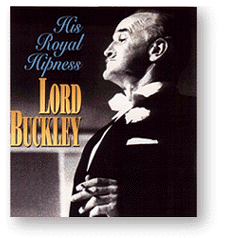
Hipsters, Flipsters and finger-popping daddies – knock me your lobes... Lord Buckley Redux...


I've been busy these last days so late on parade with this week's selection. I've been at a great gig (Vibracathedral Orchestra, Hush Arbors and Sunburned Hand of the Man in Nottingham) and played on two others – friday in Northampton at Liquidiser's regular sessions and last night the first one of this year's Club Sporadic – which went brilliantly – some fine music played by Stephen Lenehan and The Good Anna apart from ourselves. So: screw music this week! Need a break:

So: some hip humour from way back. I first encountered Lord Buckley's work in the sixties. He comes and goes out of fashion but is usually around somewhere in the background – wherever hipsters are having a laugh. Here's three of his most famous routines: The Raven, The Nazz and Marc Anthony's Funeral Oration. Head for Kick City... Enjoy...

Download:

The Nazz


Marc Anthony's Funeral Oration


Buy

Download


The Raven


Buy

Saturday, February 18, 2006

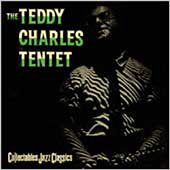
Teddy Charles and George Russell...


Tangents are there to go off on, of course... The proposed Eric Dolphy post will be a little delayed because I wanted to put up some Teddy Charles. Who is still with us, like Chico Hamilton, featured in the previous post, an elder stateman still playing. Who has never really got his due – jazz critical fashions being what they are/were. Many interesting and valid currents from the artistic ferments of the fifties in America were subsequently overshadowed by the blood and fire of the sixties. The Eisenhower period is always depicted as grey, conformist, coming in off the witch-hunting/black-listing/commie-hunting McCarthy melodramas that put TV on the map. Yet there was the whole Beat ferment, the Black Mountain crew, a slew of painters and a variety of restless jazz musicians whose souls were not in hock to Charlie Parker producing some amazing music. If the dominant streams were the 'Cool school' and 'Hard Bop,' allied to those areas and overlapping were a bunch of mavericks intent on movement down their own paths. Jazz like all art forms runs on fashion and critical opinion. Dave Brubeck – forget it. Tristano – too white, or something, didn't like drummers anyway. And so it goes... Or people are just plain forgotten – like Charles, I suspect although he seems to have come back on the radar over the last few years – in his eighties, for God's sake. Maybe some obscurity is good for the health when you consider the litter of premature corpses round the jazz pantheon... So – Teddy Charles, started out as a drummer, like many a vibe player then took up the vibraharp and really flew. A good overview of his career is here...

The tracks I have chosen – Lydian M-1 by George Russell and Vibrations by Mal Waldron. Note that on the cd/album notes the trumpeter is called 'Pete Urban' – an alias for Art Farmer. The Tentet existed in various combination of arrangers,composers and personnel. This edition has the following musicians on board:

Personnel:
Teddy Charles (vibraphone); Gigi Gryce (alto saxophone); J.R. Monterose (tenor saxophone); George Barrow, Sol Schlinger (baritone saxophone); Peter Urban (trumpet); Mal Waldron (piano); Jimmy Raney (guitar); Teddy Kotick (bass); Joe Harris (drums).
Download

Vibrations


Lydian M-1

Buy
Teddy Charles Tentet - Teddy Charles Tentet


Another unrecognised genius who had a massive theoretical impact on jazz but never really got his due until later in life (perhaps due to his decamping to Europe for a long period) is George Russell.Who composed one of the pieces above – 'Lydian-M1' and has Teddy Charles playing on this session which produced 'All about Rosie.' Noted especially for the Bill Evans solo that helped to establish him as a major new force in jazz, this is a long-form composition in three sections, lumped in with the 'Third Stream' at the time of inception. (And maybe 'Third Stream' – too European, man - could do with a re-examination?). There was a lot of crossover between the two musicians and those who played with them – Art Farmer for one, who plays on all these selections. Yet where the 'Third Stream' veered towards an often uneasy accomodation of European art music devices, notably atonality, Russell founded his own harmonic conception which expands greatly the harmonies of jazz from bebop onwards but is more polytonal than atonal – and he anticipated and influenced the move towards modal structures. Charles came at composition from a different angles but always seems to retain the essence of jazz in his performances, however 'far out' they go.

Charles and Russell stand as musicians who wanted to progress the music onwards without junking the tradition they came from, staying loosely within the 'bebop aesthetic,' as it were. Looking back one can see how much of a ferment was occurring throughout the so-called dull fifties before the jams really were kicked out by the 'new thing' in all its diverse manifestations. (Also, how much the sixties revolutionaries in turn were as rooted in the tradition – with hindsight).
Russell reached his eighties, as did Charles – as a now world-acclaimed composer and theoretician, still leading his ensembles. Charles is less well known – though still playing, apparently – those are the breaks. But the music remains, luckily available on CD and repaying much study – and enjoyment. Because whatever complexity of composition is on display here, the drums still have it underneath – the music swings in the old sense that was to be disrupted by the rhythmic onslaughts of polyrhythmic density to come. In some other more consciously 'Third Stream' settings, the beat edged into abstraction and a more European feel- these tracks swing, still sound fresh and full of surprise.

Personnel:
Art Farmer, Louis Mucci (t), Jimmy Knepper (tb), Jim Buffington, Robert Di Domenica (frh), John LaPorta (as), Hal McKusick (ts), Manuel Zegler (bsn), Margaret Ross (hrp), Teddy Charles (vib), Barry Galbraith (g), Bill Evans (p), Joe Benjamin (b), Teddy Sommer (d), George Russell (con, a),

Download

All about Rosie


Buy

Wednesday, February 15, 2006

Coltrane... Dolphy... obsessions? ... probably...


Kulu Se Mama was always an oddity... I bought it years ago but I can't say that it was ever one of my favourites and I rarely played it. But the times change – it's still an oddity, kind of Coltrane's equivalent of a late Albert Ayler track, maybe – world music/african roots exploration etc instead of flower power and r and b, but something that significantly demonstrates a potential broadening of direction – or a dead end... personally I like late Ayler... And on re-acquaintance, this does not sound that dated, strangely enough, because of those world music connotations?... Maybe... Recorded in 1965 with an expanded group on hand – Pharoah Sanders, McCoy Tyner, Jimmy Garrison, Donald Rafael Garrett, Frank Butler, Juno Lewis, and Elvin Jones, there are a lot of streams flowing into the making of this chosen track – folk music mingling with the jazz - itself a river whose banks were bursting at the time - via overlaid imitations/emulations of African rhythms and song. Juno Lewis wrote the title poem for his mother, apparently, and performs it in an African-Creole dialect called 'Entobes.' Which , if you google it, only comes up in relation to this record. Obscure... The percussion is free-flowing but structured – unlike the wilder bangouts with Elvin Jones and Rashied Ali – with Frank Butler as second drummer. It opens over rattling small drums and Lewis chanting until the horns come in a slow line over the rippling cross rhythms, answered sporadically by Lewis. The heavily vocalised saxophone lines echo Lewis's voice – half-singing, half-chanting – getting wilder and squarkier as the music builds. The drums are recorded slightly back in the mix but the hand percussion burst through here and there – the pattering of what sounds like conga drums and bongos more cutting than the two trap drummers who are down in the engine room producing a dense blur of cymbals and snares and bass drums. Tyner surfaces through the dense murk of rhythm, repeated figures hammered out over a recurring thump on the tonal centre of b flat: the congas and shakers and what sounds like a cowbell welling up behind him. An echoing wooping sound from Lewis(?) before he returns to his vocal line. Bass led vamp to the ending, bringing the music to rest over echoing high drum sounds – bongos?

Now I've listened to it a few times, it grows on me, an attempt to expand beyond the usual howling wildness into an area where it would have been interesting to have heard more...

Download

Kulu se mama

Buy

Continuing the African roots theme – a couple of years earlier, Coltrane recorded the mighty Africa/Brass sessions – some of my favourite music, not the least down to our man Eric Dolphy's arrangements for the orchestra. Blues Minor is taken at a brisk pace – Coltrane straight in with the theme as the band punctuates with deep sonorous chords then onwards into his solo as they drop out. The drums are with him all the way, the bass more felt than heard and Tyner chording in what sounds like the next room. A few choruses of solo sax then the orchestra step back in with background punches of colouration. Tyner up for a solo, an elegant, swinging series of choruses, lines of single notes mainly over discrete left hand chording, Garrison going from low to high on his bass walks. Coltrane returns, more forceful blowing, inside the form with the odd flurry to hint at escape outwards, recapping the theme here and there as the orchestra soar up in abrupt waves until they all go into the final theme statement.

Impassioned playing, of course. The subject matter demanded it... The resonance of this album comes from this excavation of origins – from the celebration of Africa as homeland to the sadness, despair and anger because of the forced separation of so many of its peoples during slavery. To the freedom road that started back on obscure plantations and developed through and after the Civil War, the sold-out dreams that became the nightmares that followed of segregation. Onwards to – wherever you want to put your marker. Not for me to say, I'm not black or American. A track from one of the great Coltrane albums – and by obvious extension one of the great artworks of the twentieth century.

Download

Blues Minor

Buy


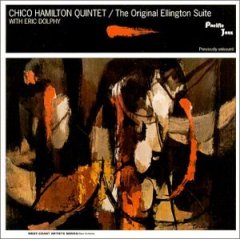
We seem to be working backwards. So, from Dolphy the arranger to Dolphy the soloist. A curiosity – his first recorded solo, or near as dammit, still under the heavy sway of Parker (which never entirely disappeared but became lighter as he rapidly fashioned his own inimitable style and built sturdily on that legacy). Taken from a lost album – Hamilton recorded the Ellington Suite twice- and the released version in 1959 was by a reunion of his old band - Buddy Collette, Jim Hall, Fred Katz and Carson Smith with Paul Horn added. This version, from 1958, was never released and remained lost for over thirty years until a test pressing surfaced in England. So here's 'Just a sitting and a rocking.' Bass and band in call and response theme statement. A mellow timbred group with the cello upfront alongside guitar and Dolphy on alto – unwinding upwards into his solo. Parkeresque as stated. Lightly swinging drums and cello doing some effective counterpoint in the background. Guitar solos cleanly as cello plays behind. Dolphy, of course, was to use the cello in his own groups a bit further down the line. This is light, airy jazz with unusual textures due to the instrumentation. Hamilton is still alive and playing in advanced years , an undersung hero in a genre of undersung heroes. A man whose recordings are well worth seeking out – a stone original...

The rest of the band on this date: Nate Gershman: cello, John Pisano: guitar and Hal Gaylor on bass . Some say that the released album was better, given Jim Hall and Fred Katz's jazz pedigree over the lesser known Pisano and more classically inclined Gershman. Track it down and compare... I'd usually go with Dolphy, no matter that Collette was a more accomplished player. Eric always had that spark
...

Download

Just a sitting and a rocking


Buy

Saturday, February 11, 2006

Elton Dean: 1945- 2006...


I was going to post some more Eric Dolphy – but it can wait a week or so. I was down in the Artist's Quarter yesterday afternoon for a quiet drink and a read of the paper when I discovered – sadly – another obituary and another loss to the British jazz/improvised music scene. Elton Dean, gone from us at 60 on the 7th February. I also discovered something in the write-up by John Fordham here...
that I didn't know – Elton was originally from Nottingham. And following up a bit of research when I got home – Long John Baldry, see here...
with whose band Bluesology he played in the sixties, and who died last year, came originally from Haddon in Derbyshire. As a local East Midlander, back on the home ground now for a few years (but not for much longer if all goes well...) I felt maybe just a bit closer to these guys as an admittedly more obscure provincial boy who also went to the big city. Baldry I saw many times in London years back, especially when he was running some of the all -night folk sessions at Les Cousins – and maybe the old 51/Colyer Club although I 'm a bit amnesic about that one. Young blood running high on wild cocktails of adrenalin, drink and drugs... a long time ago... Elton Dean I don't think I ever saw live – but I heard him on radio and records consistently down the years. He was one of the few interesting constituents of 'Soft Machine' – a band I never liked, finding their take on jazz rock just too lumpy after hearing Miles and 'Bitches Brew.' Never was into that particular scene grouped around that band – and for all that he was and is no doubt a sterling and affable man, Robert Wyatt especially has always put me off – can't stand his whiny voice. Hey – shoot me. John Fordham's piece also imparts the amusing information that the appalling Elton John took his stage name from the monikers of Dean and Baldry. Dear God... But Elton Dean was a fascinating character, coming off that particularly English 60's treble – whammy of jazz and rhythm and blues and rock – which I wrote about in an earlier blog here... I like the freeforming moves across the territories of blues, jazz, rock and improv that he represents and was so adept at – open ears and mind, not closed up into any particular ghetto, the comfort of which in a hostile world where creativity does not always get its due is within easy reach and easier to cope with sometimes than challenging the barriers of one's peers. Eclecticism is not always a good move, musically, of course. A healthy dash of purism can be just as astringently uplifting... Circumstances and nerve and grace and luck determine which avenue to take at the correct tme... For the sake of argument, say, the area described between Miles Davis's later musics and Cecil Taylor's career. (The mirror image maybe is the distance between most fusion music and, for all the undoubted skills contained therein,the Wynton Marsalis neocon camp...)

I gather that Elton did not play so much over here these later days – which comes as no surprise: to make a living in the United Kingdom from challenging music is a difficult and sometimes impossible road to venture down. Plus ça change...

The two tracks I've selected come from a recent album: 'QED.' Quod erat demonstrandum, which if my rusty Latin tells me as : 'That which was to be demonstrated.' So I offer two of these proofs, more aesthetic, perhaps, than strictly mathematical, of the very considerable worth of the late Elton Dean:

'Sheepdogs.' A duet with Paul Rodgers on bass – performed within the jazz end of the spectrum, a free-ranging piece, fluent squalling vocalised saxophone, going in and out of more lyrical passages. Recorded live, at the Red Rose club.

'New Roads' is a trio recorded in the studio: an interesting line-up of Alex Mc Guire on the Hammond organ, Tony Bianco on drums and Elton on sax and Fender Rhodes. The two keyboards carry much jazz ideology with them – organ and sax playing grits and greens soul jazz (often for economic reasons) was a staple line-up in many clubs in the States during the fifties and sixties – and no doubt beyond. The whole jazz rock scenario of course sprang in great part from Miles Davis's experiments with adopting electronic instruments – much of the denseness on those 'Bitches Brew' and beyond tracks come from the mixture of electronic keyboards – Chic Corea and Keith Jarrett et al. There is an element of those epochal sounds here, mixed in with the orthodox jazz heritage – yet there is not much backbeat or conceding simplicity for it's own sake – this is also not some Jimmy Smith retread. Electric jazz, if you will, but not of the tedious kind that unfortunately followed Miles' experiments (you know who I mean). It rocks...

The diversity of playing scenarios that Dean adventurously participated in throughout his musical life are reflected in a small way by these tracks. A tantalising snippet of his most recent playing (at the end of an amazing live concert recording by Mary Schneider) can be caught during the next few days on Jazz on 3's latest show, available here...
featuring his latest (and sadly last) band Soft Bounds, with Hugh Hopper, Simon Goubert, Sophia Domancich. Lots of high energy playing – with a touch of the Coltrane quartet, perhaps (no bad thing) except maybe that bass and piano are more audible and integrated into the whole.

A great loss to the scene and condolences to his family and friends...


Good article about Elton Dean here...


Download
Sheepdogs

New Roads


Buy

Tuesday, February 07, 2006

Eric Dolphy and Andrew Hill...

My two musicians are (again) Eric Dolphy and Andrew Hill. One dead in his tracks too tragically young – the other, luckily still with us and belatedly, maybe, getting the acclaim he justly deserves. Two firebrands on saxophone (flute and bass clarinet) and piano respectively who nevertheless in the time of ferment they burned in when young kept a foot back behind the line of tradition. Dolphy could be seen as in the direct descent from Charlie Parker – Hill, well, a combo of Monk and Bud Powell at certain moments... maybe... But each was also his own man,with a fully developed style and broader musical aesthetic by the time these records were made. Dolphy has alongside him Booker Little, another tragically young fatality, and a powerful rhythm section – who all are magnificient, Haynes especially. Who is the overlap this time round (along with the relationship between Dolphy and Hill, of course) as he plays on both sessions, introducing the Dolphy tune with a few crisp bars of cymbal and sinuous snare. Little plays confidently and well, Dolphy bursting in as he always does, impatiently but in an almost boyish, charming manner. 'Far Cry' was dedicated to Charlie Parker, I believe, who at that time was only dead a few years – but his ghost still overshadowed mightily. Dolphy eschews his more dissonant angular intevallic leaps in his solo - almost reminding me of one of the other keepers of the Bird flame – with that cutting tone – Jackie McLean. But playing with that Bird-like fluency that demonstrated his immense technique. Byard - quite boppish. Then theme and out ending on upwards squawky twisting notes as Haynes ripples to a stop.


Eric Dolphy: Far Cry -1960

Eric Dolphy: alto sax;Booker Little: trumpet;Jaki Byard:piano; Ron Carter:bass; Roy Haynes:drums.

Download

Far Cry


Buy

Andrew Hill: Black Fire - 1963

Andrew Hill:piano;Joe Henderson: tenor saxophone;Richard Davis:bass;Roy Haynes: drums.

Hill's theme 'Pumpkin' is a bumpy ride with a bar of 5/4 tacked on every so often to disrupt the rhythmic flow – which also acts as a unifying device and is negotiated in varying ways – a fluent Hill solo – well, he wrote it – a swift run through by Haynes and Davis – then Henderson, who sounds a fraction stifled here and there by that odd bar but steams through mightily overall. I had never really listened to the tenor player much until recently – given that he was fresh on the scene when this was recorded he plays with a gruff assurance throughout the album. Hill satisfies like Dolphy to the extent that he has a similar knotty harmonic vision and mastery of unexpected moves – and is also a superior compositional craftsman for his various small groups. They don't run off into the totally uncharted but play his compositions with cool mastery that has its flexibility tested to the limits at times. The 'Black Fire' here is a slow-burner rather than a flat-out conflagration – controlled heat.

Dolphy - an accomplished composer with a variety of takes on melding the old to the new – died young and Hill went into obscurity for a long time. The freshness of this music tempts speculations as to what might have been... maybe the vindication is that jazz as it stands today – a sprawling ill-defined and almost undefinable area – contains in its mainstream much of the advances and sounds these guys made.

Download

Pumpkin


Buy

Thursday, February 02, 2006

Pete Morton at the Pack Horse, Loughborough, 20 Jan 2006


There had been a buzz all week round the watering holes – Pete Morton – Friday – be there... come early... Pete is back in town...

Pete Morton
is a constant...even though I haven't heard him live so much recently and was removed by geography and the madness of relationships from the game for a long time before that. But back in the East Midlands – who ya' gonna call? This is the guy who reduces me to tears, makes me laugh out loud and causes me to click my heels with the sheer éclat of his muse: they say he's a best kept secret and maybe that is (unfortunately) true... but not on his home ground...

And: why write about those who do not move the blood... Pete always has.

I got to the Pack before 8 pm and the place was quiet – there was that odd feeling that – maybe it was going to be one of those dire nights when no-one turns up – then the room started to fill rapidly. No problem. Everyone expectant – and a cross section of ages for once, not just the usual ageing folk club diehards. An introductory song from Frank Marmion, the club curator and main resident musician – in his own inimitably waggish style: 'The hole in the elephant's bottom.' Inspired: old school music hall, really, as being totally different to the main emotional tenor of the night, raising much laughter and easing the audience in smoothly. Then: coming up fast – Pete Morton.

Who has been playing this old club on and off for many years, since his early breakout onto the scene with a refreshingly dynamic take that rode on the punk energy of the times (and the energy of his earlier musical attempts at rock and roll anarchy and riot, amusingly mentioned later in the evening). He looked a little tired, just back from the States a week before and constant gigging since apparently. But with an audience like this, the emotional energy is palpable – just reach out and touch and be enervated. So he did.

Starting off with a song from his new album, 'Great Gold Sun.' A ¾ evocation of another time which could have lapsed into the sentimentality that is rampant on the folk scene – all those bygone songs of yearning yesteryears. Pete avoids this – on one level, by his delivery, a very good singer who can soar upwards and come through with an emotional honesty that hits hard. Also by the cunning and craft of the song: using the distancing device of a flickering, crackly old silent piece of film that shows a town scene from 1905, he wonders where the people went to, notices social details such as 'everyone's wearing a hat.' The film acts to stand in between us and them, a barrier which recognises the distance that the sentimental ones ignore and that can only give snatched glimpses of the past. Almost a straight observation of the landscape and people, there is a sadness behind in the awareness that this is time gone – only scratchily available now through a battered old scrap of film. Yet the casual observations of individual quirks somehow build a subtle if flimsy bridge across time- we are connected to our forefathers and mothers across death, if only for a song's duration.

Following this: an interesting - and brave – take on the Palestine/Israeli conflict. Admonishing the opposing participants as if they were squabbling children – brothers especially who fight more savagely in sibling rivalry than strangers in random encounters. This is not the usual weary knee-jerk reaction but a song that tries to be even-minded – I guess it would probably offend both sides which makes it relevant. 'Overtired.' But who is speaking? This could be seen as Western patronising on one level – except that the narration can come from – everyone. Anyone. And the distance again that this creates seems to put the conflict into a wider historical timeframe, outside the daily catalogue of horrors and name-calling - with the promise that resolution sooner or later is inevitable. Someday... At the end of the song there were sirens outside moving fast across town in the East Midlands night. An almost chilling piece of synchronicity.

Moving on. 'The Busker's Song. An evocation of teenage rebellion – 'we played Ramones songs faster than the Ramones' - and the eventual inevitable separation from other like-minded anarcho-rebels as the mirror person in the song is met years later and turns out to have become a straight member of society – as opposed to the singer/musician who took the rhetoric (too?) seriously and followed his dream: a rake and a rambling boy in the ongoing vie bohème. It's a song about being a musician and growing older and looking back – noting and measuring the degrees of separation from those who went into jobs and raised families etc. Especially resonant to musicians who have followed the same roads... But it is not cheesy – even-handed while celebrating the loneliness, it does not snipe at the one who stayed home. Which is an ongoing quality of Pete's music – a generosity that can applaud difference. A generosity of words as well – as they tumble out and across the bar-lines in a splendid torrent.

'The Luckiest Man' is a celebration of family – Mum and Dad. Social history and celebration of place – Leicester – which comes over all the more piquantly because Pete does not adopt a foreign accent for his songs or flatten his inherited inflections out of recognition but sings well within the gradations of the local, so that a fragment of dialect does not jar. This gives his music an ease to itself, a space to breathe easily.

A song for himself... a personal request: 'Further.' A song that moves from the local to the universal and back which is as good a phrase as any to describe Pete's main songwriting tactic. In this case, a ramble through Lincolnshire, during which he reflects that his language is related to Friesian – the Holland across the sea from the fen country. And how much he loves this land. With the line that sums up a main strand of his thought and music: 'The world is crazy but your love can change it./ And it's going to get better 'cause we carry it on.' Ending on the universal inside the local – sitting in a cafe in Lincoln but looking out at the world: 'I raised my glass for all mankind.'

He puts this technique to good use again in the song: 'Post Office Queue.' Celebrating the myriad lives that can be found in something as mundane as – a queue at the Post Office. An up song, quirkily amusing. And an interesting device – the queue - to engage lightly with the modern world and contrast the human speech of people thrown into accidental interaction with the mechanical voice that directs people to the different counters as they become available. 'Cashier number four, please'...

Pete has never stayed still on his musical quests – delivering his next song in passable Dutch from the Hollander songwriter Stef Bos. (Here - or here...). This looks a promising direction – for his Dutch gigs! Not sure how much you can get away with in monolingual England. Only joking - the choruses are not that difficult to get around.

Followed by the end set number: 'Harvest.' A loaded word. Initially, images of rural England in a folk song context, certainly. But something more going on here – 'Love' is bringing the harvest home and operating on metaphorical level. The song depends to a certain extent on lists of opposites throughout: 'The passions come the passions go,' 'The pleasures and the troubles,' 'Joy and sorrow sun and rain,' 'The body grows the body wanes' Etc. These dialectic encounters set up the very rhythm of life, it seems – and are resolved when the higher force intervenes: 'Love.' All you need? A cheap shot – there is a denseness to this song which resists easy analysis.

As intimated in his introductory song to the evening, a new career awaits Frank Marmion if there is a musical hall revival: he opens the second half with 'After the Ball.' A song that reveals some strange sadness underneath the familiarity of the chorus. In a voice, as someone famously said: 'throbbing with emotion and alcohol,' two traditions meet – or recombine as the music hall was where much 'folk music' that survived the rise of urban England flowed into the new, more consciously commercial mainstream, I guess, after the industrial revolution. Chris Coleman essayed a nifty piece of ragtime guitar playing as contrast. John Bentham, local stalwart of the traditional scene sang unaccompanied and as ever - well. Sheila Mosley next – another local singer with an unusual high and sweet voice. (Her daugher runs this site about Pete Morton, by the way... worth a look... ) These floor singers are varied and skilful – a tribute to the Pack Horse and also the seemingly higher standard of musicianship around these days. Not one of those dreadful tributes to laziness – a songsheet – in site. They frame Pete's performance well.

Second half: going into the John Clare song I mentioned above – 'The Shepherd's Calendar.' I love this song, so evocative of the poet's tortured, tragic yet defiantly optimistic life – 'The bells of life are ringing...And anyway the birds are sweetly singing.' Contrasting the world of rural Northamptonshire/Nature with the bustle and harshness of London – the old and the new England - and the brief fame he encountered there before his eventual return and later descent into madness. A snapshot of a moment when he was caught between two worlds on the way to meet his publisher: ' I step from my world toward his/I'm like a beggar on a bridge/Between two understandings.' The guitar figure is that familiar descending pattern in G he uses (maybe too often!) that evokes the gait of someone strolling out to London and their problematic destiny. 'London is calling with its scheme... I do not know where the wolves lie'... All provincials who travelled that road know that big city wolf howl – and the harbinger, poor old mad John Clare from Northampton – sucked blindly into the Metropolitan dazzle so long ago... plus ça change etc...

Moving to an American poet: 'I'm in love with Emily Dickinson.' Staying inside with a ghost - 'Some say she died years ago' - evoked by the immortality of her achievement and her presence: 'I heard her down the hall.' A celebration of what reading poetry is probably all about – entering a zone beyond the temporal – as the narrator echoes the strange interiorised life of Dickinson at her family home in Amherst: 'That's why I stay indoors/and let the world go proudly by.' Describing the relationship one has with a loved writer – intense and almost erotic and transcending time. The weird cyberspace of literature...

From the literary to – 'The Battle of Trafalgar.' The pub in Leicester where he wrote it during a drinking session, not the famous conflict of 1805. A raucous paean to the eccentricities and foibles of the common run – 'they'll never clone people like this in a million years.' The surreal in the ordinary. Anyone who has ever participated in one of those lock-ins that defiantly go outside of time – in both senses – temporal and legal (before the new laws anyway) -creating a temporary zone of freedom where strangers meet and enjoy the ongoing barminess- will know what he is describing. If you've never been there – you won't truly appreciate this song...

'Corruption country.' Displays the manner in which Pete can be strongly moral in his social criticism – but still up-beat enough to point beyond the darkness. Some powerful imagery here –

'Corruption Country it knows no bounds
It's a killer it's a thief it's a bloodthirsty pack of hounds.'

Describing the all-inclusive manner of contemporary society – 'it knows no bounds.' The older corruptions were more ring-fenced in a way, more contained, compared to the pervasive intrusions of today that spill over everywhere – on a scale never seen before due to the power of technology but backed up when necessary by the traditional thuggeries – 'killer,' 'thief,' 'pack of hounds.' Images that link criminal violence with the vengeance of the law on a common participatory ground of evil. This viral character of contemporary corruption and darkness is further taken on: 'runs amok through the fields of the good and it craves more wealth.' A wild apocalyptic floodtide, out of control... yet counterbalanced by the continual growth of democracy which 'is still a child/but it's growing every day.' To the extent that 'One day soon... Corruption Country will be gone.' An optimistic take, maybe. But heartwarmingly so: we can sometimes stare too long into the headlights of brutal events as they come at us and be hypnotised into complacency and cowardice. An interesting song that is not geographically specific – it could apply to almost any country on some level. With a strong hint- maybe - of the growing pains of young democracy in Iraq and Afghanistan? The ambiguity and universality again makes the song resonate more strongly...

'The Shores of Italy' is an absolute killer and heartbreaker. About an incident off the coast of Italy concerning a boat full of African immigrants sinking. No moralising, or explicit side taking. No slogan banging. Just a compassionate and tragic story – about the dazzling mirage of wealthy Europe and freedom from want for the dispossed of Africa (and by extension, beyond...). About the disorientation of transit between home and and a fearful, uncertain future: 'When I lose my compass and I'm thinking of Africa.' A stunning rendition and raising of the grim images lurking beyond the surety and safety all too easily taken for granted: 'So many dreams lost on an unknown sea.' A song that haunts you for days afterwards...

Another Dutch song. Dutch always sounds slightly familiar yet off-kilter – a weird funhouse mirror image of English. I am not unfamilar with Dutch music so I enjoy these Lowlands journeys – and the audience seem happy enough as they struggle to sing along... a contrast to Holland where most people could probably make every chorus tonight in English without too much linguistic strain...

A traditional song at last: 'Farmer's Boy.' A song Pete has made his own, which suits that open-throated soaring voice. And an interesting story buried inside the happy ending and narrative trajectory lit by bucolic sunlight – the lad who comes to the farm looking for work has a lot of hungry mouths to feed which hints at the harsher life of the rural poor back when. One of those rolling choruses suited to a venue like this. I looked at the faces of the audience as they joined in: ecstasy.

Going out on...

'Six Billion Eccentrics.' A light-hearted crowd-leaver. But again – that celebration of the extraordinary in the supposed mundane – we are all wonderfully different and this should be celebrated, the title referring, of course, to the massed population of the world.

The encore. Riding out on 'Another Train,' what else? About the reality of redemptionary second chances in life stated bluntly: 'There always is.'. I've heard others sing it and it travels well but... always better from the fountainhead and weirdly, still fresh... A strong song that means a lot to many people...

Summation: Pete said earlier down in the bar that most reviews read like train time-tables - lists of the songs and little else. I've tried to get away from that by using my transcribed reactions to the music as I heard it as much as possible – a barrelfull of emotion, for sure, but - not exactly recollected in tranquility - as I did not have my glasses with me that night so the notes were even more scrawled and indecipherable than usual – more: feverishly embellished. A distancing technique of my own but hopefully retaining some immediacy... The next day I was sat in a Loughborough bar with Frank Marmion and he said something interesting: that he was still full emotionally from the night before. I knew what he meant – there is a lot to unravel and take in when Pete Morton performs. But the first and lasting impression is the emotional force he sends out to his audience. By being true to himself – still the Leicestershire pronunciations scattered throughout the songs, the voice clear and true, lightly rooted in its place but flexible enough to encompass the greater world without compromising its origins - he creates a unique body of work. English yet universal, looking for the common humanity of all far and wide while simultaneously rejoicing in the individuality of each person. Beyond system or ideology, a spiritual take on life that needs no priests or churches, rooted perhaps in the rebellious culture of the English antinomian heritage from the Ranters and beyond through the anonymous rebel past and back via a couple of individuals he has written songs about - George Fox, John Clare - by way of the Spinster of Amherst. Who, come to think of it, took the Puritan heritage of the Bay Colonies, refracted it through the ballad and hymn forms of her culture and produced amazing anticipations of the modern and post-modern muse with her fragmented lines, dashes, taut compressions and wild wired conversations and arguments with God. Dickinson was a questor through internal, enigmatic spaces...

'EXULTATION is the going
Of an inland soul to sea,
Past the houses, past the headlands,
Into deep eternity! '

The female internalised counter-part(and subtle counterpuncher) to Walt Whitman's outdoor, brawling, sprawling poems that followed and delineated the outer space of the growing country. Maybe Pete should write a song about him... as a man who celebrated democracy and the individual as paradigm for all, with a matchless joyful optimism for the possiblities of life, he seems a fitting anticipatory member of this radical heritage:

'I CELEBRATE myself;
And what I assume you shall assume;
For every atom belonging to me, as good belongs to you.'

Pete Morton. One day in Loughborough - we raised our glasses to him...
Wednesday, February 01, 2006

Hard Bop - forwards and backwards...


It looks as if I have gone seriously old school these last couple of weeks with all the folk/acoustic gigs and reviews (Pete Morton at the Pack almost finished)... apart from that wild Coltrane track a few days ago. But – it's what comes up and out.. So- some hard bop of the classic variety first up – Art Blakey and the Jazz Messengers from the remastered album 'Moanin.' But not the title track - a couple of different tunes, I think, to be perverse. 'Along Came Betty' is a Benny Golson compostion. 'Come Rain Or Come Shine' an old standard – here done in a loping mid-tempo smartly clipped arrangement. One of the Blakey band's great strengths apart from soloists in depth and the mighty power of the leader's drums was the continual excellence of his arrangers, as well as all the classic original compositions for the band. This particular incarnation had Timmons and Golson – two very original writers of themes that have stuck around. Solos are great – Timmons romping, rolling, almost barrelhouse at times, Lee Morgan signifying why his death was such a loss – but listen especially to Golson on 'Come Rain...' - almost edging into Coltrane territory? Well, they were from the same town...


And then there was original bop – which doesn't come harder and faster than this aptly titled track: 'Dizzy Atmosphere.' Classic live recordings from 1947 - brief theme statement – then into a whirling Parker solo punctuated by crisp cymbals and those sporadic bop bombs from the drummer. Then Gillespie – an equally barnstorming, lipburning solo. Brief re-statement and out to wild applause. The bass and piano (Al McKibbon and John Lewis) are all but inaudible but the horns and drums of Joe Harris are enough to display how fast bop became a mature style – a mere couple of years. Those theme statements - a precursor echo of what Ornette Coleman would sound like with Don Cherry ten years or so later. Hindsight being a mult-faceted analytical tool...


Download
Along Came Betty_mp3


Come Rain And Come Shine_mp3


Buy

Download

Dizzy Atmosphere_mp3


Buy

Saturday, January 28, 2006

Tenor Madness... Rollins, Coltrane and more Coltrane...


Yet more Coltrane – I have my obsessions... Two book ends almost – a blowing session with Sonny Rollins from 1956 and a track from the wild 'Live in Seattle' sessions dated 1965. Some people like early Trane, others late Trane, some in the middle. I like them all. The fascination maybe is to track the route he travelled from bebop to fire music. An amazing journey which still fascinates and grabs.
'Tenor Madness' is a blues riff vehicle for some good blowing. Coltrane exploratory, Rollins easy bouncing. Plus the ever-admirable Miles Davis rhythm section: Red Garland, Paul Chambers and Philly Joe Jones. Two tenor solos and swapping fours later on. Plus the usual Garland rippling magic – a pianist I really like, with a bright-eyed sparkle to every solo. Chambers on bass – ditto – smooth as ever. Philly Joe plays with his always limber swing and sharpness. I can remember some of the old school jazz critics from way back writing that these blowing sessions were too long – raised on the medium-necessary succintness of the 3 minute 78. For me the time passes too soon. Given the historic nature of this session – the only time they played together on recordt- tenor madness? Well... not really. If you are thinking in terms of bop/hard bop, you would go to Johnny Griffin and Lockjaw Davis, for instance. Rollins was the more established player, but Coltrane certainly does not sound lagging or country cousinish. Within ten years... Rollins went into retreat, allegedly as a reaction to Coltrane's magisterial rise (who knows the real story?). And Coltrane was pouring out pure molten fire like...


...'Live in Seattle:' legendary scorching with Pharoah Sanders. For me, Sanders, a good player, never transcended his time with the Coltrane band, never consistently played at such peaks again. Audience applause, bass in, then strumming underneath a tentative horn chorale slowly building – Donald Garrett added to Sanders and the rest of the quartet – Tyner, Elvin Jones and Garrison. But no piano and drums at the beginning – which reminds me of a couple of Albert Ayler tracks, a squiggly high horn line almost emulating the strings in someof his bands – Michael Sampson et al.. Like some weird chamber music cross with New Orleans collective funkiness. The horns start to duel going strongly into a helter skelter conversation. This also demonstrates how a large part of the Coltrane 'sound,' especially late Trane, is rooted in the boiling rhythms of the drummers – Jones and later Rashied Ali – together and separately – that he bounced off so mightily. The horns drop out and leave Garrison to play one of his 'guitarry' solos – fast, thoughtful and melodic strumming. When the piano and drums kick in after this solo – to prove my point - the energy levels shift perceptively. Tyner drops out fairly quickly – as usual – and the drums start to really dig in – and dig in more and more behind Coltrane's long, searching solo. Weird cries and grunts:'Woooaah' Then into free collective horns freakout. Tyner edges back in – hey, I'm still here, boys! His instrument is a bit 'pub piano-y' but recorded clearly. An inspired two-fisted solo, rhapsodic and powerful – back into more collective blowing that starts to lift you to impossible realms before slowly winding down – and out on a piano trill and applause that sounds distant – as if the audience were too wrung out to clap too loudly. Majestic – and don't let anyone tell you otherwise. Leaving you breathless and exhilarated.

Yeah, it's 35 minutes long. So what? To borrow a Miles tune...


Download

Tenor Madness


Buy


Download

Evolution


Buy

Monday, January 23, 2006

More Coltrane...


John Coltrane from 1958 - a perkily tender reading of 'Time after Time' with a solid Red Garland solo thrown in. Garland had a bounce to his playing I always found infectious. Trane is playing within the boundaries of the tune here – but his tone is wonderful, that keening, sad edge giving the flavour of melancholy. For all the fury and fire, it is interesting to see how much of Coltrane's music has been marketed as 'Smooth Jazz,' 'Jazz for lovers,' etc... something about the man's tenor that speaks to many.

'Stardust' – add Wilbur Harden on flugelhorn. An elegant player, not as well known as he should be – long gone into the backroads of jazz obscurity- unfortunately. A long, rambling take on the Hoagy Carmichael tune with an arco solo from Paul Chambers. The flugelhorn added to Coltrane and the Davis rhythm section gives this a slightly off-kilter mirroring of the Miles Davis band of the time.


Download

Time after time


Stardust


Buy

Thursday, January 19, 2006

Cecil Taylor...redux...


Cecil Taylor... redux...

Fiery swinging stuff... Cecil Taylor's early work repays attention. The rhythm section is bebop orthodox almost – but listen to his piano tearing chromatic chunks out of the tracks here. The first, 'EB', a trio with Dennis Charles and Buell Neidlinger. The second: 'Excursion on a wobbly rail' (with strong Ellington overtones), add Earl Griffiths on vibes, whose cool, spinning lines counterpoise perfectly with Taylor's piano. As he advances into his solo, Cecil plays figures behind him that have a flavour of Monk behind Milt Jackson on the seminal Blue Note recordings of the late forties. Whatever happened to Griffiths? A question asked many times down the years. There is a tension admittedly, between the other musicians and Taylor's more advanced conception but I find it fascinating - hearing him playing off the almost conventional rhythms, it's as if they slow him down enough so that you can hear the bare bones of the later style. Having said that - he rocks out on 'EB' - smashing left hand chords and a right hand like a storm wind. These tracks throw much light on the denser and rhythmically freer works to come. Although they are pretty torrid performances by any standards. This is music of its time, probing and pointing beyond its time and... ahead of its time. A definition of classic, maybe...


Download

EB

Buy

Download

Excursion on a wobbly rail


Buy

Monday, January 16, 2006

Coltrane and Cannonball... Miles and Coltrane...

A quick one – Coltrane and Cannonball Adderley playing 'Wabash' – effectively the Miles Davis group without the Prince of Darkness, recorded in Chicago 1959. Cannonball a bit back in the mix with Jimmy Cobb to the fore. Then Coltrane, up front and cutting straight through. Cannon was a great and maybe underrated player, Coltrane enjoying himself here, relatively angst-free. Classy piano from Wynton Kelly, fluent nimbly plucked bass from Paul Chambers. A fun track, bouncing along for 5.45 mins.

Le tout ensemble: the Davis Group in full tilt, live from on 'So What' from 1960 – Wynton Kelly, Paul Chambers, Jimmy Cobb, Coltrane and Miles. Coltrane boiling through, playing long, dense looping lines: you can feel the paradigms bending. Inspired solo from Kelly.

Coltrane/Adderley

Download

Wabash(mp3
)

Buy

Miles Davis Quintet with John Coltrane

Download

So what(mp3)


Buy

A quiet skill... Gren Morris and Sam Stephens at the Pack... Friday 13 Jan 2006...


Friday night, there is always a session at the Pack Horse, run by the inimitable Frank Marmion and his new gang: In Any Order. Arrived, scored a double vodka with lime and soda top up – off to the music. Which proved to be... brilliant. I had forgotten that they had a duo booked so was expecting the usual jam – which can be curate's eggish sometimes – but it usually takes off, either in a familiar or non-familiar direction – the ease of the old, the jolt of the new or something. There were a couple of new faces and new voices – mainly unaccompanied stuff but well sung. Then as I was easing into another double vodka the duo got up. Gren Morris vocals and Sam Stephens guitar and vocals. Some material can defeat the singer because they try too hard for an accent or dialect which is not natural to them in their efforts to enter the core of the song. We all know what I'm saying here... well, anyone who ever attended a folk session over the past decades. We jolly ploughboys and miners... well, we're not actually, at this long remove from the industrial revolution, which is often the problem – romanticising of a dead age. Or bending into an uncomfortable vocal trajectory in an attempt to interpret Americana old and new. But Gren Morris here sang in a full yet understated way, closely followed by interesting guitar from Sam Stephens that flowed with the songs rather than clawhammering them into a straitjacket. (And reminded me at odd points of a continental performer such as George Brassens...) The repertoire was incredibly varied and obviously well considered: no wild rovers need cavort among the wild mountain thyme tonight as the guns thunder yet again over the Somme...

Starting with 'Lake Ponchartrain,' performed with elegance. Onto 'Matt Ireland' which I haven't heard for a long time. And done well again. 'The Flash Lad,' another favourite of mine, introduced as 'Gangsta Rap' from way back. Which is pretty funny – and also pretty accurate when you think about it. A song by Cyril Tawney, 'The Drunken Sailor,' that I have never heard to my knowledge - which surprised me because as Al Pacino says in 'Scent of a Woman,' “I've been around, you know...” A droll song, sung a cappella – loaded with that shot of realism that made Tawney such a great songwriter. Which led neatly into Kipling's great Barrack Room Ballad: 'Tommy Atkins.' Kipling has long been out of fashion in the academic literary culture although there are signs his star is on the rise again. But he was resurrected in the folk world some time back by several seminal settings and performances of the Barrack Room Ballads – notably by Pete Bellamy in the 1970's - somewhat surprisingly maybe given the broad old left ideology that has underpinned the revival since the fifties and its antipathy towards Kipling, clumsily seen as an apologist for imperial wrongdoing. But welcome. (And go here... for an interesting article that links Pete Bellamy, Kipling and this broader ideological point).

On y va: Richard Thompson's 'King of Bohemia.' During this last, it struck me that all the singing tonight had an edge of music hall to it rather than the usual folky nuances. What do I mean? Um – the notes are a bit scribbled here as the third double vodka was starting to hit. I suppose that - the songs were sung with a clever (but not slick) grasp of performance. They are knowingly delivered with the skill hidden backstage as it were, letting the song breathe and work itself through. So that it does not rely on cod folk accents or American timbres or some phony and sentimental idea that we are elsewhere in time than the present but comes, maybe, from a more knowingly performative tradition that is somewhat closer to us. And is certainly more available for study. And works very well as an underlying platform that can accomodate a large variety of songs. Maybe I'm wrong... But there is definitely something at work behind the songs here that enables the smooth transitions of old and new.

Onwards: 'Lovely Nancy,' again a song that fits well in this context;the (I think) Leon Rosselson setting of William Blake's 'I went to the garden of love;' a guitar instrumental take on a Sharon Shannon tune – which in places reminded me vaguely of Cyril Tawney's 'Sammy's Bar.' A skilful use of vibrato by Sam Stephens here. A clever segue into Tom Wait's 'Waltzing Matilda.' Sung straight again – not easy to pull off when getting inside the narrative flow of Tom Wait's home language. On to another favourite of mine: 'Napoleon Bonaparte.' This is usually sung unaccompanied: the guitar part here was especially fluid in its following of the vocal line. See my comments above about clawhammering straitjackets. The obligatory gambit of the encore was accepted: in this case truly deserved – hey, we really wanted more! Hats off to Gren and Sam.

I was talking with Frank the next day and we were enthusing over the performance. The folk scene of the early 1960's was where I initially made my bones as a guitar player and singer, before various and many detours. I've run clubs as well, so have seen the game from both sides – still do, although my club's experimental music agenda is perhaps a long way from the mainstream of folk music. Maybe not. I happen to enjoy both and have had a strange relationship with folk down the years that has run the gamut of emotions from outright love of the music to complete exasperation - to, all too often, stunning boredom. But the folk scene can still throw up a few surprises – which is why I took a chance on Friday night. After a week spent recording mixing some hardcore electronic compositions and improvisations it was so refreshing to clear my head and get back to a stripped down room above a pub, a warm and friendly audience, the obligatory few drinks and witness such a good gig. And to witness the fact that the scene can continue in good hands without resorting to the ghettoisation of the downright twee and irrelevant and/or the quasi misplaced and in any way spurious purisms based on musical and cultural ignorance. These two, Gren and Sam, have evolved a style that provides a flexible backdrop of guitar and voices that will sustain an entertainingly wide variety of songs without straining for effect or buckling under the ambition of the endeavour. A quiet skill. And damn clever...

And the beginning of an interesting run of acoustic gigs, locally. Next Wednesday, Gren Bartley, a stunningly good young performer, and then Pete Morton, back at the Pack. My favourite English singer/songwriter who has, for a long time now, brought class and grace to that maligned occupation.

Saturday, January 14, 2006

'Point of departure:' Andrew Hill's classic from 1964... a dash of Coltrane from 1962...


Point of departure' is (vaguely) similar territory to Dolphy's classic 'Out to Lunch' – Blue Note was doing some interesting stuff round this time for which Dolphy and Hill would be two similar and overlapping paradigms maybe – battering up against the walls of tradition and in Dolphy's case often going through in gaping rents here and there but crossing back to keep a foot firmly planted inside.

'Refuge' – after the theme a rolling Hill solo – reminds me of a cross between Monk and early Cecil – then – Eric Dolphy comes blasting in, crashing exuberantly through the starting gate, as ever sounding fresh and charmingly jagged (if that makes any sense - Dolphy wears his transgressions lightly, without the angst-ridden heaviness of Coltrane, say). Kenny Dorham – poised and assured, bopping across the harmonies of Hill. Richard Davis solos masterfully. Joe Henderson lays out his credentials, sounding secure in Hill's world. Williams the young Turk drummer everywhere in the best sense.


'New Monastery' is even more reminiscent in its theme of 'Out to Lunch.' Kenny Dorham starts the solo round – if you think about it, playing the Freddie Hubbard straight man role from that album. Then Dolphy again, barrelling in – his unique harmonic/melodic/rhythmic take instantly heard as different – a short sharp shock here. Hill plays a marvellous solo – those echoes maybe of other players – as in Monk looking back to James P Johnson and oddly at times Art Tatum - but distinctly his own man. On this track Joe Henderson sounds a bit back in the mix with Hill's comping to the fore which makes him sound more tentative than he is. A few bars of bass then into a few bars of drums – oddly, you wait for more but the theme comes back in

More Coltrane... could there ever be enough? I think not... from the 1962 Paris Concert, one of my favourite tunes – 'Every time we say goodbye' - essayed here on soprano with a keening sad-tinged wailing, a bitter sweet version of a bitter sweet song. A reflective 'inside' reading, backed up with Tyner's mainly double-timed solo ending on some two-fisted keyboard work. Out with Coltrane, still sticking near to the contours and melody of the song. Maybe one of those that demand it – and/or a lesson learned from Monk who always required his musicians to consider the melody as much as the harmonies beneath.


Andrew Hill

Download

Refuge


New Monastery


Buy


Coltrane Paris Concert

Download

Every time we say goodbye


Buy

Monday, January 09, 2006

Coltrane in 1957... some oddities...


Coltrane
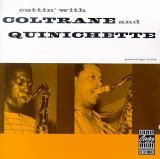
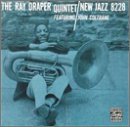
... some rarish material from 1957. The session with Ray Draper was under the aegis of the tuba player – who was only 17 when he cut this. I think he acquits himself well but the the tuba did not really emerge at the time as a definitive front-line instrument. Spanky De Brest suddenly and amusingly (I love that name!) turns up again – I seem to have summoned his presence every time I check sideman details recently.

The session with Quinichette is a relaxed blow with a second line tenor man who was regarded as a kind of Lester Young tribute artist – Pres himself dubbed him (rather unkindly maybe but with Lester one never knows do one?) 'Lady Q' ?... But the 'Vice Pres' holds his game up here against the mercurial Trane. Who, as ever, plays well on both – the long tumbling lines marking his expanding personal space in the transitional area of post-Bird Fifties bop/modern jazz. With Quinichette especially, he seems, happy, relaxed, enjoying himself. There is a nice lightness to these two tracks.

1957 was a busy and seminal year for Coltrane – the famous spell with Thelonious Monk and recording in many different settings. These two oddities come from that time of transition, just before he returned to the Davis band in 1958 – to eventually travel onwards into the fire of the 'New Thing.'

These three are for Bruno...


John Coltrane and Ray Draper

Lineup: Ray Draper (tuba); John Coltrane (saxophone); Gil Coggins (piano): Spanky De Brest (bass); Larry Ritchie(drums).


Download

Filidia_mp3


Buy


John Coltrane and Paul Quinichette

Lineup:John Coltrane, Paul Quinichette (tenor saxophone); Mal Waldron (piano); Julian Euell (bass); Ed Thigpen (drums).

Download


Sunday_mp3


Tea for Two_mp3


Buy

Friday, January 06, 2006

Derek Bailey at the BBC...

OK – I said that I would hunt down some of the Derek Bailey airshots I recorded way back when from the BBC Radio 3 series 'Jazz Today.' The first one is here and should have gone up with the post yesterday: Final Thoughts etc – but the clock was against me. This is Derek in the studio playing live on acoustic – a piece called 'Duke' from the mordantly titled 'The only good jazz composer is a dead one' suite. Maybe I will put up the rest as and when. The sound quality is not perfect – these were cassette transcriptions from the live radio broadcasts – but are adequate enough, I guess. One thing you'll notice on this track is the constant use of open strings grounding it securely in the natural tonalities of the guitar: E A D G etc.
From this same program I also have some fiery Paul Dunmall improvising -I may get round to putting up some of this at a later date. One more for Derek... enjoy...

Derek Bailey

Download

Duke

Thursday, January 05, 2006

Derek Bailey: Final thoughts...'All my guitars are called George.'

On this sad day of Derek Bailey's funeral, condolences to his partner, Karen, family and friends - and some final thoughts. The story of his life and achievements is documented in plenty of other places – I just want to record my personal reactions to his passing. When you have never seen or met an artist but only know them from recordings I suppose you create an image of what they might be like in real life. By various accidents of geographical location I was never in the right place at the right time and never got to see or meet Derek Bailey yet he was one of my favourite musicians – up with Monk, Coltrane, Cecil Taylor and Miles. I suppose that straight away one can draw a line connecting all of these – and not the obvious one that the four I just mentioned were and are jazz musicians or playing from the tradition that Derek had also emerged from – and then transcended mightily. The linkage is – integrity. Integrity as artists specifically – I do not know enough about their private lives to comment nor would I be interested in doing so, having no prurient interest and being a believer in the maxim of William Seward Burroughs taken from the short piece re-printed here – 'Most of the trouble in this world has been caused by folks who can't mind their own business, because they have no business of their own to mind .' Miles Davis was, apparently, an unpleasant enough man at times – by his own autobiographical testimony - yet was also capable of great kindness. But consider how he kept on moving artistically rather than sit back and trot out standard choruses on 'Walkin' year after year, encased in a smart Marsalis-like suit and tie. Integrity. Bailey, certainly on the evidence of the interviews I have heard and anecdotal evidence, also had a great deadpan sense of humour. I had entertained a fantasy that I might be able somehow to book him for the club that I run – although where the money was going to come from... But running an improvised enterprise like the Club Sporadic outside of the usual subsidies and art bureacracies you need lots of faith and hope... I was sure that somehow I could secure the money. Then I could have pulled a double coup: booked Derek into the darkness of the East Midlands and sent up a fiery light – and got to hear him close up. Well, we know now that it isn't going to happen in this life. My selfish loss. But also there will never be the chance to give others the chance to hear him. But the fact that I run such a club stems in part from the example of Bailey and others setting up networks, record labels, festivals – creating performing environments from scratch and surviving on ever-fraying shoestrings – a further extension of the integrity of those who see a clear purpose in what they are doing, however supposedly off-the-wall and distanced from the mainstream. The top room of a pub as paradigm for autonomous zone of freedom... even if complete sometimes with the archetypal three men and a dog...

I never saw Monk or Trane or Miles either. But you go with what you have... In the last year I got to see Cecil Taylor, Anthony Braxton, Ornette Coleman, Misha Mingelberg, Erik Friedlander and John Zorn, Evan Parker, despite (or because of, having the free time to travel) recovering from illness. All of whom did not disappoint my expectations...

But not Derek.

It is hard to overestimate my sheer affection for this man, whom I never met. I came to understand his playing more when I started my own faltering steps into free improvisation as apart from improvising conventionally. He had already been down the road... and it is still difficult to avoid the influence. Hearing him for the first time was a truly world-changing moment – comparable to the first time I heard Thelonious Monk, for example. It was the SOUND, not the notes but the way they were strung together. It is long-received critical wisdom that you can tell Monk from a couple of notes – slightly hyperbolic, maybe, but in practice this usually the case. Regarding Derek Bailey, this is equally true. His individual vision for re-structuring guitar playing in a free improvising environment, by the time it came to fruition, indicated to the listener that they would not mistake the player for anyone else. It seems as if Bailey went right to the material core of what guitar playing was and is about. I have written elsewhere in a comparison between Bailey and Joe Morris, a player with some small resemblance but playing more out of jazz, that if you transcribed their solos on acoustic guitar, you could just about imagine Morris's lines transposed to another instrument – with Bailey this would pose many problems of notation. It is not so much the individual notes as the whole of the guitar gestalt that would have to be considered. The difference between playing on a conventional piano,say, and a prepared piano which takes you under the lid into the entrails of wires and hammers and frame. On a saxophone – forget it... Bailey gets inside the guitar, explores its essence of wooden knockings, overtones, string rattle, open strings ringing in a manner that orthodox jazz, say, does not implement. (Having to modulate continually and play with horns means that most jazz guitar chording and scalar playing works off positions going up and down the neck that do not use in the main open strings, the un-stopped strings being deadened by the sides of the fingers). Almost a folk take on playing. Crossed with the implied musical knowledge behind – from jazz and dance band repertoire to 20th century art music. Using the timbral qualities of the instrument helped him to move beyond the conventional chromatic harmonial solutions to improvising by rising above them as it were, forging a metalanguage that is vertical and horizontal in ways that evoke Cecil Taylor. To escape chromatic harmony's drive towards conventional resolution and open up new spaces with the implied imperative of demanding new ways of listening. The texture of the guitar being as important as the actual notes – an equality of timbres, resonance and musical ideas that demands an immersive listening rather than a linear one? Or, as we cannot totally escape the flow of time, an immersive listening alongside or simultaneous to the lineal? A vertical listening to parallel the horizontal? The use of harmonics as an integral part of the note selections is much more extensive than is usually found in the guitar canon – an echoing maybe of the extended range of the saxophone through so-called overblowing – or the 'prepared' piano? These harmonics disrupt the line even as they extend it... contributing to the spiky feel...

His playing with others is equally intriguing. On the very good WMFA broadcast to be found here, there are back to back tracks of him in a duo with Joelle Leandre and a trio with Calvin Weston and Jamaaladeen Tacuma. On the first, Leandre sets up a wonderful long sonorous arco line and Bailey appears to be scratching at this round the edges, playing a sharp, percussive chordal backing. Slowly he comes more into the foreground, the 'comping' figure blending in with the double bass line until they come together. He works aqainst and with the power of Leandre – and you need to be a strong player not to be daunted by Bailey, I think. And this doesn't necessarily apply to technique – more to character and experience. On the other track he meets two other players who stand their ground, the bass and drums of Tacuma and Weston. And rightly so: they give him the supple rhythmic almost harmolodic space to bounce his electric guitar off – a joyous track. The speedy sixteenth note rhythms bring out some inspired playing here as he alternatively floats across the beat and locks onto it. Something that Ornette Coleman does, come to think of it. It proves my thought that he could play anywhere and find his own space – or attract others into his. This last track is also very jazzy... Compare and contrast to his playing with Ruins where his electric guitar cranks out wild distorted howls over the noise/metal/rock of the Japanese duo – not bad for a man of his age, beautifully described by Stewart Lee as 'a cross between Clegg from Last of the Summer Wine and a harsh-but-fair science teacher...' in his piece on Bailey for the Sunday Times January 19 1997 – go here...

By using standard tuning he gave himself further freedom – he gave up 'prepared guitar' fairly early on because, I guess, it actually limits you to playing inside the 'preparedness.' Also, putting the guitar say to modal or open tunings takes you out of the standard but actually again limits you to the insistent tonality of the tuning By using the open strings he can root his playing tonally at times but move beyond conventional resolution – the tension coming from the notes crushed, sprung and chopped across those open strings to provide a kind of pan-tonal rather than stricly atonal ambiguity and complexity. Some of this transfers over into his electric playing... although the volume, timbral qualities and built in speed of the electric medium require different strategies. For example, the longer sustain of notes – on an instrument that can be played fast, conversely you don't have to.Yet he is still, demonstrably, Derek Bailey, instantly recognisable, the style/metalanguage in place.

Bailey established himself internationally playing and recording in a bewildering amount of line-ups and settings – those who follow the music increasingly recognising his influence and genius. In recent years, predictably, however, one started to notice the backlash creeping in. After the dust settles (some biblical image there?) will be the time to consider his contribution more soberly . Oddly enough there have never been that many detractors (surprisingly, considering some of the scathing comments he makes about the parochial/bureaucratic nature of some aspects of the London scene in this interview – thanks to Zoilus for this) – the recent sniping was more of a balancing, maybe, or the inevitable reaction when an artist has been on the top of their game for so long. There was, maybe, too much reverence at times. But I suspect that his place in the world of improvised music – and beyond – is secure. I doubt that it bothered him overmuch – this after all is a man who has played with the whole roster of international musicians from within and without the improvising world – and with Morecambe and Wise and Gracie Fields. And called his various guitars 'George.' And had a firm and humourous sense of his own worth and contribution to the music...

When the dust settles... the Sheffield steel will still be shining through...

Wednesday, January 04, 2006

Bluebird... Ornette Coleman... Derek Bailey...


Here's a weird and wonderful mix – I found a Bluebird sampler yesterday that I bought a couple of years ago and promptly forgot about. Like all samplers, a curate's egg... But some interesting stuff. A rare Art Blakey Jazz Messengers track for starters – at the time when theoretically Jackie McLean had left and Johnny Griffin came in – except that they are both on this track, Bill Hardman making up the front line on trumpet – a peppy solo from him. McClean still plays under the heavy shadow of Bird here, Griffin his usual rapid-fire self. Sam Dockery on piano and the delightfully named 'Spanky' De Brest on bass. The guv'nor at the traps, majestically powering it all along.

The Mingus is an alternate take from 'New Tijuana Moods,' with the very wonderful and totally obscure Clarence Shaw on trumpet. A brief overview of the sessions that made up 'Tijuana Moods' and its later reprise with added alternate takes can be found here...

The Ellington band from 1967 make up this trio – Johnny Hodges on imperious form.

People seem to like Ornette – he's statistically the most popular download off this blog. So: here's a couple more from 'Change of the Century.'

Lastly – a repost of a couple of Derek Bailey tracks, solos from 'Improvisation'... why not? Just to mention a touching tribute (and free download of a track from the album featured here: 'Improvisation') to the late Derek from my friend and collaborator Murray Ward here... Another indication of the ways that Bailey touched many of us - apart from the music there was something about the man that generated deep affection among strangers...

Download

Art Blakey
Evans

Charles Mingus
Tijuana Gift Shop

Duke Ellington
Blood Count

Buy


Ornette Coleman

Download

Face of the Bass

Forerunner


buy


Derek Bailey

Download

M3


M9


Buy

Monday, January 02, 2006

Onwards... Louis Armstrong... Jimmy Guiffre... John Coltrane...


Haven't got round yet to the 2005 best of stuff – one has to observe the traditions, I suppose, but I've been concerned with other things - recovering from my night at the 'Pink Flamingo' on New Years Eve – and I also realised when I checked 'The Wire' best of year lists that I hadn't actually bought much this last twelve months that was directly new. The bebop posts are going on hold for a week or so as I'm trying to work on a longish Derek Bailey post - so here's some mp3s from the twenties to the sixties in no particular theming... a holding measure but also - just good music. The Louis Armstrong tracks sound as fresh now as they did when they exploded on the scene. I'm working backwards from the thirties – 'Swing that Music' to the Hot Five and Hot Seven stuff – just because I love the sheer happiness evoked in that first track (with a big band) – a great way to start the sequence. The other two tracks from the twenties – well, just listen and wonder...

The Guiffre Three – 'Train and the River' is the famous piece that was featured in 'Jazz on a Summer's Day' – so I added 'Crawdad Suite' as it's lesser known and just as good, I think, in a more languid, spacy manner. (And I've discovered some air shots of Guiffre with Paul Bley and Gary Peacock that I'll try to get round to converting from tape asap). Guiffre is one of those mavericks who still need an accurate reappraisal – from the Four Brothers Herman Herd to being ostracised in the sixties for playing free jazz – someone else I intend to write about soon... from Texas as Ornette was... something about that State and its players and the way that the blues is always lurking in their playing... which leads on to...

Coltrane playing the blues – self-explanatory: 'Blues to Bechet. Homage... to the other great soloist from New Orleans, the mercurial Sidney Bechet...

Maybe the link is the classic feel to all of these tracks - in the way that they look forward and backward at the same time. Sprung off the backbone of the blues and pivoting on Louis who more or less invented the role of bravura solo improvisor in the twenties – while retaining some gutbucket feel of New Orleans. We can see now that 'Jazz' is a continuum which confounds facile categorising...

Enjoy...


Download

Swing that music


buy


Potato Head Blues


West End Blues


buy


Jimmy Guiffre

Crawdad Suite


The train and the river


buy

or buy


Blues for Bechet


buy

Sunday, January 01, 2006

Happy new year...


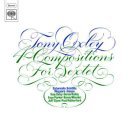
Happy new year to all... Here's two longish (beware) tracks - Albert Ayler : 'Holy Holy.' A blast of the spirit to warm up a cold and slightly hungover New Years Day. Calvados for breakfast and ask no questions... And one last from Derek Bailey whose death cast a downer spell on the season– taken from when he was part of Tony Oxley's group that recorded 'Four Compositions for Sextet' in1970. British avant-garde at its best.


Download

Holy Holy


buy


Download

Saturnalia

buy

Thursday, December 29, 2005

Derek Bailey: Requiem 2

Two more tracks in my mini-tribute to the late Derek Bailey. 'Rocking Chair' and 'Stella by Starlight', both taken again from the 'Ballads' album...


Download

Rocking Chair


Stella by starlight


Buy